What Is an Automatic Coil Winding Machine?
An automatic coil winding machine forms insulated wire into precise coils for motors, transformers, generators, relays, and other electromagnetic components. It controls winding speed, tension, spacing, turns, and stopping positions through programmed mechanical and digital systems. Unlike manual winding, it can repeat the same coil pattern across thousands of units. That consistency matters when a small gap changes resistance, heat, or magnetic performance.
Demand is becoming more visible. The International Energy Agency’s Global EV Outlook 2024 reported nearly 14 million electric cars sold worldwide in 2023, representing about 18% of new car sales. Each traction motor requires carefully wound copper coils. The IEA’s Electricity 2024 report also highlights continuing investment in grids, motors, and electrification equipment. These trends support wider use of automated winding systems. Market research from Grand View Research and MarketsandMarkets similarly identifies electric motors, transformers, and industrial automation as important growth areas for winding equipment.
No machine is magically automatic. Operators still select wire diameter, coil geometry, insulation settings, and quality limits. A reliable automatic coil winding machine must also manage wire breakage, uneven tension, tooling wear, and changing production batches. In a real factory, copper wire may pass through ceramic guides while sensors monitor tension several times per second. That detail is easy to overlook. This article explains how the machine works, where it creates measurable value, and which specifications deserve careful evaluation. Some published market forecasts remain optimistic, so buyers should compare those claims with actual cycle times, reject rates, maintenance records, and verified production samples.
Definition and Basic Function of an Automatic Coil Winding Machine
What Is an Automatic Coil Winding Machine?
An automatic coil winding machine forms insulated wire into precise electromagnetic coils. Its basic function is simple: control wire movement, tension, speed, and placement during winding. A programmable controller guides the spindle and traverse system. Sensors monitor wire breaks, position errors, and abnormal tension. The machine can then stop before a small defect becomes a costly reject.
This equipment serves motors, transformers, solenoids, sensors, and other electrical components. Operators enter winding parameters, such as turns, wire diameter, coil width, and rotation speed. The machine repeats the same pattern with limited manual adjustment. That consistency matters as electric mobility expands. The International Energy Agency reported nearly 14 million electric cars sold worldwide in 2023. More electric motors create stronger demand for repeatable coil production.
The U.S. Department of Energy identifies motor-driven systems as major industrial electricity users. This makes winding accuracy important, not merely convenient. Poor tension can create loose layers, damaged insulation, or uneven heat distribution. Automatic control reduces these risks, but it does not remove them. The machine still needs calibrated tooling, suitable wire, and trained inspection. Perfect winding is not automatic. In practical production, operators may need to adjust settings after observing real coils, because material behavior can differ from laboratory specifications.
Main Components and How the Winding Process Works
What Is an Automatic Coil Winding Machine?
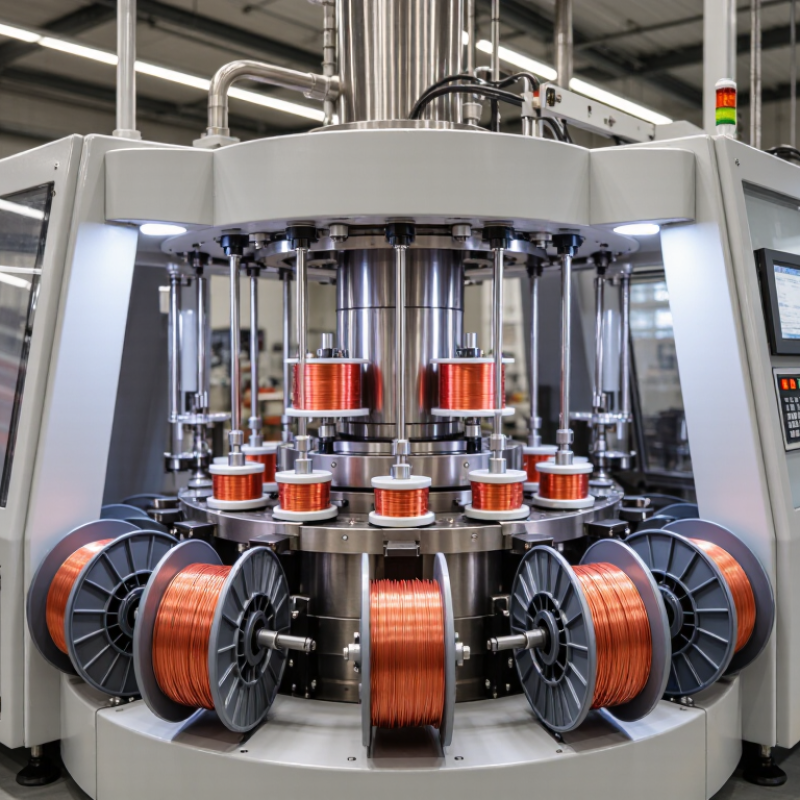
An automatic coil winding machine forms insulated wire into precise electromagnetic coils. Its main parts include a wire-payoff reel, tensioner, guide nozzle, spindle, tooling, and control system. A servo motor drives the spindle. Sensors monitor wire position, tension, and winding speed. The controller adjusts these values during production.
The process begins when the payoff reel releases enamelled copper wire. The tensioner keeps the wire stable without stretching its insulation. The guide then moves across the former in programmed patterns. Meanwhile, the spindle rotates at a controlled speed. Layered winding requires careful coordination. One misplaced turn can increase resistance or weaken insulation.
According to the International Federation of Robotics, 541,302 industrial robots were installed worldwide in 2023. That figure shows the wider manufacturing shift toward repeatable automation. Coil winding benefits from the same principle, especially in high-volume motor and transformer production. The International Energy Agency states that electric motor systems use roughly 46% of global electricity. Better winding consistency can support lower electrical losses, though machine accuracy alone cannot guarantee efficiency.
In real workshops, setup remains decisive. Operators still check wire diameter, former dimensions, tension limits, and insulation condition. A machine may follow its program perfectly. The coil can still fail if the tooling is worn. This is where practical experience matters. Automatic does not mean maintenance-free. Calibration records, sample inspections, and controlled speed changes help reveal problems before large batches are affected.
Different Types of Automatic Coil Winding Machines
What Is an Automatic Coil Winding Machine?
Different Types of Automatic Coil Winding Machines
An automatic coil winding machine forms insulated wire into a controlled coil. It manages tension, speed, turns, and wire placement. In production, I have found that stable tension often matters more than maximum speed. A small tension change can create loose turns, crossed wires, or uneven coil edges.
Flyer winding machines suit many stator and transformer coils. Their rotating flyer guides wire around a stationary or moving former. Spindle winding machines rotate the coil directly and support precise, repeatable shapes. They are useful for compact coils, bobbins, and components requiring accurate layer placement. Needle winding machines reach narrow slots and difficult internal spaces. Their slim needle guides wire into areas that other systems may miss.
Toroidal winding machines work around ring-shaped cores. They pass wire through the core opening repeatedly, which requires careful control of wire length and clearance. Precision layer winding machines place each turn beside the previous one. This improves coil height and electrical consistency. It also demands accurate programming.
The choice matters. Operators still matter. Automatic systems reduce repetitive work, but they cannot correct poor wire quality or incorrect tooling. In practice, calibration can drift after long production runs. I would check tension, wire alignment, insulation damage, and finished dimensions at regular intervals. The “best” machine depends on coil geometry, material, output, and required tolerance. Speed alone is a weak selection standard.
Materials, Applications, and Industries Served
An automatic coil winding machine forms insulated wire into controlled coils around a bobbin, core, or custom fixture. It uses programmable tension, traverse, speed, and turn-count controls. In production, these settings help maintain consistent pitch and reduce damaged insulation. Copper wire is common because it conducts efficiently. Aluminum wire may reduce weight and cost, but it requires careful tension control. The machine also handles enamel-coated wire, magnetic cores, plastic bobbins, insulation paper, and protective tape. Materials change the process.
Applications range from compact sensor coils to larger motor and transformer windings. In an electric motor, accurate winding affects torque, heat, and service life. Transformer production demands controlled layers and reliable insulation between winding sections. Solenoids, relays, inductors, ignition components, charging equipment, and medical devices also use wound coils. Some applications need round wire. Others use rectangular wire or unusual winding patterns. The machine must match the component geometry, not merely the target turn count.
Industries served include automotive, industrial automation, renewable energy, consumer electronics, aerospace, medical equipment, and power distribution. Each sector has different inspection needs, traceability rules, and tolerance limits. I have found that stable tension often matters more than maximum winding speed. Fast output can hide loose turns, crossed wires, or poor end connections. No setup is perfect. Operators still inspect samples, adjust guides, and question inconsistent results. That human review remains important, especially when a new material or coil shape enters production.
What Is an Automatic Coil Winding Machine? – Materials, Applications, and Industries Served
| Machine Category | Typical Winding Method | Common Coil or Wire Materials | Typical Applications | Industries Served | Key Production Advantages |
|---|---|---|---|---|---|
| General-Purpose Automatic Winder | Layer winding, precision winding, or programmable pattern winding | Copper wire Aluminum wire Enamelled wire | Relays, solenoids, small transformers, and compact inductors | Electrical equipment, industrial controls, consumer electronics | Repeatable tension, programmable turns, consistent coil geometry, and reduced manual handling |
| Transformer Coil Winder | Layer winding, foil winding, or continuous winding | Enamelled copper Enamelled aluminum Copper foil | Power transformers, distribution transformers, high-frequency transformers, and inductors | Power transmission, renewable energy, industrial power supplies, electronic equipment | Accurate turns counting, controlled insulation placement, and uniform winding tension |
| Motor and Generator Coil Winder | Needle winding, flyer winding, or insertion-compatible coil winding | Magnet wire Copper wire Insulated conductor | Stator windings, rotor windings, armature coils, and fractional-horsepower motor coils | Industrial motors, pumps, fans, compressors, appliances, and transportation equipment | High repeatability, accurate slot-compatible coil formation, and improved throughput |
| Voice-Coil Winding Machine | Precision layer winding on cylindrical or rectangular formers | Fine enamelled copper wire Aluminum wire Self-bonding wire | Loudspeaker voice coils, headphone coils, and small actuator coils | Audio equipment, electronics, automotive audio, and consumer products | Fine-wire handling, controlled coil height, precise placement, and stable electrical performance |
| Air-Core Coil Winder | Single-layer winding, multi-layer winding, or spaced winding | Enamelled copper Litz wire Tinned copper wire | Radio-frequency coils, antenna coils, filters, and wireless charging coils | Telecommunications, radio equipment, wireless power, medical electronics | Accurate pitch control, repeatable inductance, and programmable spacing between turns |
| Litz-Wire Winding Machine | Controlled tension winding with wire-guiding and bundle management | Litz wire Multi-strand copper wire Insulated strands | High-frequency transformers, resonant inductors, wireless charging coils, and power converters | Power electronics, electric vehicles, renewable energy, telecommunications | Protects delicate strand bundles, supports consistent winding density, and helps reduce conductor damage |
| Toroidal Coil Winder | Needle or shuttle winding around a toroidal magnetic core | Enamelled copper Litz wire Insulated wire | Common-mode chokes, current transformers, power inductors, and toroidal transformers | Power supplies, electromagnetic compatibility, industrial automation, and renewable energy | Consistent wire distribution around the core, reduced labor requirements, and repeatable turn counts |
| Needle Winding Machine | Needle-guided winding into slots or around small formers | Fine magnet wire Self-bonding wire Insulated copper wire | Small stators, micro-motors, sensor coils, and compact actuator windings | Medical devices, robotics, automotive components, small appliances | Accesses narrow winding spaces, provides accurate wire placement, and supports compact coil designs |
| Flyer Winding Machine | Rotating flyer distributes wire around a stationary or rotating workpiece | Copper magnet wire Aluminum magnet wire Insulated wire | Stator coils, transformer coils, ignition coils, and larger wound components | Automotive, industrial machinery, electrical manufacturing, and appliance production | Suitable for high-speed production, programmable winding patterns, and multiple coil configurations |
| Special-Purpose Coil Winder | Custom programmable winding, segmented winding, or combined winding and forming | Copper wire Aluminum wire Foil Specialty insulated conductors | Custom sensors, medical coils, aerospace components, precision actuators, and non-standard inductors | Aerospace, medical technology, automation, research equipment, and specialized electronics | Adaptable tooling, recipe-based control, integrated inspection options, and support for complex geometries |
| Automatic Coil Winder with Integrated Testing | Programmable winding combined with electrical or dimensional inspection | Enamelled copper Enamelled aluminum Litz wire | Production of motors, transformers, inductors, relays, and sensor coils requiring traceability | Automotive, energy systems, industrial electronics, appliances, and regulated manufacturing | Combines winding and quality checks, identifies defects earlier, and supports production data collection |
Benefits, Limitations, and Selection Considerations
What Is an Automatic Coil Winding Machine?
Benefits, Limitations, and Selection Considerations
An automatic coil winding machine forms insulated wire into precise coils for motors, transformers, sensors, and other electrical assemblies. It controls winding speed, tension, turns, spacing, and stopping points. In practical production, this consistency can reduce uneven layers and repeated manual adjustments. It also improves output when orders require thousands of similar coils. However, automation does not remove every production problem. Wire insulation may crack under excessive tension. Small alignment errors can still damage coil geometry.
The main limitation is flexibility. A machine configured for one bobbin, wire size, or winding pattern may need tooling changes for another job. Setup time can become expensive for short production runs. Operators also need training in tension calibration, tooling alignment, and quality inspection. I would not judge a machine by speed alone. A faster cycle is useless if coils require frequent rework. Selection should consider wire diameter, maximum coil dimensions, winding method, allowable tolerance, changeover time, and data-recording needs. Safety guards and accessible maintenance points matter too.
Tips: Request sample winding tests before purchasing. Measure actual coil tension and layer accuracy. Check whether the control system stores repeatable recipes. Leave room for future wire sizes, even if the current product range seems stable. A careful trial may reveal limitations that a sales specification hides. That step is easy to skip, but regret is costly.
Automatic Coil Winding Machine: Benefits, Limitations, and Selection Considerations
The chart uses a relative 1–5 index to compare common operating characteristics. Automatic winding machines generally provide higher throughput and repeatability, but they usually require greater initial investment and may offer less flexibility for frequent product changes than manual or semi-automatic equipment. Actual performance depends on wire diameter, coil geometry, winding tension, tooling, and production volume.
Related Posts
-
China Top Coil Winding Machine Manufacturers Guide
-
10 Tips for Choosing the Right Coil Winding Machine?
-
What Is a Linear Coil Winding Machine?
-
10 Essential Tips for Using an Automatic Motor Winding Machine?
-
Top 10 Automatic Motor Winding Machines for Global Buyers?
-
China Top 10 Automatic Motor Coil Winding Machine Suppliers