10 Tips for Choosing the Right Coil Winding Machine?
Selecting the right coil winding machine can influence production quality, labor efficiency, and long-term operating costs. In a real workshop, the decision begins with the coil, not the brochure. Wire diameter, winding width, turn count, tension range, and insulation requirements define useful machine capability. A motor manufacturer may need precise control for fine enamelled wire. A transformer producer may prioritize torque and larger bobbins. Small details matter.
Ask how quickly operators can change tooling, adjust settings, and correct a broken wire. Their daily experience often reveals problems that purchasing teams overlook. Review machine accuracy, spindle speed, programmable patterns, safety guards, and maintenance access. Request sample winding tests using your actual wire and bobbin. Measure tension stability, layer alignment, cycle time, and finished coil quality. Numbers provide stronger evidence than confident sales language.
Check training, spare-part availability, software support, and the supplier’s service record. A reliable manufacturer should explain limitations, not only advantages. A low purchase price can conceal costly downtime. Expensive automation is not automatically the best choice. That assumption needs questioning. Consider future products, production volume, floor space, and operator skill before signing an order. The ideal machine should fit today’s process while allowing practical upgrades later. No checklist is perfect. Real testing may expose an inconvenient truth: a technically impressive machine might still be difficult to operate. Careful comparison, documented results, and honest feedback create a safer and more dependable investment.
Define the Coil Type, Wire Size, and Winding Requirements
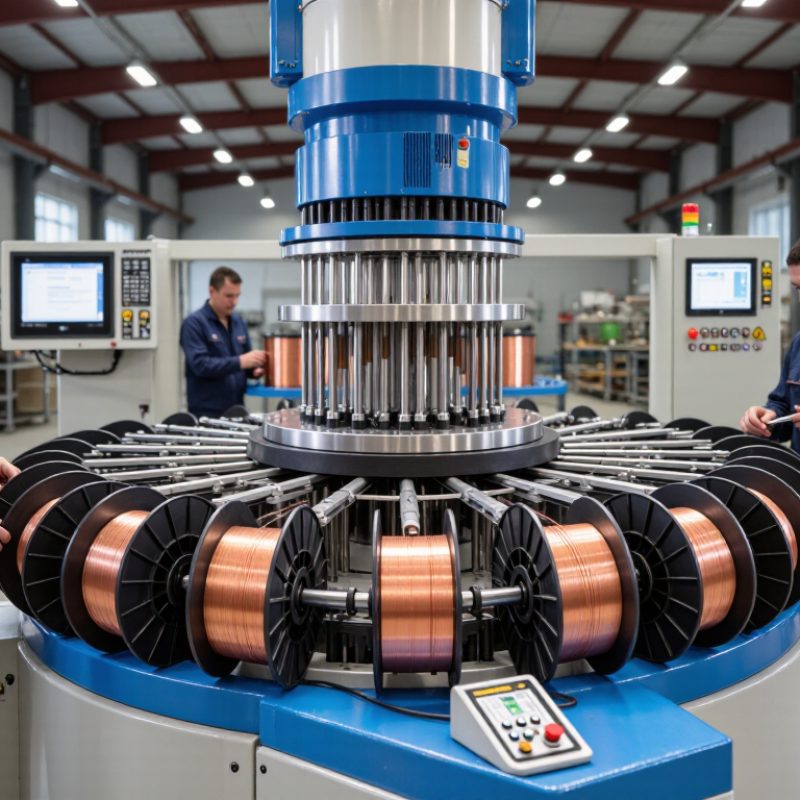
Choosing the right coil winding machine starts with the coil, not the machine catalog. Identify whether the part is a stator, transformer coil, solenoid, or toroidal winding. Each form demands different tension control, tooling, and winding paths. A stator may need distributed winding, while a transformer often requires precise layer separation. Measure the former diameter, winding width, turn count, and allowable lead position.
Wire size changes the decision immediately. Record conductor diameter, insulation thickness, material, and permissible tension. IEC 60317 defines key requirements for enamelled winding wires, including insulation dimensions and electrical performance. A small diameter error can alter slot fill and resistance. The U.S. Department of Energy reports that motor-driven systems consume about 69% of industrial electricity in the United States. Consistent winding quality therefore affects both reliability and energy performance.
Write the winding requirements before requesting quotations. Include target turns, speed, wire overlap, tension range, coil pitch, tap positions, and acceptable defects. Specify whether the machine must handle round, rectangular, or multiple parallel wires. Ask for measured tension data, not only a stated accuracy percentage. In real production, operators may need to correct wire memory or uneven insulation. That detail is easy to miss. A 2022 U.S. Department of Energy motor systems assessment also emphasizes system-level efficiency, not isolated equipment claims. I would avoid choosing a machine from speed alone; faster winding can expose weak tension control, poor tooling, or unstable guiding.
10 Tips for Choosing the Right Coil Winding Machine
Define the coil type, wire size, and winding requirements before selecting a machine. The chart below uses standardized bare copper conductor diameters for common American Wire Gauge (AWG) sizes.
How to Use This Data
Thinner wires require precise tension control, accurate traverse movement, and suitable guides. Larger wires require stronger wire handling components and adequate winding torque. Confirm the complete wire-size range, coil dimensions, winding pattern, and required production speed before making a machine selection.
Match Machine Capacity With Production Volume and Speed
Tip: Match the machine’s real output to your production volume, not its advertised maximum. A winding machine rated for 120 coils per hour may deliver 85 during normal operation. Wire changes, coil loading, inspection, and minor stoppages reduce actual speed. Measure your daily requirement, then add a practical capacity margin of 15 to 25 percent. Too little capacity creates overtime and rushed quality checks. Too much capacity ties up capital and floor space.
Tip: Check the relationship between winding speed, wire size, and coil design. Thin wire may tolerate higher speeds, while heavier wire often needs slower acceleration and careful tension control. Ask for cycle-time data using your actual coil dimensions. The test should include loading and unloading. A fast spindle alone does not guarantee fast production. In my experience, changeover time is often underestimated. It can quietly consume an entire shift each week.
Tip: Evaluate capacity across several order patterns. A machine that performs well on long runs may struggle with small batches and frequent setup changes. Review expected monthly volume, peak demand, operator availability, and maintenance intervals. Leave room for learning. New operators rarely reach standard speed immediately. A simple production trial can reveal heat buildup, wire breaks, or unstable tension before purchase. Record both ideal output and ordinary output. The second figure is usually more useful.
Evaluate Tension Control, Precision, and Automation Features
10 Tips for Choosing the Right Coil Winding Machine
Evaluate Tension Control, Precision, and Automation Features
Tension control should be tested with the actual wire, not only a supplier’s sample. A closed-loop load cell can maintain steadier force during acceleration and deceleration. That matters when fine wire passes across sharp layer transitions. Ask for tension variation data, response time, and results from continuous production trials. A dancer system may work well, but it can react slowly under changing spool conditions. Small differences become visible as loose turns, damaged insulation, or uneven coils.
Precision depends on more than the advertised turn-count accuracy. Check spindle runout, traverse resolution, wire-guide alignment, and repeatability across several batches. Request measured results, not rounded claims. The U.S. Department of Energy reports that motor-driven systems use about 68% of industrial electricity in American manufacturing. Consistent winding can support motor efficiency, although winding quality alone cannot guarantee it. That connection deserves careful testing.
Automation should reduce variation, not simply add screens. Look for recipe storage, automatic wire cutting, alarm history, barcode input, and production-data export. The International Federation of Robotics recorded 541,302 industrial robot installations worldwide in 2023. This growth reflects stronger demand for repeatable automation. Still, excessive automation can hide poor setup decisions. I would test changeover time with a new operator. I would also inspect rejected coils by hand. No machine is perfect. A practical trial should compare tension stability, winding accuracy, downtime, and operator corrections over several shifts.
Check Tooling Flexibility, Safety Systems, and Ease of Operation
Choosing a coil winding machine starts with tooling flexibility, not catalogue speed. Confirm whether the spindle accepts different bobbins, wire gauges, tensioners, and winding patterns. Quick-change fixtures can reduce setup time between small production batches. Ask for real samples, not only drawings. A machine may appear versatile, yet require costly custom tooling for one unusual coil.
Safety systems deserve equal attention. Check interlocked guards, emergency stops, guarded rotating parts, fault messages, and safe access during setup. ISO 12100 provides a recognized framework for machinery risk assessment, while IEC 60204-1 addresses electrical equipment safety. The U.S. Bureau of Labor Statistics reported 3.0 recordable cases per 100 full-time workers in private manufacturing during 2023. This figure is not specific to winding equipment, but it shows why safeguards cannot be treated as accessories. Test them physically. Software warnings alone are insufficient.
Operation should feel clear under production pressure. A readable HMI, recipe storage, guided setup, and language options reduce mistakes between operators. The International Federation of Robotics reported 541,302 industrial robot installations worldwide in 2023, reflecting broader factory automation. More automation does not always mean easier work. During acceptance testing, measure training time, changeover steps, alarm recovery, and first-pass yield. I would also observe a new operator using the machine without coaching. That test can reveal awkward controls, confusing menus, and assumptions engineers missed.
| No. | Selection Criterion | What to Check | Practical Benchmark | Why It Matters | Potential Warning Sign |
|---|---|---|---|---|---|
| 1 | Winding Application Compatibility | Confirm that the machine supports the required wire type, coil geometry, winding method, and production volume. | The machine should be specified for the target wire diameter, coil dimensions, winding speed, and duty cycle. | Incorrect application matching can cause poor tension control, damaged insulation, unstable coil dimensions, or low productivity. | The supplier provides only general speed data without application-specific operating ranges. |
| 2 | Tooling Flexibility | Evaluate interchangeable mandrels, bobbin holders, guide assemblies, tensioners, and fixture adjustment ranges. | Tooling changes should be repeatable and require only common hand tools where possible. | Flexible tooling reduces changeover time and allows one machine to handle multiple coil sizes or product variants. | Each new product requires custom machining, extensive realignment, or difficult mechanical modifications. |
| 3 | Wire Tension Control | Check whether tension is measured, adjusted, and maintained consistently throughout acceleration, winding, and deceleration. | Tension settings should be documented for each product, with stable results across repeated production runs. | Consistent tension helps prevent loose turns, wire stretching, insulation damage, and variation in electrical performance. | Tension is adjusted only by operator feel or changes noticeably with spool diameter and machine speed. |
| 4 | Programming and Recipe Management | Review the control interface, parameter groups, recipe storage, password levels, and backup or export functions. | Operators should be able to recall validated recipes and modify authorized parameters without rewriting the program. | Reliable recipe control improves repeatability and reduces setup errors between batches or shifts. | Critical settings are scattered across multiple screens, cannot be backed up, or are easily changed accidentally. |
| 5 | Ease of Operation and Changeover | Observe threading, tooling replacement, product loading, parameter entry, fault recovery, and first-piece approval. | Routine setup steps should be clearly labeled, supported by on-screen instructions, and manageable with minimal training. | Simple operation shortens training time, improves operator consistency, and reduces avoidable downtime. | The machine depends heavily on undocumented procedures or requires frequent intervention from specialist technicians. |
| 6 | Safety Systems | Inspect guarding, interlocked access doors, emergency stops, restart prevention, pinch-point protection, and safety labels. | Safety functions should be integrated into the control system and verified during commissioning and routine maintenance. | Winding equipment contains rotating parts, moving guides, and stored mechanical energy that can create serious hazards. | A guard can be opened while motion continues, or the machine can restart automatically after power is restored. |
| 7 | Winding Accuracy and Quality Monitoring | Assess control of turn count, traverse position, winding pitch, start and finish locations, and coil dimensions. | The machine should provide measurable process settings and support first-article checks using calibrated inspection equipment. | Accurate winding is essential for fit, inductance, resistance, insulation clearance, and downstream assembly quality. | Quality depends only on visual inspection, with no practical method for detecting missed turns or positioning errors. |
| 8 | Speed, Acceleration, and Production Capacity | Compare usable production speed—not only maximum speed—under the actual wire, coil, tooling, and quality requirements. | Capacity calculations should include loading, threading, tooling changes, inspection, and planned maintenance time. | A realistic cycle-time estimate prevents overestimating output and helps determine the required number of machines. | The quoted maximum speed is achieved only without wire, without production tooling, or under conditions unlike the intended application. |
| 9 | Maintenance and Serviceability | Review access to wear parts, lubrication points, sensors, belts, guides, electrical cabinets, diagnostics, and maintenance records. | Routine maintenance tasks should be defined with intervals, procedures, required tools, and replacement-part information. | Accessible maintenance reduces downtime and helps preserve winding accuracy over the machine’s service life. | Wear components are difficult to access, diagnostic messages are vague, or essential spare parts have no clear specification. |
| 10 | Total Cost of Ownership and Verification | Include tooling, training, installation, utilities, maintenance, spare parts, software, validation, and energy use in the comparison. | Request a sample run using representative materials and approve the machine against documented acceptance criteria. | The lowest purchase price may not provide the lowest cost per acceptable coil over the equipment’s useful life. | The quotation excludes essential tooling, integration work, operator training, or performance verification. |
Compare Maintenance Needs, Supplier Support, and Total Cost
A coil winding machine should be judged beyond its purchase price. In production audits, I have seen inexpensive equipment create expensive delays through difficult cleaning and slow adjustments. Ask how often operators must lubricate guides, replace tension parts, and recalibrate sensors. Downtime hurts. Request a maintenance schedule with labor estimates, not vague promises. Check whether common spare parts are stocked locally and whether manuals explain fault codes clearly.
Supplier support can determine your real operating cost. Ask about installation, operator training, remote diagnosis, and on-site response times. Request service records from comparable installations, when available. A reliable supplier should explain warranty limits and identify parts considered normal wear. Test the support process before buying. Send a technical question and measure the response. Fast replies matter, but accurate replies matter more.
Total cost includes energy use, tooling, software updates, training, rejected coils, and lost production hours. Compare these costs over five years, using your expected operating schedule. A machine with a lower price may require more skilled labor or frequent tension adjustments. My first comparison missed changeover time, and the error distorted the estimate. That mistake still influences how I review quotations. Ask for a trial run using your wire sizes, insulation materials, and target speeds. Record setup time, scrap levels, noise, and operator effort. Leave room for uncertainty. Forecasts are never perfect.
Related Posts
-
China Top Coil Winding Machine Manufacturers Guide
-
China Top 10 Automatic Motor Coil Winding Machine Suppliers
-
Top 10 Stator Winding Machines for Efficient Motor Manufacturing?
-
Top 5 Best Stator Winding Machines for Efficient Manufacturing?
-
What Is a Motor Coil Winding Machine and How Does It Work?
-
Why Choose an Automatic Stator Winding Machine?