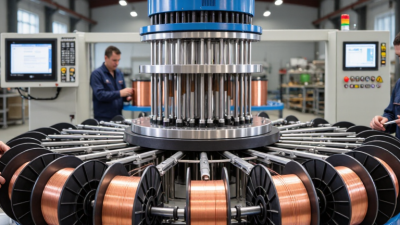

What Is a Linear Coil Winding Machine?
Electric motors quietly power factories, pumps, compressors, vehicles, and household equipment. Their performance depends heavily on the quality of their copper windings. A linear coil winding machine forms and places wire into precise, repeated coil shapes. It supports consistent tension, controlled spacing, and repeatable coil geometry during production. In practical terms, the machine replaces slow manual handling with measured motion and programmable control.
The International Energy Agency’s Energy Efficiency 2023 report identifies electric motor systems as a major global electricity-use category. This highlights why efficient motor manufacturing deserves closer attention. Better winding accuracy can reduce electrical imbalance, improve slot utilization, and support stable motor performance. Grand View Research’s electric motor market analysis also indicates continued demand for motors across industrial automation, transportation, appliances, and renewable-energy equipment. That demand increases pressure on manufacturers to improve output without sacrificing quality.
Precision matters here.
A linear coil winding machine may include wire guides, tension systems, forming tools, servo drives, and inspection sensors. Each component affects the final coil. A small tension error can create loose turns, damaged insulation, or uneven packing inside the stator slot. However, automation is not a complete solution. Machine settings, copper quality, tooling wear, and operator experience still influence results. This article explains what a linear coil winding machine is, how it operates, and where it fits within modern motor production. It also considers practical limitations, because published performance claims do not always reflect every factory’s conditions. Reliable evaluation requires measured cycle times, rejection rates, maintenance records, and finished-motor testing.
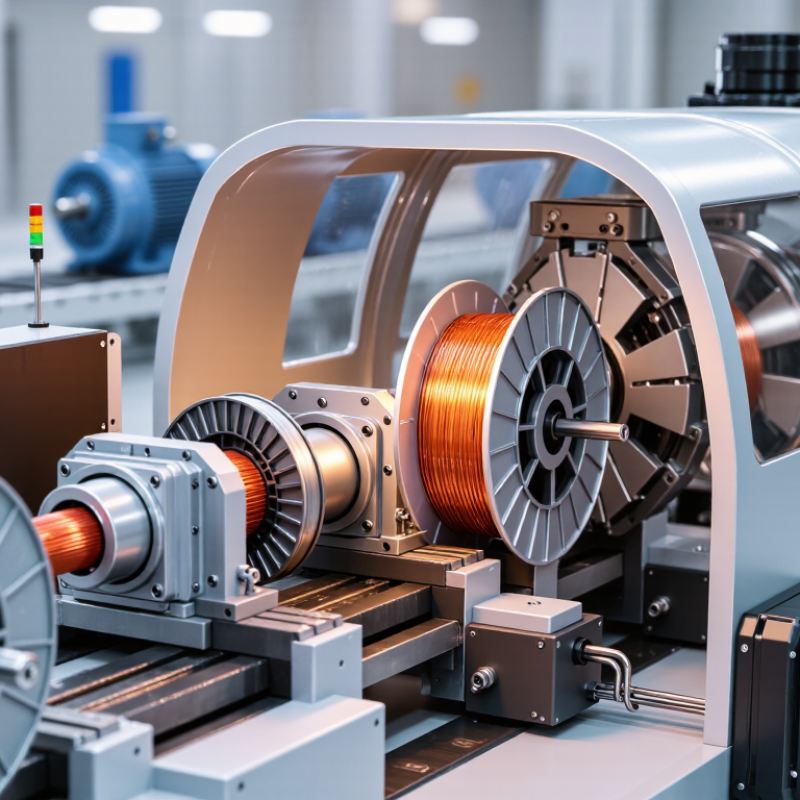
Definition and Core Purpose of a Linear Coil Winding Machine
A linear coil winding machine is equipment that winds insulated wire onto a bobbin, former, or magnetic core through a controlled linear movement. Its core purpose is simple: place each turn accurately, repeatedly, and with stable tension. The winding head travels along a defined path while the spindle controls rotation. Sensors may monitor wire tension, speed, and position. This process supports coils used in transformers, inductors, motors, solenoids, and other electrical components.
The machine matters because coil geometry affects resistance, inductance, heat generation, and insulation reliability. A 0.1-millimeter spacing error can create uneven layers or damage delicate enamel insulation. Operators usually set wire diameter, winding pitch, turn count, rotation speed, and traverse limits before production. The International Energy Agency has estimated that electric motor systems consume roughly 40% of global electricity, increasing pressure for efficient and consistent electromagnetic components. Industry forecasts also show continued growth in motor and electrical equipment demand, according to recent reports from Fortune Business Insights.
In practical production, automation improves repeatability, but it does not remove every risk. Wire tension can change during a spool transition. Dust may affect insulation. The ideal winding pattern is rarely perfect. That limitation deserves attention. Skilled technicians still inspect layer alignment, measure resistance, and check finished coils under magnification. A reliable linear winding machine therefore combines mechanical precision with process judgment, not speed alone.
Key Components and Their Functions
What Is a Linear Coil Winding Machine?
A linear coil winding machine forms insulated wire into neat, controlled coils. Unlike ordinary winding equipment, it guides the wire in a straight, programmed path. This design supports accurate spacing and repeatable coil shapes. It is commonly used for motors, transformers, sensors, and electrical assemblies.
Key components determine winding quality.
The wire payoff supplies material at a steady rate. A straightener removes bends before the wire reaches the winding area. The tensioner controls pulling force, since loose wire creates gaps and excessive force can damage insulation. The guide nozzle positions each turn. The spindle or forming fixture holds the coil and controls its shape. A traverse system moves the guide across the winding width. Sensors monitor wire position, speed, and possible breaks. The controller coordinates these movements, while the cutter finishes the coil at the programmed length. Small alignment errors matter.
Tips: Check the guide nozzle before production. Dust can change wire movement. Measure tension with a calibrated gauge, not by touch alone. Confirm the fixture dimensions against the work drawing. A perfect setting is rare, so inspect the first coil closely. If turns overlap, reduce speed and review guide alignment. If the wire scratches, stop the machine and examine contact surfaces. Operators sometimes trust automatic settings too much. That can hide gradual wear and create inconsistent coils. Record actual results, not only programmed values.
How the Linear Coil Winding Process Works
A linear coil winding machine forms copper wire into orderly coils through controlled, straight-line movement. The machine guides wire across a former while regulating tension, pitch, speed, and turn count. Each pass must sit beside the previous one, like threads on a narrow spool. Poor alignment can create gaps, crossed wires, or uneven insulation pressure.
The process usually starts with wire preparation and fixture alignment. Operators set the coil dimensions, winding direction, number of turns, and lead positions. A servo-driven carriage then moves along a programmed path. Tension control keeps the wire stable during acceleration and deceleration. According to the U.S. Department of Energy’s motor-systems market assessment, motor systems consume about 46% of global electricity. That figure highlights why winding accuracy affects more than appearance; it can influence efficiency, heat, and service life. The International Energy Agency reported nearly 14 million electric cars were sold worldwide in 2023, increasing demand for reliable traction-motor production. Yet automation is not flawless. A small tension change may still distort the final layer.
Tips: Check wire tension before production. Inspect the first coil manually. Measure resistance, coil height, and lead position. Use insulation checks when required by the applicable IEC 60034 series. Keep a winding record for every batch. Do not trust one reading. A repeated defect may come from tooling, not software.
How the Linear Coil Winding Process Works
The waveform represents the normalized movement of the winding carriage along the coil length. The carriage travels from one end to the other, reverses direction, and repeats the traverse for each successive winding pass. Position is shown as a percentage of the usable coil length.
Major Applications Across Electrical Manufacturing
What Is a Linear Coil Winding Machine?
Major Applications Across Electrical Manufacturing
A linear coil winding machine forms insulated wire into precise, repeatable coils. It controls wire tension, winding pitch, movement, and coil length. Operators use these systems for stators, solenoids, transformers, inductors, and compact motor assemblies. The wire moves along a guided path, while synchronized tooling creates the required geometry. Small errors can damage insulation or alter electrical resistance.
The applications are broad. Motor manufacturers use linear winding equipment for industrial drives, pumps, compressors, HVAC units, and electric vehicle traction motors. The International Energy Agency reported nearly 14 million electric cars sold worldwide in 2023. That growth increases demand for consistent motor coils and higher production throughput. Transformer and inductor producers also depend on controlled winding for power supplies, charging equipment, and energy-storage systems. The U.S. Department of Energy estimates that motor systems consume more than half of industrial electricity in the United States, making winding quality relevant to long-term efficiency.
Precision matters. A stable winding pattern improves slot filling and reduces unwanted vibration. Automated systems can also record tension, turns, and rejected parts for traceability. However, automation is not perfect. Insulation thickness, copper variation, and operator setup still affect results. In real factories, engineers often adjust tooling after early production tests. That step is easy to underestimate. A machine may achieve high speed, yet poor alignment can create costly rework. Practical validation remains essential before full-scale production.
What Is a Linear Coil Winding Machine? - Major Applications Across Electrical Manufacturing
| Application Area | Typical Coil or Winding | Why Linear Winding Is Used | Common Conductor | Key Production Requirements | Typical Quality Checks |
|---|---|---|---|---|---|
| Power Transformers | Layer windings, disc windings, and regulating windings | Provides controlled turns, orderly layer placement, and consistent conductor tension for insulated coils. | Paper-insulated copper or aluminum strip and round wire | Accurate turn count, insulation overlap, winding tension, axial alignment, and stable coil dimensions | Turn-count verification, insulation inspection, dimensional measurement, resistance testing, and dielectric testing |
| Distribution Transformers | Continuous-layer low-voltage windings and high-voltage layer windings | Supports repeatable coil geometry and efficient production of medium-size cylindrical windings. | Enamelled copper or aluminum conductor | Uniform pitch, controlled tension, accurate start and finish positions, and reliable insulation handling | Visual inspection, resistance balance, hipot testing, turns-ratio testing, and coil-height measurement |
| Electric Motors | Form coils, concentric coils, and preformed stator coils | Creates repeatable coil lengths and shapes before insertion into stator slots. | Enamelled copper round wire or rectangular wire | Consistent coil pitch, controlled wire tension, accurate end dimensions, and protection of enamel insulation | Coil resistance, insulation resistance, surge testing, dimensional checks, and visual inspection |
| Generators and Alternators | Stator bars, Roebel-type bars, and formed rotor or stator coils | Enables controlled forming and accurate placement of larger insulated conductors. | Insulated copper strip or multi-strand copper conductors | Large-coil dimensional accuracy, insulation integrity, bend-radius control, and repeatable forming pressure | Dimensional inspection, insulation resistance, high-voltage testing, and conductor continuity checks |
| Inductors and Chokes | Air-core coils, bobbin windings, and core-mounted windings | Delivers controlled turn spacing and repeatable inductive performance. | Enamelled copper wire, litz wire, or insulated strip | Accurate turns, stable spacing, low conductor damage, and compatibility with bobbins or magnetic cores | Inductance, resistance, insulation resistance, visual inspection, and dimensional checks |
| Traction and Industrial Motors | Heavy-gauge form coils and rectangular-wire windings | Handles demanding coil shapes and supports repeatable production for high-power electrical machines. | Rectangular copper wire or copper strip with enamel and additional insulation | High forming accuracy, controlled bending, strong insulation protection, and precise coil-end geometry | Resistance, surge comparison, insulation resistance, dielectric strength, and dimensional testing |
| Renewable-Energy Equipment | Generator stator coils, reactor windings, and transformer windings | Improves repeatability for electrical assemblies used in variable-load and high-duty-cycle systems. | Insulated copper or aluminum wire and strip conductors | Stable winding tension, accurate turns, reliable insulation placement, and traceable process settings | Electrical resistance, insulation resistance, dielectric testing, dimensional inspection, and process-record review |
| Industrial Control and Automation | Relay coils, contactor coils, solenoid coils, and control transformers | Provides consistent small-to-medium coil dimensions and repeatable electrical characteristics. | Fine enamelled copper wire | Accurate turn count, neat layering, low wire tension variation, and compact winding dimensions | Coil resistance, inductance, insulation resistance, pull-in or actuation testing, and visual inspection |
Benefits, Limitations, and Selection Considerations
What Is a Linear Coil Winding Machine?
A linear coil winding machine forms wire turns around a bobbin or fixture through controlled linear movement. It suits transformers, solenoids, sensors, and compact motor coils. The guide positions wire precisely while tension control protects insulation. In production, this can improve repeatability and reduce manual handling.
Its value is increasingly practical. The International Energy Agency reported more than 14 million electric cars sold globally in 2023. Electric motors require consistent, low-loss windings. The U.S. Department of Energy also estimates motor-driven systems use about 46% of global electricity. Better winding quality can support efficiency, although the machine itself does not guarantee efficient final products.
Linear winding offers flexible layouts, clear programming, and useful control over pitch and wire tension. However, it may struggle with unusual coil geometries or frequent product changes. Setup time can become expensive. Tooling errors also create uneven layers, damaged insulation, or rejected coils. These problems are easy to underestimate.
Tips: Check wire diameter, coil dimensions, winding speed, tension range, and software compatibility using real production samples. Ask for trial winding, not only a catalogue specification. Review maintenance access and operator training. A faster machine may still lose money if changeovers remain slow. Industry reports provide direction, but factory testing reveals the uncomfortable details.
Related Posts
-
10 Tips for Choosing the Right Coil Winding Machine?
-
China Top Coil Winding Machine Manufacturers Guide
-
Who Are the Top Auto Coil Winding Machine Suppliers in China?
-
China Top 10 Automatic Motor Coil Winding Machine Suppliers
-
10 Essential Tips for Choosing a Coil Winding Machine
-
What Is the Best Automatic Winding Machine from China?