China Top 10 Automatic Motor Coil Winding Machine Suppliers
Choosing a reliable automatic motor coil winding machine supplier requires more than comparing catalog prices. It demands practical knowledge of winding accuracy, production stability, service response, and long-term component availability.
Motor-manufacturing expert Dr. Anil K. Gupta states, “A winding machine earns trust through repeatable coils, not impressive brochures.” This principle guides the selection of China’s leading suppliers. A strong supplier should demonstrate stable wire tension, precise nozzle movement, programmable winding patterns, and consistent coil placement. These details become visible on the factory floor. Copper wire should feed smoothly. The spindle should run without harsh vibration. Operators should understand the control interface within minutes, not days.
This overview of China’s top 10 automatic motor coil winding machine suppliers examines their technical strengths, product applications, customization capabilities, and after-sales support. The comparison considers machines used for stators, rotors, transformers, and other compact motor components. It also reviews production speed, winding accuracy, automation depth, and integration with testing equipment.
No ranking is perfect. Supplier performance can vary by project, region, and order volume. A machine that suits a high-volume automotive line may not fit a small appliance factory. Buyers should request sample winding tests, inspect real production records, and clarify warranty terms before making a decision.
The right supplier is not always the cheapest. It is the one that supports reliable output when the factory is under pressure.
Definition and Role of Automatic Motor Coil Winding Machines
China Top 10 Automatic Motor Coil Winding Machine Suppliers
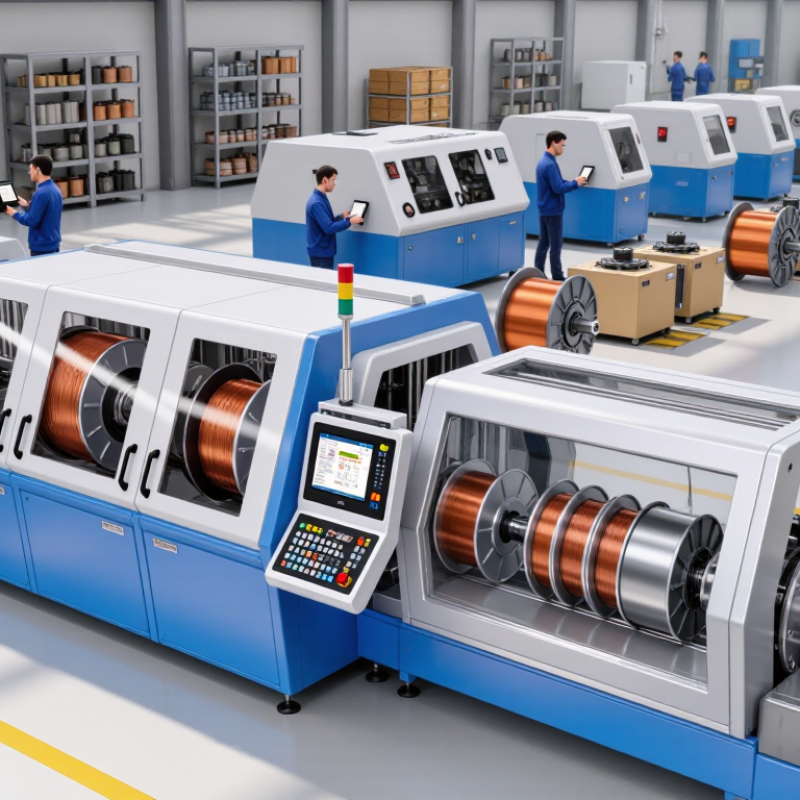
Automatic motor coil winding machines form copper wire into precise coils for stators, rotors, transformers, and other electrical assemblies. Their role is practical: they control tension, winding speed, spacing, and turn counts during production. This reduces variation between coils and supports repeatable motor performance.
The International Energy Agency estimates that electric motor systems consume about 45% of global electricity. This makes manufacturing accuracy important, especially for motors used in factories, vehicles, pumps, and appliances. The International Federation of Robotics reported 541,302 industrial robots installed worldwide in 2023. Winding equipment is part of this broader move toward controlled automation. In production audits, operators often find fewer loose wires and more consistent coil geometry after automation. Still, automation is not magic. Poor wire selection, incorrect tension settings, or weak maintenance can create hidden defects. Some reports also compare machine shipments differently, so market figures need careful reading.
Tips: Check the machine’s tension control, programmable winding patterns, wire-size range, and changeover time. Ask for sample coils using your actual copper wire. Measure turn accuracy, insulation damage, and cycle stability. A fast machine may still be unsuitable. That point is easy to miss. Calibration records and operator training also matter, because small setup errors can affect thousands of coils.
Key Features Used to Compare Chinese Machine Suppliers
China Top 10 Automatic Motor Coil Winding Machine Suppliers
When comparing Chinese automatic motor coil winding machine suppliers, examine performance beyond catalog claims. Check the machine’s supported wire diameter, winding speed, spindle accuracy, and tension control. A stable tension system prevents loose turns and damaged enamel. Request sample coils using your actual copper wire and bobbin sizes. Inspect the finished winding under magnification. Small gaps can reveal larger process problems.
Supplier evaluation also requires factory evidence. Review quality records, component traceability, operator training, and final inspection procedures. Ask for videos of continuous operation, not only polished demonstrations. Confirm servo brands, control-system compatibility, tooling life, and changeover time. A machine that takes three hours to adjust may reduce production more than expected. Service response matters too. Clarify installation support, spare-part availability, software updates, and warranty coverage in writing. Some suppliers provide strong engineering advice but weaker documentation. That weakness should not be ignored.
Tips: Compare the same test conditions. Record wire size, coil count, speed, rejection rate, and noise level. Use a written acceptance test before payment. Include emergency-stop checks and electrical safety verification. Do not select the lowest quotation automatically. A cheaper machine may require custom tooling later. Even experienced buyers can overlook maintenance access. Leave space around the machine for cleaning, inspection, and repairs.
China Top 10 Automatic Motor Coil Winding Machine Suppliers - Key Features Used to Compare Chinese Machine Suppliers
| No. | Key Comparison Dimension | Typical Specification or Market Benchmark | Why It Matters | Recommended Evaluation Method |
|---|---|---|---|---|
| 1 | Applicable Wire Diameter | Approximately 0.02–1.20 mm for common automatic motor-coil winding applications; larger-wire machines are usually configured separately. | Determines whether the machine can process the required copper or aluminum wire without unstable tension or insulation damage. | Request sample winding tests using the smallest and largest production wire sizes. |
| 2 | Winding Speed and Productivity | Typical spindle speeds range from about 1,000 to 6,000 rpm, depending on wire diameter, coil geometry, and winding method. | Higher rated speed does not always mean higher output; acceleration, stopping time, and stable production speed are equally important. | Compare completed coils per hour, not only the maximum no-load spindle speed. |
| 3 | Number of Spindles or Winding Heads | Common configurations include 2, 4, 6, 8, 12, and 16 winding heads; the practical choice depends on product variety and output requirements. | More heads can increase throughput but may reduce flexibility when products require frequent tooling or parameter changes. | Match head quantity with forecasted volume, product family size, and available floor space. |
| 4 | Coil and Stator Size Range | Machine capability is normally defined by maximum coil outer diameter, inner diameter, height, slot dimensions, and workpiece weight. | A machine may handle the wire size but still be unsuitable for the required stator, rotor, transformer, or bobbin dimensions. | Submit dimensioned drawings and verify clearance, tooling access, and clamping accuracy. |
| 5 | Wire-Tension Control | Closed-loop tension control, programmable tension settings, and tension monitoring are preferred for precision motor windings. | Consistent tension helps prevent loose turns, wire stretching, insulation damage, and uneven coil packing. | Check tension stability during acceleration, deceleration, corner changes, and different spool diameters. |
| 6 | Programming and Recipe Management | Industrial touch-screen controls commonly support stored recipes for winding speed, turns, pitch, direction, tension, and motion sequences. | Reliable recipe management reduces setup errors and makes repeat production easier across multiple operators. | Confirm password levels, recipe backup, parameter traceability, multilingual support, and data export options. |
| 7 | Quality-Control and Detection Functions | Useful functions include wire-break detection, turn-count monitoring, overload protection, end-of-wire detection, and alarm history. | Built-in detection reduces defective coils and prevents extended production with undetected process faults. | Test each alarm function and review whether faults stop the correct spindle or the complete machine. |
| 8 | Changeover and Tooling Flexibility | Quick-change fixtures, adjustable guides, modular tooling, and saved setup recipes are common methods for reducing changeover time. | Shorter changeovers improve equipment utilization when production involves many motor models or coil sizes. | Measure changeover time from the last good coil of one model to the first approved coil of the next model. |
| 9 | Automation and Production-Line Integration | Available integration options may include automatic loading and unloading, wire cutting or stripping, barcode input, conveyors, and communication with factory control systems. | Integration can reduce manual handling, improve traceability, and support continuous production. | Request a layout drawing, interface list, cycle-time study, and responsibility matrix for every automation interface. |
| 10 | Service, Documentation, and Compliance | A professional supplier should provide manuals, electrical drawings, spare-parts lists, operator training, remote support, and applicable conformity documentation. | After-sales support affects installation time, maintenance cost, production continuity, and long-term machine availability. | Check response time, spare-parts availability, warranty terms, training scope, acceptance criteria, and safety documentation. |
China’s Top 10 Automatic Motor Coil Winding Machine Suppliers
China’s Top 10 Automatic Motor Coil Winding Machine Suppliers are gaining attention from motor manufacturers worldwide. They typically provide equipment for stators, rotors, transformers, and compact automotive motors. Their machines may include automatic wire feeding, tension control, coil forming, and programmable winding cycles. These features help reduce manual errors and improve repeatability on busy production lines.
In practical sourcing, technical evidence matters more than polished websites. A reliable supplier should offer sample winding tests, clear machine drawings, installation guidance, and responsive after-sales support. Ask about wire diameter ranges, winding speed, tooling changes, and compatible insulation materials. Factory experience is valuable here. I have found that small details, such as stable wire tension at high speed, can affect final coil quality. Online information can still be incomplete. That deserves careful checking.
Tips: Request videos of real production trials, not only demonstrations. Confirm delivery schedules, spare-part availability, training hours, and service response times. Compare finished coils under identical settings. Check noise, wire alignment, and insulation damage. A lower quotation may hide expensive tooling or limited support. Keep written records of every technical promise. Suppliers should answer clearly, even when a requirement needs adjustment.
Machine Types, Applications, and Industry Compatibility
China Top 10 Automatic Motor Coil Winding Machine Suppliers
Automatic motor coil winding machines differ by geometry, wire size, and production volume. Flyer winders suit compact stators and high-speed appliance lines. Needle winders handle concentrated windings with restricted slot access. Spindle systems support precise armature and rotor winding, while toroidal machines serve ring-shaped cores. Each type demands different tooling, tension control, and programmable motion.
Electric vehicle production is increasing demand for repeatable hairpin, stator, and traction-motor winding. The International Energy Agency reported nearly 14 million electric cars were sold globally in 2023. This growth makes winding accuracy more than a quality preference. A small tension error can create uneven insulation pressure and costly rework. Industrial pumps, HVAC compressors, drones, and household appliances require different coil dimensions and duty cycles. One machine rarely fits every factory.
Supplier evaluations should compare wire-diameter range, slot compatibility, changeover time, servo accuracy, and inspection functions. The International Federation of Robotics recorded 541,302 industrial robot installations in 2023, showing stronger automation adoption across manufacturing. However, automation figures do not guarantee winding performance. That assumption needs questioning. Operators should verify sample coils, thermal endurance, data traceability, and maintenance response before purchasing. A suitable supplier combines machine flexibility with documented process trials, not impressive specifications alone.
How to Select the Right Chinese Coil Winding Machine Supplier
Selecting a Chinese automatic motor coil winding machine supplier requires more than comparing online prices. Start with your actual production needs. Define wire diameter, coil dimensions, winding speed, tension range, and required automation level. A machine running quickly may still create uneven layers or damaged insulation. Ask for sample winding tests using your materials. The results should show neat coils, stable tension, and repeatable settings.
Evaluate the supplier’s engineering experience and factory capability. Request technical drawings, component specifications, inspection records, and references from similar applications. A reliable supplier should explain maintenance intervals, software functions, spare-part availability, and operator training clearly. Check whether the machine includes safety protections and documented quality procedures. Video meetings help, but an on-site audit can reveal assembly details that photographs hide. I have learned that fast replies do not always mean strong after-sales support.
Tips: Compare total ownership costs, not only the machine price. Confirm installation support, response times, warranty limits, and export documentation before signing. Ask for a written acceptance standard. Include output accuracy, noise limits, test duration, and rejected-coil handling. Keep communication precise. One misunderstood specification can delay production for weeks. Consider ordering a trial unit if the process is unusual. This costs more initially, but it may expose design weaknesses early. No supplier is perfect. Your evaluation should leave room for testing, correction, and honest discussion.
Related Posts
-
Top 5 Best Stator Winding Machines for Efficient Manufacturing?
-
What Is a Motor Coil Winding Machine and How Does It Work?
-
China Top Coil Winding Machine Manufacturers Guide
-
Top Benefits of Using an Automatic Stator Winding Machine?
-
10 Essential Tips for Choosing the Best Auto Winding Machine?
-
Top 10 Stator Winding Machines for Efficient Motor Manufacturing?