China Top Coil Winding Machine Manufacturers

China is home to a wide range of coil winding machine manufacturers, from specialized workshops to larger equipment suppliers. Their machines serve industries such as transformers, motors, inductors, and automotive components. For buyers, the challenge is not simply finding a low price. It is matching machine capability to the wire, bobbin, production volume, and winding pattern required. Small details matter. Tension control, spindle speed, traverse accuracy, and changeover time can all affect finished coil quality. A machine that looks suitable in a catalog may perform differently with a specific wire diameter or complex winding profile.

This guide introduces key factors for evaluating China-based manufacturers, including product range, customization, quality checks, and after-sales support. Look for clear technical specifications, documented testing procedures, and practical answers about installation and spare parts. Ask whether the supplier can run a sample using your materials and provide results for review. That step may take extra time, but it can reveal issues that a product brochure will not show. A polished website is not proof of consistent production quality. Nor does a long list of models guarantee the right fit. Buyers should compare evidence, ask precise questions, and verify claims before making a decision. Some information may remain difficult to confirm remotely; recognizing that limitation is part of careful sourcing. The aim is a reliable match, not merely a machine with an impressive specification sheet.
China Top Coil Winding Machine Manufacturers

What Coil Winding Machines Do and How They Work

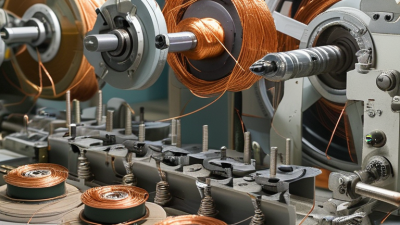
A coil winding machine wraps insulated wire around a bobbin, core, or former to create a controlled electrical coil. The finished winding may serve in a transformer, motor, inductor, or sensor. Operators set parameters such as turn count, winding speed, wire spacing, and tension. Small details matter. Excessive tension can stretch or damage fine wire, while loose turns may shift during later assembly.

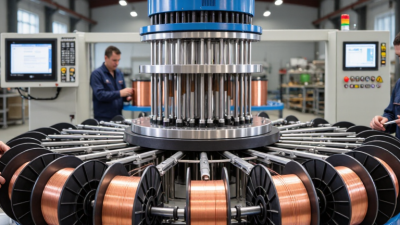
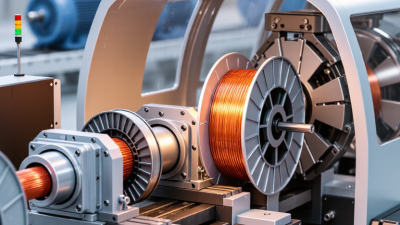
In a typical machine, a motor rotates the spindle while a guided nozzle or traverse mechanism moves the wire across the form. A tensioner helps keep the wire steady, and a controller coordinates rotation with the guide’s movement. Some systems also use sensors to monitor wire breaks or count turns. The result depends on both the programmed path and the physical setup. A bobbin mounted slightly off-center can produce uneven layers, even when the settings appear correct.

Different coil designs call for different winding patterns, including orderly layers or crossed turns. Before production, technicians commonly check the wire path, tension, and sample coil dimensions. A slow test run can reveal problems that a screen cannot. Still, setup is not always perfect: wire coatings vary, and small adjustments may be needed between batches. Inspecting the actual winding remains useful.

China’s Coil Winding Machine Industry and Its Main Product Types

China’s coil winding machine industry serves manufacturers producing transformers, motors, inductors, and other electrical components. Its product range is best understood by winding task and automation level. Transformer winding machines handle coils on bobbins or cores, while motor winding machines are designed for stators, rotors, or armature assemblies. Toroidal machines wind wire around ring-shaped cores, a process requiring controlled wire placement and tension.

Equipment also varies from manual and semi-automatic systems to programmable CNC machines. Basic models suit repeat jobs with straightforward setups. Automated machines can manage more steps, such as wire guiding, layer changes, and coil termination. More automation is not always better. A complex machine may slow production if operators spend too much time changing tooling or correcting settings. A tidy specification sheet can hide awkward changeovers. That deserves a closer look.

Tips: Match the machine to the actual coil dimensions, wire range, and daily output. Ask for a sample winding using your material, then inspect tension, spacing, and repeatability. Check how quickly guides and fixtures can be adjusted. Small details matter. A clear maintenance plan and accessible technical support can also reduce downtime, though these points are easy to overlook during purchasing.

China’s Coil Winding Machine Industry and Its Main Product Types
Machine Type Typical Products and Applications Winding Method Common Automation Features Key Selection Factors
Transformer Winding Machine Power, distribution, and control transformer coils Layer, foil, or wire winding on a bobbin or core former Programmable turns, traverse control, tension adjustment, and recipe storage Coil dimensions, conductor type, winding tension, turn-count accuracy, and insulation requirements
Toroidal Winding Machine Toroidal transformers, inductors, and current-sensing coils Conductor is fed through the center opening and wound around a ring-shaped core Programmable turns, speed control, and adjustable core and wire handling Core inner diameter, outer diameter, core height, wire size, and required winding density
Stator Winding Machine Stators for motors, pumps, fans, and selected electrical appliances Coils are inserted into stator slots using needle, flyer, or insertion processes Multi-station operation, automatic indexing, coil insertion, and optional wire cutting Stator slot geometry, pole configuration, winding pattern, production volume, and changeover needs
Needle Winding Machine Brushless motor stators and other slotted electrical components A moving needle guides wire directly into individual slots Multi-axis motion control, programmable winding paths, and automatic indexing Slot access, wire diameter, winding pattern, component geometry, and cycle-time target
Voice Coil Winding Machine Voice coils for loudspeakers, headphones, and precision actuators Fine wire is wound onto a cylindrical or shaped former Controlled traverse, turn counting, tension regulation, and precision positioning Former dimensions, winding height, wire size, coil resistance, and concentricity requirements
General-Purpose CNC Winding Machine Inductors, relays, sensors, solenoids, and custom coil assemblies Programmed winding around bobbins, formers, or other fixtures Stored programs, multi-axis control, automatic stopping, and optional wire cutting or loading Product range, number of axes, tooling flexibility, setup time, and required production consistency

Machine capabilities and specifications vary by configuration, tooling, materials, and manufacturer. Confirm the required coil dimensions, conductor, winding pattern, and production rate when comparing equipment.

Leading Chinese Manufacturers and Their Specializations

China Top Coil Winding Machine Manufacturers

Leading Chinese Manufacturers and Their Specializations

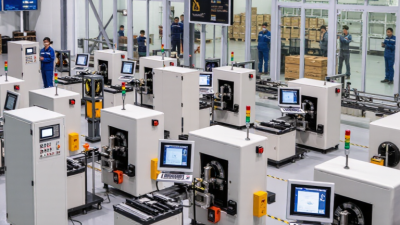
Chinese coil-winding machine manufacturers tend to specialize by workpiece, production volume, and automation level. Some build precision winders for compact motor stators, where narrow slots and consistent wire tension matter. Others focus on transformer coils, larger wire gauges, programmable layer winding, and controlled turn placement. High-volume lines may add automatic loading, wire cutting, and inspection. The right specialization depends on the coil design, not just machine speed.

Demand signals help explain these distinctions. The International Energy Agency reported nearly 14 million electric cars sold worldwide in 2023, about 18% of all car sales, in its Global EV Outlook 2024. That growth supports demand for motor-production equipment, though it does not translate directly into winding-machine orders. Grid investment matters too: the IEA’s Electricity Grids and Secure Energy Transitions report says annual grid investment must rise from roughly USD 300 billion to more than USD 600 billion by 2030. Transformer-coil equipment is one part of that wider supply chain. Small details count. Buyers should test sample coils for tension, insulation clearance, and repeatability. A fast setup can still produce uneven layers; that is easy to overlook.

Coil Winding Machine Specializations by Application

The bars count the established machine and winding types listed for each application group: motor (stator and rotor/armature), transformer (toroidal, layer-wound, and foil-wound), and electronics (bobbin and voice-coil). These are taxonomy counts, not market-share or manufacturer figures.

How to Compare Manufacturers, Equipment, and Support

China Top Coil Winding Machine Manufacturers: How to Compare Manufacturers, Equipment, and Support

A coil winder should be judged by repeatable output, not its catalogue speed. The IEA’s 2011 report, Energy-Efficiency Policy Opportunities for Electric Motor-Driven Systems, estimates these systems use 43–46% of global electricity. That makes consistent winding quality relevant to efficient motor production. Ask each manufacturer to run your wire, bobbin, and winding pattern. Check tension stability, turn-count accuracy, changeover time, and reject rates across a full production shift. A fast sample run proves little.

Look beyond the machine price. Compare tooling, installation, operator training, spare-part availability, and software backup. Request a factory acceptance test using your production recipe, then record cycle time and defect levels. A detailed service plan matters. Ask who responds when a controller faults, how quickly common parts ship, and whether manuals are clear enough for your technicians. These answers are often less polished than sales presentations, but more useful.

For a fair comparison, calculate total cost over the expected service life, including downtime and consumables. Review references from factories making similar coils, and verify the claims directly where possible. Not every buyer needs the most automated line; some need easier setup and reliable support more. A checklist helps, though it cannot replace seeing the machine run.

Industries and Applications Served by Chinese Suppliers

Chinese coil-winding machine suppliers serve manufacturers in electrical, automotive, appliance, and industrial equipment sectors. Transformer producers use winding systems to build coils with consistent turns and controlled wire tension. Motor factories need machines suited to stator and rotor winding, often with repeatable placement across production runs. Inductor and relay makers may require smaller, precise windings. Different workpieces demand different tooling.

There is no single ideal machine. A supplier may offer manual, semi-automatic, or CNC-controlled options, depending on coil size, output targets, and changeover needs. For example, a workshop producing several motor models may value adjustable fixtures and accessible recipes more than maximum speed. Automotive component makers often examine process repeatability and how equipment connects with existing production lines. Appliance manufacturers may prioritize stable output across long shifts. Details matter.

Buyers should share wire diameter, bobbin drawings, winding patterns, and expected daily volume before comparing quotations. Ask for a sample winding and inspect tension, layer alignment, and setup time. A catalog can make every machine look adaptable. It isn’t always. Some specifications also depend on the operator’s skill, a detail that deserves an honest trial rather than an assumption.