Why Choose a Motor Stator Winding Machine?
Choosing a motor stator winding machine can improve production quality, consistency, and operator control. In practical workshops, winding errors often appear as uneven tension, loose coils, or damaged insulation. These issues can affect motor efficiency and create costly rework. A reliable machine helps control wire movement, winding speed, and coil placement with greater precision.
From hands-on manufacturing experience, repeatability is one of the clearest advantages. The machine can follow programmed winding paths across multiple stator sizes. It also supports consistent wire tension during long production runs. That consistency matters when every slot must receive the correct number of turns. Small gains become significant. Less rework.
However, automation is not a magic cure. A motor stator winding machine still requires skilled setup, suitable tooling, and regular maintenance. Operators must check wire diameter, insulation condition, stator dimensions, and winding parameters. Poor calibration can produce defects faster, not eliminate them. This point is easy to overlook. Reliable purchasing decisions should consider machine accuracy, changeover time, safety features, service support, and verified production results. Ask for samples, technical data, and realistic cycle times before making a commitment. A machine may look impressive during a demonstration, yet perform differently in daily production. The right choice matches the equipment with actual motor designs, workforce capability, and expected output. When those factors align, automated winding becomes more than a speed upgrade. It becomes a practical method for building stable, traceable, and dependable stator production.
What Is a Motor Stator Winding Machine?
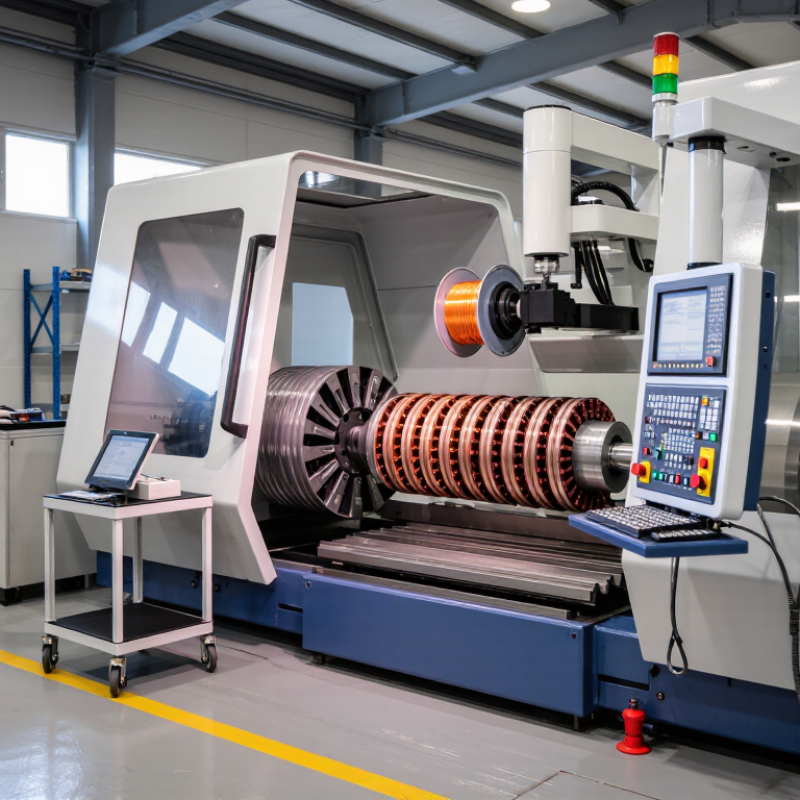
A motor stator winding machine is industrial equipment that places insulated copper wire into a stator core. The stator is the stationary part surrounding a motor’s rotor. During operation, a guided needle or flyer moves wire through carefully arranged slots. The machine controls winding speed, direction, spacing, and the number of turns. Precision matters.
Most machines include a wire tension system, programmable controls, and sensors for position monitoring. Tension control prevents loose coils and reduces insulation damage during high-speed winding. The tooling holds the stator firmly while the winding head follows a selected pattern. Operators may adjust settings for different slot shapes, wire diameters, and coil designs.
After winding, technicians inspect the coil shape, wire placement, and terminal connections. Electrical tests can identify insulation weakness or an incorrect winding path. In practical production, a trained operator still matters. A machine can repeat movements accurately, but it cannot always recognize every unusual wire bend. Setup errors also happen, especially when tooling changes are rushed. For this reason, reliable use depends on clear parameters, regular maintenance, and documented quality checks. The equipment improves consistency, but it does not replace engineering judgment.
How Does a Stator Winding Machine Work?
Why Choose a Motor Stator Winding Machine?
How Does a Stator Winding Machine Work?
A stator winding machine places insulated copper wire into slots in a motor’s stator core. The operator loads and secures the core, then selects settings such as coil turns, winding direction, and wire tension. Guides direct the wire as the spindle or needle moves through each slot. Sensors and counters can help track turns and detect interruptions, depending on the machine’s design. The goal is a repeatable winding pattern, not merely a fast one.
After winding, the operator checks the coil layout, lead connections, and insulation for visible damage. Even small tension changes can affect how tightly wire sits in a slot. Loose turns may shift; excessive tension can strain the insulation. Automated controls reduce repetitive work, but they do not replace setup checks or skilled inspection. A machine can repeat a poor setting very consistently.
Tips: Confirm the core dimensions and winding data before production. Test a sample coil, inspect its placement, and verify the turn count. Keep wire guides clean, and record adjustments between batches. Small notes can prevent repeat errors.
What Benefits Does Automated Stator Winding Provide?
Why Choose a Motor Stator Winding Machine?
What Benefits Does Automated Stator Winding Provide?
Automated stator winding helps manufacturers produce coils with more consistent placement and tension. A machine can guide wire through narrow slots while controlling its feed, reducing variation between winding cycles. That consistency matters: uneven turns may affect a motor’s electrical performance and make quality checks harder. Less rework, too.
For production teams, automation can shorten repetitive winding tasks and make output easier to plan. Operators can monitor settings, inspect finished coils, and handle exceptions rather than repeating every movement by hand. A well-configured system may also record parameters such as winding speed and turn count, giving technicians useful information when a batch needs review.
Automation is not a cure-all. Wire type, stator geometry, tooling, and setup still shape the result, and a poorly tuned machine can repeat the same mistake quickly. Careful trials and regular inspection remain essential. The practical benefit is control, not perfection: reliable winding depends on sound process design and skilled people who notice when a coil looks wrong.
Why Choose a Motor Stator Winding Machine?
Automated stator winding improves production consistency while reducing labor content, changeover time, and winding-related rework.
The chart uses a normalized benchmark in which manual winding is set to 100. A higher score indicates better winding consistency, while lower scores indicate reduced labor content, changeover time, and rework.
Which Industries Use Stator Winding Machines?
Why Choose a Motor Stator Winding Machine?
Stator winding machines serve several industries, each demanding controlled copper placement and repeatable insulation quality. Automotive manufacturers use them for traction motors, especially as electric vehicle production expands. The International Energy Agency reported nearly 14 million electric cars sold worldwide in 2023, representing about 18% of new car sales. That growth increases demand for compact, efficient stators with consistent coil tension.
Industrial equipment manufacturers also depend on these machines for pumps, compressors, fans, conveyors, and factory automation systems. The U.S. Department of Energy estimates motor-driven systems consume more than 70% of industrial electricity in the United States. Small winding errors can increase heat, vibration, and energy loss. Appliance producers use similar equipment for washing machines, refrigerators, and air-conditioning units. Renewable energy companies apply winding technology in wind turbine generators and other power-conversion equipment. The International Energy Agency recorded nearly 400 gigawatts of new solar capacity in 2023, showing how quickly electrical equipment markets are expanding.
A machine can improve output.
However, automation does not remove every risk. Operators still inspect wire insulation, slot filling, and terminal connections. In my experience, production teams sometimes trust machine settings too quickly. That is a weakness. Different wire gauges, winding patterns, and core designs require careful trials. Reliable manufacturers therefore combine programmable control with practical quality checks, sample testing, and documented maintenance.
Why Choose a Motor Stator Winding Machine? - Which Industries Use Stator Winding Machines?
| Industry | Typical Motor Applications | Common Stator Winding Method | Why Automated Winding Is Used | Key Production Requirements |
|---|---|---|---|---|
| Automotive and Electric Vehicles | Traction motors, electric power steering motors, cooling fans, pumps, actuators, and auxiliary motors. | Needle winding Hairpin or formed winding Insertion winding |
Provides repeatable coil placement, controlled conductor tension, and consistent electrical performance across high production volumes. | High repeatability, traceable process data, precise slot filling, insulation protection, and reliable testing after winding. |
| Heating, Ventilation, and Air Conditioning | Indoor and outdoor fan motors, blower motors, compressor motors, and variable-speed drive motors. | Distributed winding Needle winding Insertion winding |
Improves winding consistency and supports stable torque, efficiency, noise, and vibration performance. | Accurate wire routing, compatibility with different stator sizes, controlled end turns, and dependable insulation handling. |
| Household Appliances | Washing machines, refrigerators, dishwashers, vacuum cleaners, mixers, and kitchen ventilation equipment. | Flyer winding Needle winding Concentrated winding |
Reduces manual variation and helps maintain consistent motor starting, operating efficiency, and service life. | Flexible tooling, quick model changeover, accurate winding counts, compact end turns, and low material waste. |
| Industrial Automation and Robotics | Servo motors, stepper motors, robot joints, conveyor drives, machine-tool motors, and precision positioning systems. | Precision needle winding Distributed winding |
Supports precise coil geometry and repeatable phase balance, both of which are important for motion control. | Fine wire control, accurate winding tension, programmable winding patterns, low phase-to-phase variation, and detailed quality records. |
| Pumps and Compressors | Water pumps, circulation pumps, refrigeration compressors, vacuum pumps, and process equipment drives. | Insertion winding Needle winding Distributed winding |
Delivers consistent coil placement and insulation integrity for motors that may operate continuously or under variable loads. | Strong slot insulation control, secure coil placement, resistance testing, surge testing, and compatibility with continuous-duty production. |
| Power Tools and Small Equipment | Drills, grinders, saws, garden tools, portable equipment, and compact high-speed motors. | Needle winding Flyer winding Concentrated winding |
Enables compact coil designs, repeatable production, and controlled winding tension for small stator geometries. | Small-diameter wire handling, compact tooling, high spindle speed, rapid changeover, and reliable insulation protection. |
| Renewable Energy and Energy Systems | Wind-turbine generators, solar-tracking motors, energy-storage cooling systems, and auxiliary generator motors. | Distributed winding Needle winding Formed winding |
Helps achieve consistent electromagnetic characteristics and supports efficient production of large or specialized stators. | Large-part handling, controlled conductor placement, insulation reliability, dimensional consistency, and electrical quality testing. |
| Aerospace and Defense Equipment | Actuators, pumps, fans, positioning systems, starter-generator systems, and lightweight electric drives. | Precision needle winding Specialized formed winding |
Provides controlled winding geometry and documented process repeatability for applications with demanding reliability requirements. | Strict process control, controlled wire tension, insulation verification, dimensional inspection, and complete production traceability. |
| Medical and Laboratory Equipment | Medical pumps, centrifuges, laboratory automation systems, imaging accessories, and precision motion devices. | Precision needle winding Concentrated winding |
Supports stable torque, low vibration, accurate speed control, and consistent motor dimensions in compact assemblies. | Fine wire management, clean production conditions, repeatable coil placement, low electrical variation, and inspection documentation. |
| General Industrial Machinery | Fans, gear motors, material-handling equipment, machine tools, compressors, and factory production systems. | Flyer winding Needle winding Insertion winding |
Improves throughput, reduces dependence on manual skill, and makes winding parameters easier to standardize. | Adaptable tooling, programmable recipes, consistent wire tension, efficient changeovers, and integrated electrical testing. |
Note: The suitable winding method depends on the stator geometry, slot design, wire diameter, number of turns, production volume, insulation system, and required motor performance.
What Factors Should Guide Your Machine Selection?
Selecting a motor stator winding machine starts with the stator, not the catalogue. Confirm core diameter, stack length, slot count, and winding pattern. Wire range matters too. A machine designed for thin magnet wire may not handle thicker conductors or narrow slot openings consistently. Request a trial winding on a representative core. It can reveal uneven turns, damaged insulation, or poorly shaped end coils before installation.
Match the machine to normal daily production, not an advertised peak rate. Check tension control, indexing accuracy, recipe storage, and changeover time. If operators handle several stator sizes, tool changes should be clear and repeatable. Consider loading and unloading access; awkward handling can slow work and increase errors. Review guarding, alarms, spare-part access, and operator training. These details are easy to overlook. Automation alone cannot fix a weak process.
Tips: Bring actual stator drawings and sample wire to supplier discussions. Ask for measured cycle times across more than one part size. Check whether settings can be saved and retrieved reliably. A specification sheet helps, but it cannot show every production issue. Small concerns may only appear during a real trial.
Related Posts
-
China Top 10 Motor Winder Machine Manufacturers?
-
Top 5 Best Stator Winding Machines for Efficient Manufacturing?
-
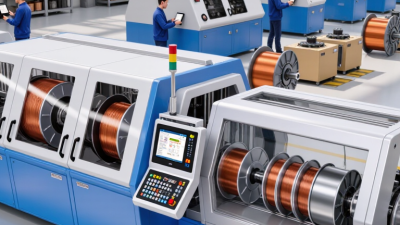
China Top 10 Automatic Motor Coil Winding Machine Suppliers
-
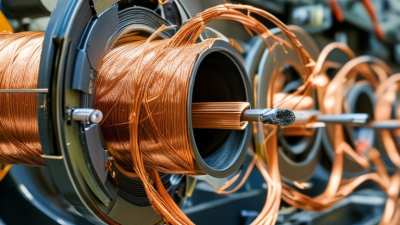
What Is a Motor Coil Winding Machine and How Does It Work?
-
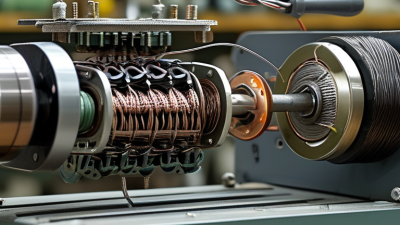
10 Essential Tips for Using an Automatic Motor Winding Machine?
-
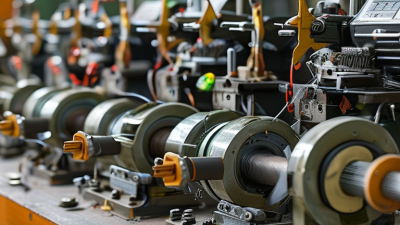
How to Choose the Best Automatic Stator Winding Machine?