Why Choose an Automatic Stator Winding Machine?

Automatic production is changing how manufacturers approach motor assembly. An automatic stator winding machine can place copper wire with repeatable tension, speed, and positioning. This consistency matters when each slot must receive the planned turns without damaging insulation. In a busy workshop, the difference appears in small details: fewer wire crossings, cleaner end turns, and more predictable coil shapes.

Experienced engineers also value control, not only speed. Modern equipment may support programmable winding patterns, tension monitoring, recipe storage, and process records. These functions help teams compare batches and investigate defects before they become expensive returns. A trained operator still matters. The machine needs correct tooling, suitable wire sizes, careful setup, and regular inspection. Automation does not remove responsibility.

There are practical reasons to choose this technology. It can reduce repetitive labor, improve production rhythm, and support stable quality across different motor models. Yet the decision should not be automatic. Some factories may face high tooling costs, limited floor space, or products that change too often. That is where honest evaluation begins. A machine that looks impressive may perform poorly when its software, fixtures, or service support do not match the line. Manufacturers should test sample stators, review cycle data, and confirm maintenance access before purchasing. Small trials reveal more than brochures. This article examines the technical, operational, and financial factors behind an automatic stator winding machine, while recognizing that no single solution fits every workshop.
Why Choose an Automatic Stator Winding Machine?

What Is an Automatic Stator Winding Machine?

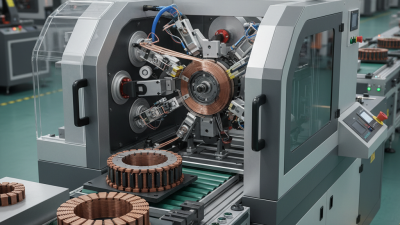
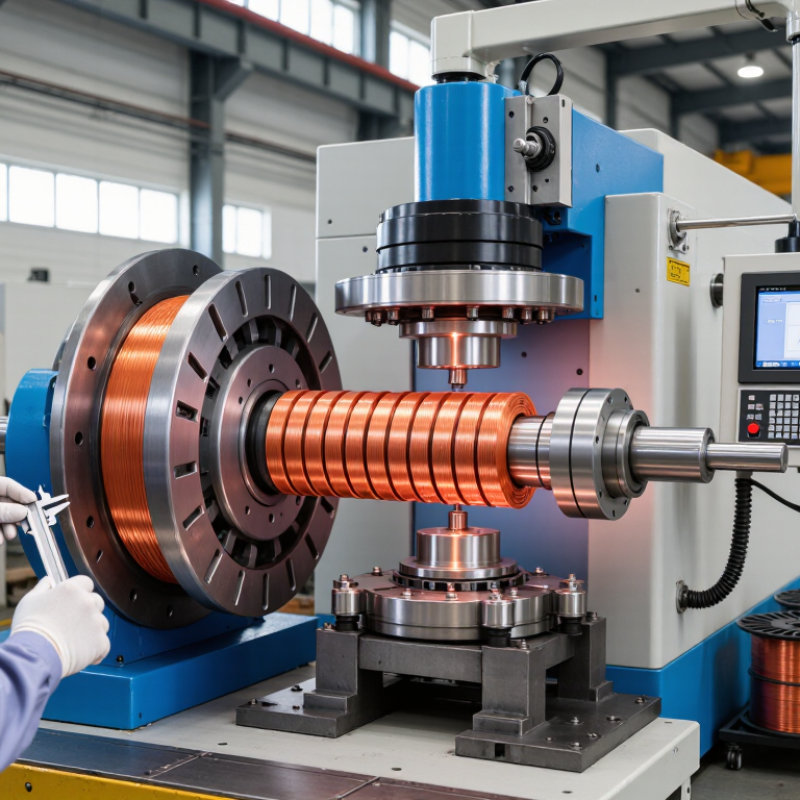
An automatic stator winding machine is production equipment that places insulated copper wire into a motor’s stator slots. It uses programmed motion, wire tension control, and position sensors to create consistent coils. The machine may also index the stator, change winding paths, cut wire, and record process data.

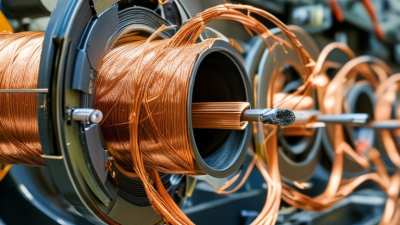
The details matter. A guide nozzle moves around the stator teeth while the spindle maintains controlled rotation. Correct tension prevents loose loops, damaged insulation, and uneven coil height. Operators still check wire size, slot liners, tooling alignment, and electrical resistance. “Automatic” does not mean maintenance-free. A small calibration error can spread across hundreds of stators.

Demand for repeatable motor production is growing.

The International Energy Agency reported more than 14 million electric cars were sold worldwide in 2023, representing about 18% of new car sales. This growth increases pressure on manufacturers to produce compact, efficient traction motors with stable quality. Industry 4.0 reports also emphasize traceability and connected equipment, although real factory integration is often less seamless than promotional language suggests. In practice, an automatic stator winding machine is valuable because it reduces manual variation, shortens cycle times, and supports measurable process control. Its return depends on product volume, winding design, changeover frequency, and operator training.

How Does an Automatic Stator Winding Machine Work?

An automatic stator winding machine forms copper coils around a stator core through a controlled sequence. The operator places the core into a precision fixture. Sensors check its position before winding starts. A tension unit guides the wire smoothly from the supply spool. This detail matters. Uneven tension can create loose turns, damaged insulation, or irregular coil shapes.

The controller then rotates or indexes the stator while a winding head moves across each slot. It follows programmed turns, speed, wire placement, and stopping points. After completing one coil, the machine may cut, strip, or secure the wire end.

Some systems also insert insulation and record production data. Sensors can detect broken wire, abnormal tension, missing turns, and incorrect positioning during operation.

Practical results still depend on setup. A machine can repeat a wrong setting perfectly. Experienced technicians verify the wire diameter, slot dimensions, tension range, and winding program before production. They also inspect the first pieces and measure electrical resistance. Small deviations may appear near the slot entrance. That is where careful adjustment becomes necessary. Automatic winding improves consistency and output, but it does not remove the need for calibration, maintenance, and human judgment.

What Are Its Main Features and Capabilities?

An automatic stator winding machine combines controlled movement, accurate wire placement, and repeatable production. Its main capability is coordinating spindle speed, wire tension, and nozzle travel with minimal operator intervention. This coordination helps create consistent coils across multiple stator sizes.

Modern machines often include programmable recipes for wire diameter, turns, winding speed, and coil shape. Operators can store these settings and recall them for repeat orders. Servo motors support precise positioning, while tension sensors reduce loose or uneven wires. Automatic wire cutting, stripping, and coil forming can shorten handling time. Some systems also detect wire breaks and stop before a damaged winding reaches the next process.

That sounds simple. It is not always simple.

In real production, insulation thickness, ambient temperature, and slot design can affect results. A recipe that works well today may need adjustment after a material change. Technicians should inspect tension readings, wire alignment, and end connections during setup. Clear fault messages also matter because they reduce diagnostic time and support safer maintenance. Data logging can reveal repeated stoppages, excessive tension, or declining output. These details help engineers improve the process instead of relying only on visual checks.

The machine should match the required stator diameter, slot count, wire range, and production volume. Flexible tooling supports more product variations, but greater flexibility may require more setup knowledge. Careful validation remains necessary before full-scale operation.

Why Choose an Automatic Stator Winding Machine? - What Are Its Main Features and Capabilities?

Feature or Data Dimension Typical Industrial Range Main Features and Capabilities Production Value
Winding Method Needle winding, flyer winding, or insertion-based winding The machine can guide enamelled copper wire into stator slots according to a programmed winding pattern. Supports repeatable coil geometry and consistent phase-to-phase production.
Compatible Stator Size Commonly about 20–200 mm stator outside diameter, depending on machine design Tooling, spindle dimensions, and winding heads can be configured for specific stator families. Allows one production platform to serve multiple motor models when change parts are available.
Wire Diameter Approximately 0.10–1.20 mm enamelled copper wire Electronic tension control and programmable motion help maintain stable wire placement across different wire sizes. Improves winding density and reduces the risk of loose turns or wire damage.
Winding Speed Approximately 1,000–6,000 rpm, depending on wire size, coil design, and tooling Servo-driven winding systems regulate spindle speed and acceleration during the automatic cycle. Provides higher throughput than manual winding while maintaining controlled motion.
Slot and Pole Compatibility Often configurable for common 2-, 4-, 6-, and 8-pole motor designs Programmable slot sequences, coil pitches, and winding directions accommodate different stator layouts. Makes the equipment suitable for a broader range of AC, BLDC, and small industrial motors.
Winding Accuracy Turn-count accuracy is commonly controlled electronically, with machine capability depending on specification Servo positioning, encoder feedback, and recipe-based parameters control turns, pitch, speed, and wire movement. Reduces variation in resistance, inductance, fill factor, and electromagnetic performance.
Wire Tension Control Programmable closed-loop or electronically assisted tension control The system monitors and adjusts wire tension during acceleration, winding, crossover, and stopping. Helps prevent wire breakage, slack turns, insulation damage, and uneven coils.
Automation Level Automatic winding with manual loading, or integrated loading and unloading Depending on configuration, the machine can perform positioning, winding, wire cutting, end preparation, and unloading. Reduces direct operator involvement and supports more stable cycle times.
Typical Cycle Time About 10–60 seconds per stator or winding operation, depending on design Cycle time is influenced by the number of turns, wire diameter, coil pattern, indexing movements, and loading method. Enables production planning based on measurable and repeatable operating cycles.
Recipe Management Digital storage of multiple product programs Operators can save parameters such as turn count, winding speed, pitch, tension, direction, and dwell time. Shortens setup work and helps prevent incorrect parameter entry during model changes.
Changeover Typically 15–60 minutes, depending on tooling and product variation Quick-change fixtures, modular guides, and stored recipes simplify transitions between compatible stator models. Improves equipment utilization in mixed-model production environments.
Quality Monitoring Real-time monitoring of alarms, wire breakage, position, and process status Sensors and PLC controls can stop the cycle when abnormal tension, wire loss, positioning errors, or other faults are detected. Limits the number of defective units reaching downstream assembly or testing.
Data and Traceability Optional production counters, alarm history, and interface connectivity Production data can be recorded locally or transferred to factory monitoring systems when communication functions are included. Supports process analysis, maintenance planning, and production traceability.
Operator Interface Touchscreen HMI with PLC-based control The interface normally provides recipe selection, parameter adjustment, alarm display, manual jog functions, and status monitoring. Simplifies operation and reduces dependence on manual adjustment experience.
Safety Functions Guard doors, emergency stop, interlocks, and fault alarms Safety systems can stop motion when access doors open or unsafe operating conditions are detected. Creates a safer working environment and supports structured industrial operation.
Compressed Air Requirement Often approximately 0.4–0.6 MPa for pneumatic accessories Pneumatic clamps, cutters, guides, or positioning devices may be used depending on the machine configuration. Provides reliable fixture movement and auxiliary process control where required.
Electrical Supply Commonly three-phase industrial power, such as 380–480 V, depending on region and configuration Servo drives, heaters, controllers, sensors, and auxiliary systems are integrated into a centralized electrical cabinet. Supports coordinated machine operation and easier maintenance access.
Maintenance Requirements Routine cleaning, lubrication, wire-path inspection, and periodic calibration Accessible guides, tension devices, fixtures, and control diagnostics help maintenance personnel identify wear or faults. Helps preserve winding accuracy and reduce unplanned downtime.

Note: The ranges shown are typical industry values for automatic stator winding equipment. Actual performance depends on stator geometry, winding pattern, wire specification, tooling, automation configuration, and product quality requirements.

Why Choose Automatic Stator Winding Over Manual Winding?

Why Choose an Automatic Stator Winding Machine?

Why Choose Automatic Stator Winding Over Manual Winding?

Manual winding can suit prototypes, repairs, and low-volume production. However, it relies heavily on operator skill and attention. A technician must control wire tension, coil pitch, turns, and placement by hand. Small variations can affect resistance, magnetic balance, and final motor performance. Automatic stator winding uses programmed settings to repeat these actions with greater consistency. It can also record winding parameters for quality checks and process tracing.

The International Federation of Robotics reported 541,302 new industrial robots were installed worldwide in 2023. This broader trend reflects manufacturers’ demand for repeatable production and reduced physical strain. Deloitte’s 2024 Smart Manufacturing and Operations Survey found that 86% of surveyed leaders viewed smart manufacturing as a major competitiveness driver. Automatic winding supports that direction through controlled speed, tension monitoring, and digital production records. Less fatigue matters too.

Automation is not magic.

A poorly designed program can repeat mistakes faster. Skilled operators remain important for setup, inspection, and troubleshooting. The machine also requires investment, training, and preventive maintenance. Even so, automatic winding becomes more practical when production volumes rise or quality tolerances become tighter. It can help reduce dependence on individual hand skills while making defects easier to identify. Industry reports support automation’s value, but each factory should confirm the result through its own cycle-time, yield, and maintenance data.

How to Select the Right Automatic Stator Winding Machine?

Choosing the right automatic stator winding machine begins with the motor, not the machine catalog. Record the stator diameter, stack length, slot number, wire diameter, and winding method. These details determine whether the equipment can handle your actual production.

Check the winding speed carefully. Higher speed is useful only when wire tension remains stable. Uneven tension can create loose turns, damaged insulation, or inconsistent coil shapes. Ask for test data using your wire and stator samples. A demonstration with a different material proves very little. It may even hide the real problem.

Changeover time also matters. If your factory produces several models, confirm how quickly operators can adjust tooling, winding parameters, and wire guides. A clear control interface reduces training errors. Check maintenance access, spare-part availability, guarding, and emergency-stop functions. The machine should support traceable settings and repeatable quality checks.

Do not judge by price alone. A low-cost machine may require more manual correction and longer setup time. However, the most expensive option is not automatically suitable either. Review actual output, rejection rates, energy use, and operator workload. A careful supplier should explain limits, not promise perfection. Leave room for testing; the first selection can still be wrong.