
7 Best Micro Coil Winding Machines for Global Buyers

Choosing a micro coil winding machine is a practical decision, not a catalog exercise. Buyers need to match wire size, coil geometry, production volume, and required tolerances. A machine that looks impressive on paper may still struggle with fine wire or frequent product changes. Small details matter. Think of a thin copper strand feeding unevenly, or a bobbin that needs careful alignment before winding begins.

This guide compares seven options for global buyers, focusing on winding capability, control systems, changeover needs, supplier support, and total operating cost. It also considers what specifications can—and cannot—tell you. A high-speed rating alone does not guarantee consistent coils. Ask about sample runs, setup procedures, spare parts, and operator training. These checks are not glamorous, but they can prevent avoidable production delays.

I can’t responsibly attach a quotation to a named industry expert without a verifiable source. Instead, here is an editorial principle for this comparison: “Choose for repeatable winding, not headline speed.” Use it as a prompt, not a sourced expert quotation. The right choice depends on your actual wire, bobbin, and output targets. Even a detailed buyer’s checklist has limits; real material trials may reveal issues a specification sheet misses.
7 Best Micro Coil Winding Machines for Global Buyers

Understanding Micro Coil Winding Machines and Their Applications

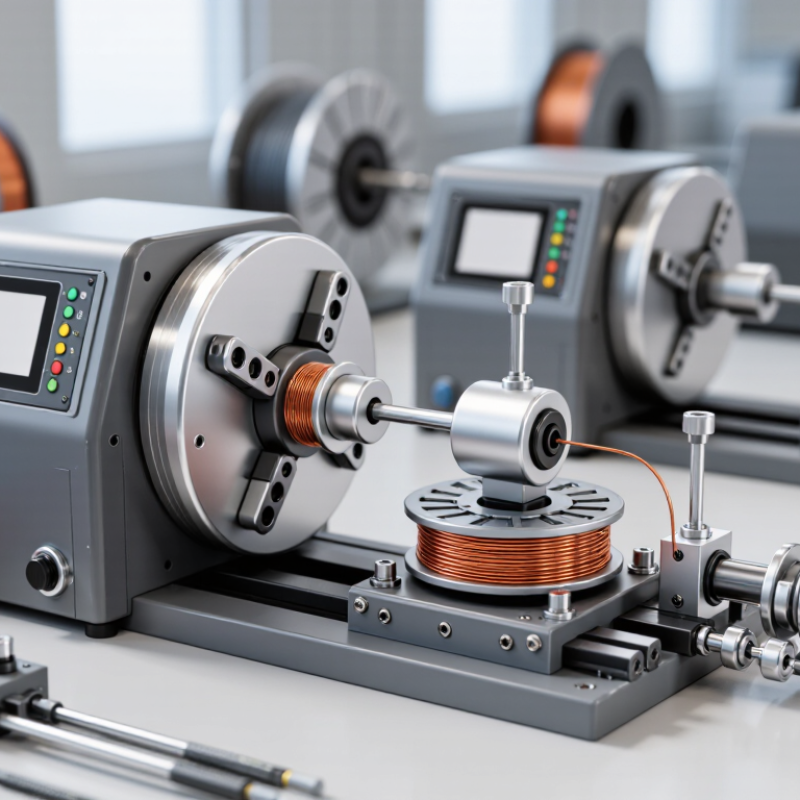
A micro coil winding machine forms fine wire into compact, repeatable coils for electrical and sensing components. It controls wire tension, spindle speed, traverse, and turn count. On a small bobbin, even a slight tension change can loosen the first layer or damage enamel insulation. That detail matters. Applications include miniature motors, relays, inductors, medical sensors, and telecommunications assemblies. Each product has different requirements.

For buyers, machine capability should match wire diameter, coil geometry, and production volume. Check the supported wire range, winding accuracy, programmable recipes, tooling, and changeover time. Ask how operators thread the wire and detect breaks. A clear setup routine can reduce scrap and help new operators learn. Published precision figures rarely tell the whole story; sample winding with your actual wire and bobbin is more useful.

Automation can improve consistency, but it cannot correct poor insulation, unstable material batches, or an unsuitable former. Request test coils, inspect layer placement under magnification, and measure resistance or inductance where relevant. For international installations, confirm power requirements, documentation language, spare-part access, and service arrangements before purchase. These checks are practical, not glamorous. I would still leave room for trial runs, because real production conditions can reveal small issues that a polished demonstration may miss.

7 Best Micro Coil Winding Machines for Global Buyers: Typical Wire Diameter Ranges by Application

These indicative ranges show the fine magnet-wire sizes commonly associated with selected micro-coil applications. Actual requirements vary with the coil design, material, and winding process; confirm machine capabilities with the manufacturer.

Key Features That Distinguish Micro Coil Winding Machine Types

Micro coil winding machines differ most in how they control wire, motion, and repeatability. Manual units suit prototypes and short runs, where an operator guides fine wire around a small bobbin. Semi-automatic machines add programmable turns and traverse settings. Fully automatic systems can coordinate feeding, winding, cutting, and part handling. More automation is not always better. A complex setup may slow frequent product changes.

Look closely at tension control, spindle configuration, and wire guidance. Thin enamelled wire can kink or stretch if tension varies; a damaged coil may look acceptable but fail electrical testing. Single-spindle machines offer focused control, while multi-spindle designs can improve output when coil geometry stays consistent. Ask suppliers for sample coils at your actual wire diameter and target turn count. A specification sheet can still mislead.

Demand context matters, but it does not define machine performance. The International Energy Agency’s Global EV Outlook 2024 reports nearly 14 million electric car sales in 2023, about 18% of global car sales. That growth supports demand for compact electrical components, including motor and sensor coils, but buyers should match equipment to their own process. Compare winding accuracy, changeover time, footprint, and inspection options. Then check whether the machine handles your bobbin dimensions and wire tension without constant adjustment. One detail is easy to miss: real production wire may behave differently from a sample spool.

7 Best Micro Coil Winding Machines for Global Buyers - Key Features That Distinguish Micro Coil Winding Machine Types

Machine Type How It Winds Key Distinguishing Features Best-Fit Applications What Buyers Should Check
Manual Micro Coil Winder An operator guides the wire and controls winding, usually with a hand-operated or simple powered spindle. Simple setup, direct operator control, and low automation. Production consistency depends heavily on operator skill. Prototypes, repair work, small research batches, and occasional production. Spindle speed control, tension adjustment, workholding, safety guarding, and availability of suitable mandrels.
Semi-Automatic Precision Winder A motorized spindle performs the winding while the operator loads parts, sets parameters, or guides some operations. Combines powered winding with operator oversight; can improve repeatability without the complexity of a fully automated line. Small-to-medium batches and applications that require frequent product changes. Programmable turns and speed, tension control, recipe storage, setup time, and compatibility with the required wire and bobbin.
CNC Single-Spindle Winder Computer-controlled axes coordinate spindle rotation and wire traverse to place turns in a programmed pattern. Precise motion control and repeatable winding paths; suitable for detailed layer or pitch patterns. Consistent production of small coils with defined winding patterns, including sensor and electronics coils. Axis resolution, programming interface, traverse capability, tension system, changeover process, and data backup options.
Multi-Spindle Winder Several winding spindles operate in parallel, either under a shared control system or coordinated station controls. Can increase output when multiple parts can be wound simultaneously; setup and monitoring requirements may be greater than for a single spindle. Repeat orders and higher-volume production of similar coils. Number of usable stations, station-to-station consistency, independent or shared settings, loading method, and floor-space requirements.
Flyer-Type Winder A rotating flyer carries the wire around a stationary or supported coil-forming area. The flyer’s path delivers wire around the workpiece; the design can suit winding arrangements where conventional spindle rotation is impractical. Specialized coil geometries and production setups that benefit from a flyer-based wire path. Flyer clearance, wire routing, tension stability, workpiece support, and whether the machine accommodates the intended coil geometry.
Needle Winder A guide needle places wire through or around a coil former, often in confined spaces or around fine features. Allows wire placement in geometries that can be difficult to reach with a conventional rotating spindle. Compact coils, miniature components, and winding around small or restricted formers. Needle access and exchange, wire-path clearance, positioning accuracy, tension control, and the range of compatible former shapes.
Toroidal Micro Winder A shuttle or equivalent wire-carrying mechanism passes wire through the center of a ring-shaped core and around its circumference. Designed for toroidal cores, where wire must be threaded through the core opening; core dimensions and opening size affect suitability. Small toroidal inductors, transformers, and other ring-core windings. Core outer diameter and inner opening, shuttle capacity, wire handling, turn-count control, and loading or unloading method.

Machine capabilities depend on the specific configuration, wire material and diameter, coil geometry, tooling, and production process. Confirm sample-winding results and required tolerances with the equipment supplier before purchase.

How to Evaluate Machines for Production Needs and Wire Specifications

A micro coil winding machine should match the work, not just the target output. Estimate daily coil volume, shift length, and changeover frequency. A fast spindle may look impressive, but frequent setup changes can erase its advantage. Check whether the machine supports the required coil diameter, winding width, and turn count. Small details matter.

Wire specifications deserve equal attention. Compare the machine’s stated wire range with the actual conductor diameter, including insulation. Fine wire can break under excessive tension; thicker wire may need stronger guides and a different feed setup. Ask how tension is adjusted and whether it stays stable as the supply spool unwinds. Test the intended wire, not a convenient substitute. A short sample run can reveal rough edges, crossed turns, or inconsistent coil height.

Production trials should use realistic operators and materials. Record cycle time, wire breaks, setup time, and variation across several coils. One clean sample proves little. I have seen early estimates miss the time needed for careful threading and alignment; those assumptions deserve a second look. Also check how easily operators can access guides, replace tooling, and repeat stored settings. Clear maintenance instructions and available technical support can matter as much as speed when production schedules tighten.

Seven Micro Coil Winding Machines for Global Buyers Compared

Seven micro coil winding machine options suit different jobs, not one universal production line. A manual bench winder offers low cost and quick setup for prototypes. It depends heavily on operator skill. A semi-automatic spindle model improves repeatability for short runs, while a programmable single-spindle unit stores winding recipes for frequent changeovers.

A multi-spindle machine raises output when one coil design dominates. It can be a poor fit when product changes are constant. Flyer winding handles fine wire with controlled tension, but guides need careful adjustment. Needle winding reaches narrow or awkward bobbins, though threading takes patience. A precision traverse model places turns evenly across a defined width. It helps produce consistent layers, but added controls mean more training.

Global buyers should compare wire-diameter range, bobbin dimensions, winding speed, tension control, and recipe storage. Ask for a sample coil made with your actual wire. Inspect the turns under magnification; small overlaps matter. Also check voltage options, manuals, remote support, spare-part lead times, and operator training. These details vary by supplier and destination. I would not rank machines by speed alone. Real production is messier than a catalog table, and that is worth admitting.

Assessing Supplier Support, Compliance, and Total Ownership Costs

When comparing seven micro coil winding machines, supplier support deserves the same scrutiny as winding speed and accuracy. A sample run can reveal whether a machine handles fine wire without frequent breaks, but it cannot show how quickly help arrives after installation. Ask who provides operator training, what response times are typical, and whether spare guides, tensioners, and sensors are stocked near your facility. Small gaps matter. Request a written service plan and confirm which tasks your staff can perform safely.

Compliance needs checking against the machine’s destination and intended use. Request current electrical and safety documentation, clear operating instructions, and a list of required site utilities. Have a qualified local reviewer confirm that the documents fit your requirements; a supplier’s general statement is not enough. Ask for a detailed cost estimate covering tooling, shipping, commissioning, training, maintenance, and likely replacement parts. Then compare those costs over several years, not just the purchase price. I would also leave room for uncertainty: production volumes and wire types change, and a precise forecast can still miss. Include the cost of a trial or later setup changes where possible.