Top 10 Stator Winding Machines for Efficient Motor Manufacturing?

In the realm of motor manufacturing, efficiency is key. A reliable stator winding machine plays a crucial role in this process. These machines are designed to streamline production while ensuring high-quality output. Selecting the right equipment is pivotal for manufacturers aiming to enhance productivity.

Many machines on the market stand out for their unique features. Some offer advanced technology, while others focus on user-friendliness. However, not every machine meets the manufacturing demands. Companies must consider their specific needs carefully. The wrong choice can result in inefficiencies and increased costs.

While the innovations in stator winding machines appear promising, challenges remain. Businesses often face issues with integration and maintenance. These factors can hinder overall performance. Reflecting on these challenges is essential for companies striving to optimize their manufacturing processes. A thoughtful approach will lead to better decisions in the long run.
Top 10 Stator Winding Machines for Efficient Motor Manufacturing?

Top 10 Stator Winding Machines Overview in Motor Manufacturing

In the competitive landscape of motor manufacturing, choosing the right stator winding machine is crucial. Industry reports show that automation in this field can boost productivity by up to 30%. A well-chosen machine streamlines operations, improving efficiency and reducing labor costs. High-quality winding machines can also enhance winding accuracy, crucial for motor performance.

However, not all systems are created equal. Some machines may struggle with complex winding patterns, leading to inefficiencies. In a survey conducted by industrial analysts, 45% of manufacturers reported difficulties in adapting their current machines for new designs. This highlights the need for flexible solutions. Many machines require frequent maintenance, impacting production timelines. It's essential for manufacturers to evaluate reliability and support before making a purchase.

Additionally, advanced features like programmable controls can significantly impact manufacturing outcomes. A recent study found that 70% of high-efficiency motors utilize machines with these capabilities. However, integrating these technologies can be challenging. Operators must be adequately trained to maximize benefits. Thus, careful consideration of both technology and workforce readiness is essential for success in motor manufacturing.
Key Features of Efficient Stator Winding Machines

Efficient stator winding machines play a crucial role in motor manufacturing. These machines can significantly enhance production speed and consistency. One key feature is their ability to optimize winding patterns. By using advanced algorithms, they can create precise coil placements. This reduces the potential for errors during assembly.

Another important aspect is the ease of operation. User-friendly interfaces help operators learn quickly. However, some machines can still be complex for newcomers. Training is essential to avoid costly mistakes. Moreover, flexibility in handling various coil sizes is a significant advantage. Machines that can adapt to different specifications save time and effort.

Additionally, energy efficiency is becoming more critical. Machines that consume less power can drive down operational costs. These machines often have built-in monitoring systems. They track energy usage and production speeds. Yet, manufacturers must consider maintenance needs. Regular upkeep ensures longevity and reliability. Balancing performance with ongoing care requires careful planning.

Top 10 Stator Winding Machines for Efficient Motor Manufacturing

Model Voltage (V) Power (W) Winding Speed (rpm) Control Type Weight (kg) Key Features
Model A 220 3000 1500 Automatic 120 Compact design, user-friendly interface
Model B 230 3500 1600 Manual 130 High versatility, adjustable settings
Model C 240 4000 1800 Digital 150 Smart technology, energy-efficient
Model D 220 3300 1450 Hybrid 140 Robust construction, low maintenance
Model E 240 3600 1550 Fully Automatic 135 Fast setup, operator-friendly
Model F 220 3200 1650 Semi-Automatic 125 Durable design, easy integration
Model G 230 3900 1750 Intelligent 155 Advanced diagnostics, high performance
Model H 240 4300 1900 Programmable 160 High capacity, customizable features
Model I 230 3700 1600 Automated 145 Easy operation, precise winding
Model J 240 4100 1750 Fully Customizable 150 Optimized for productivity, technology-driven

Efficiency Metrics: Production Rates and Energy Consumption

Top 10 Stator Winding Machines for Efficient Motor Manufacturing?

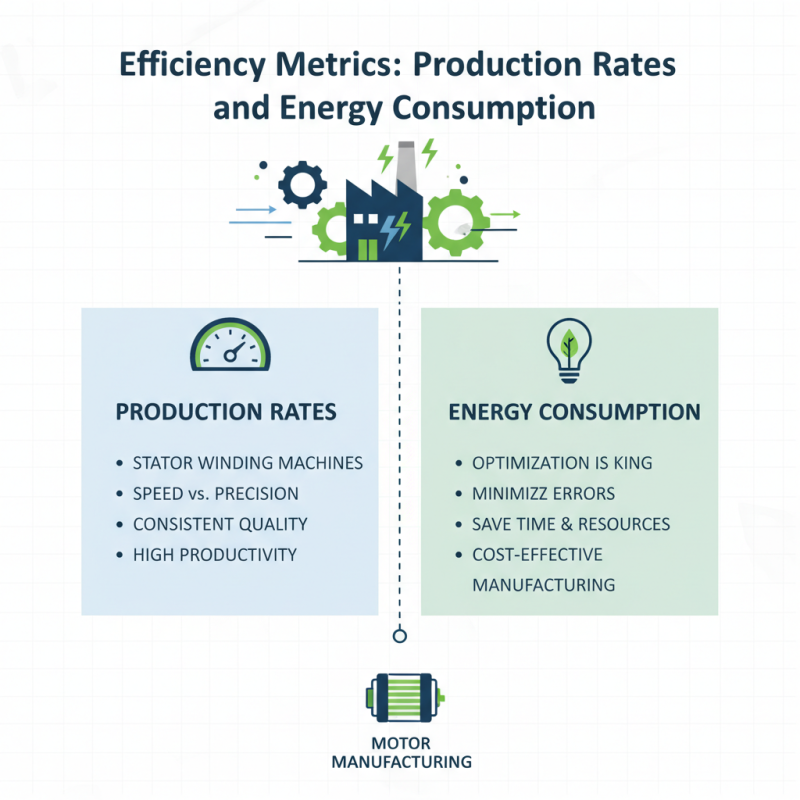
In the world of motor manufacturing, efficiency is king. Stator winding machines play a crucial role in optimizing production rates. These machines must balance speed with precision. High-speed operations can lead to errors. A single mistake can cost time and resources. Therefore, manufacturers look for machines that provide consistent quality while maintaining productivity.

Energy consumption also affects efficiency metrics. Machines with lower energy usage can greatly reduce operational costs. However, not all machines balance power and performance effectively. Some may consume more energy to achieve faster results, leading to higher bills in the long run. It’s vital to analyze energy usage along with production rates. This creates a comprehensive understanding of overall efficiency.

Investing in advanced winding technologies is essential. Yet, the challenge remains to find equipment that meets both speed and energy demands. Automation and smart technologies seem promising but require a thorough assessment. Companies must reflect on their unique needs and goals to make informed choices. A perfect solution does not exist, but continual improvement is the aim.

Market Leaders: Ranking the Top Stator Winding Machine Manufacturers

When it comes to motor manufacturing, stator winding machines play a crucial role. These machines ensure the precision and efficiency needed for high-quality electric motors. The market offers a range of options that cater to different manufacturing needs. Each machine has its unique set of features, which can sometimes lead to confusion.

Many manufacturers claim to offer the best solutions. However, not every machine lives up to its promises. Some lack durability, while others fall short in speed. It's essential to evaluate each machine critically. Efficiency is key, but functionality should not be overlooked. Factors like ease of use and maintenance also matter.

Investing in the right stator winding machine can transform a manufacturing process. The top manufacturers emphasize innovative technology and reliable performance. Yet, users must remain vigilant. Every choice carries risk, and needs may evolve. Companies must constantly review their options to ensure they are aligned with their production goals. Continuous improvement is vital for success in this competitive field.

Top 10 Stator Winding Machines - Manufacturing Efficiency Ratings

Future Trends in Stator Winding Technology and Industry Innovations

Top 10 Stator Winding Machines for Efficient Motor Manufacturing?

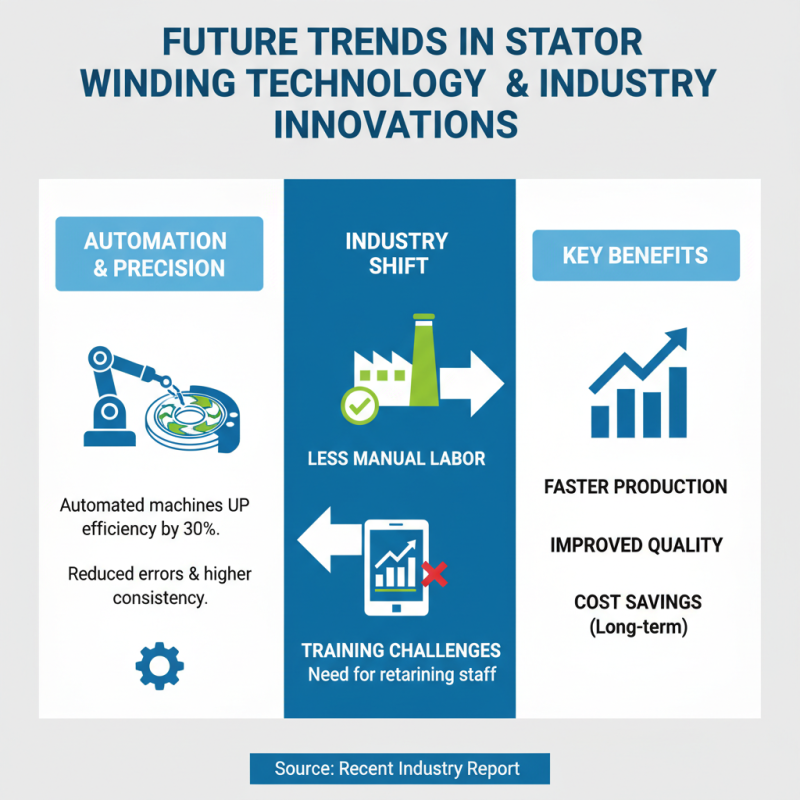
The stator winding technology is evolving rapidly. New trends focus on automation and precision. According to a recent industry report, automated machines increase production efficiency by up to 30%. This shift means less manual labor and higher consistency. It also reduces errors significantly. However, this transition poses challenges for manufacturers. Many need to retrain staff to operate these advanced systems.

Another trend is the integration of smart technology. Sensors and IoT devices can monitor winding processes in real-time. Insights from data analytics can improve quality control. Reports suggest that companies embracing these innovations see a 20% drop in defects. Yet, relying heavily on technology raises concerns about security and data privacy. The industry must address these risks moving forward.

Lastly, eco-friendly practices are gaining traction. Sustainable materials are becoming popular for winding machines. Research indicates that these innovations can reduce waste by nearly 25%. However, transitioning to sustainable options can be costly. Manufacturers must balance sustainability with profitability. This creates room for reflection on the industry's future path.