
Top Rail Maintenance Tools for Efficient Track Management?
The efficiency of rail operations greatly depends on effective track management. Rail Maintenance Tools play a crucial role in ensuring the safety and longevity of railway systems. According to a recent report by the International Union of Railways, the global rail maintenance market is projected to reach $XX billion by 2025, highlighting the growing need for innovative solutions.
Expert Mark Thompson, a renowned authority in rail infrastructure, stated, "Investing in the right Rail Maintenance Tools can significantly reduce long-term operational costs." This emphasizes the importance of selecting the proper tools to enhance maintenance practices. Rail maintenance is complex and requires precision. Tools must be durable and efficient to handle various track conditions effectively.
Despite advancements, many rail operators still face challenges with outdated equipment. There is a pressing need for modernization. The transition to state-of-the-art Rail Maintenance Tools is not just beneficial. It is essential for improved safety and reliability. Continuous evaluation and adaptation of maintenance strategies can help address these challenges effectively. Investing wisely is key.
Essential Types of Rail Maintenance Tools for Track Management
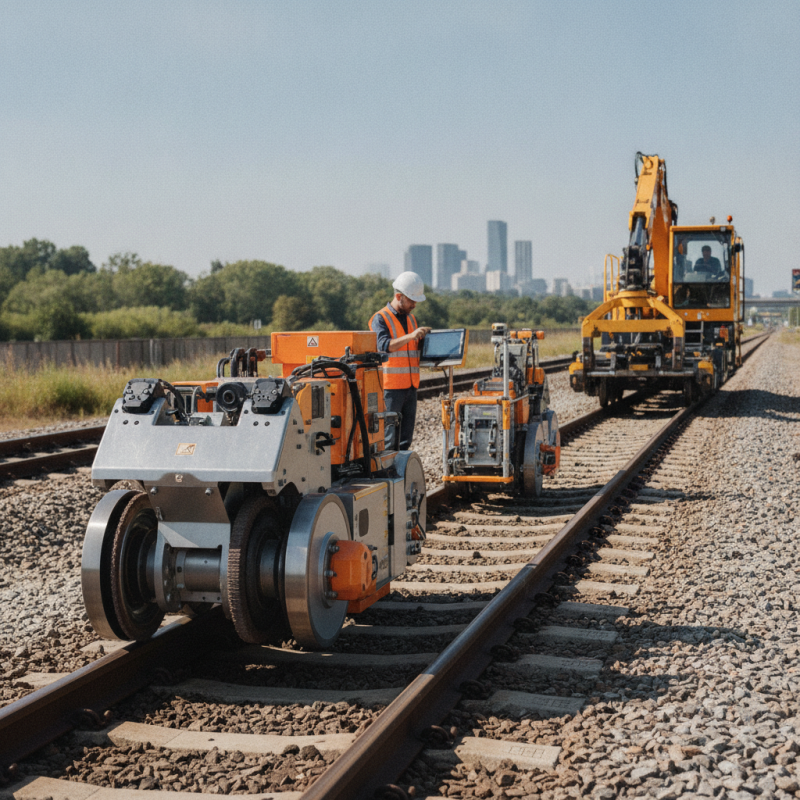
Maintaining rail tracks is critical for safety and efficiency. The proper tools are essential for effective track management. One primary category includes rail inspection tools, such as ultrasonic testers and rail flaw detectors. These tools identify defects that visually confirm can be hard to detect. According to a report from the Federal Railroad Administration, more than 25% of rail accidents are due to track-related issues.
Another important category is rail maintenance machinery. This includes rail grinders and welding equipment. Regular grinding removes surface defects and improves ride quality. A study by the Transportation Research Board found that using grinders can extend rail life by up to 30%. However, not all railways have adopted these technologies consistently, leading to varying maintenance standards.
Moreover, hand tools play a vital role in track repair. Items like spike pullers and rail saws help crews respond quickly to any onsite issues. A mismatch in tools can slow down repairs, which might contribute to increased downtime. Industry experts suggest that proper training in using maintenance tools can significantly enhance repair efficiency, yet many workers still lack this crucial knowledge.

Importance of Regular Rail Maintenance for Safety and Efficiency
Regular rail maintenance is crucial for rail safety and efficiency. According to the Federal Railroad Administration, track-related issues account for 32% of train derailments. This statistic underscores the need for stringent maintenance practices. Regular inspections and timely repairs can prevent accidents and enhance operational efficiency. A well-maintained track reduces the risk of service disruptions and improves travel times.
Industry reports suggest that investing in rail maintenance can yield significant returns. For every dollar spent on maintenance, railroads can save up to four dollars in avoidable accidents and repairs. This reinforces the argument for strong investment in maintenance tools and processes. Essential tools include rail grinders and ultrasonic testing equipment, vital for detecting flaws that might jeopardize safety. Despite the importance of these tools, many operators still hesitate to fully implement regular maintenance schedules.
Neglecting maintenance can result in serious consequences. A prominent case involved a derailment that led to extensive service outages. It revealed gaps in regular inspection routines. Operations need to acknowledge these shortcomings and prioritize track management. Efficient track management relies on a commitment to ongoing maintenance and regular updates of tools used. Ignoring this can have dire implications for rail safety and service efficiency.
Top Rail Maintenance Tools for Efficient Track Management
| Tool Name | Functionality | Importance | Frequency of Use | Estimated Cost (USD) |
|---|---|---|---|---|
| Track Inspection Vehicle | Automated inspection of tracks | Identifies faults early | Daily | $200,000 |
| Rail Grinder | Smoothens and reshapes rails | Enhances contact surface | Monthly | $150,000 |
| Rail Wrench | Tightening and loosening bolts | Maintains track integrity | Weekly | $200 |
| Track Lifting Machine | Lifts track sections for repairs | Facilitates repairs and adjustments | As needed | $50,000 |
| Rail Saws | Cuts rail to required lengths | Precision in rail fitting | Weekly | $5,000 |
Key Functions of Rail Inspection Equipment in Track Maintenance
Rail inspection equipment plays a crucial role in track maintenance. These tools help ensure rail safety and efficiency. Inspectors utilize devices to detect track faults early. Regular inspections can prevent accidents and costly repairs. Each tool serves specific functions, enhancing overall track management.
Ultrasonic testing devices are key for identifying internal rail flaws. These tools use sound waves to reveal cracks and other defects. Inspection drones provide a visual overview of track conditions. They cover large areas quickly and capture high-resolution images. Such technology helps identify issues that might go unnoticed.
Despite the advancements, limitations remain. Equipment may not detect all faults instantly. Human oversight is still needed for accurate assessments. As technology evolves, so should inspection protocols. The goal is to combine human judgment with machine precision for optimal results.
Top Rail Maintenance Tools for Efficient Track Management
Best Practices for Using Rail Maintenance Tools Effectively
Effective rail maintenance is crucial for ensuring operational safety and efficiency. Utilizing the right tools can significantly impact track performance. According to the Association of American Railroads, track-related accidents account for nearly 33% of all railway incidents in the U.S. Timely maintenance can decrease these risks, which highlights the importance of using rail maintenance tools correctly.
Safety checks should be a priority. Regular inspections help identify flaws early. Using advanced inspection tools can enhance accuracy. For instance, track geometry cars measure the alignment and stability of tracks. These tools provide data that can be crucial for timely repairs. Real-time data collection leads to informed decision-making, potentially reducing track downtime.
Training crews to use these tools effectively is essential. Knowledge gaps can lead to misuse, resulting in costly mistakes. A recent study by the Federal Railroad Administration showed that inadequate training led to a 15% increase in maintenance errors. Regular training programs can not only improve the efficiency of tools but also ensure compliance with safety standards. Making continuous improvements in these practices can lead to significant advancements in overall network performance.
Emerging Technologies in Rail Maintenance Tool Development
The railway industry is undergoing significant changes due to emerging technologies. Innovations in rail maintenance tools are enhancing track management efficiency. Advanced sensors are impacting the way rail systems monitor conditions.
For example, predictive analytics software can now identify potential failures before they occur. This capability allows for timely maintenance, thereby reducing downtime. Drones equipped with high-resolution cameras facilitate inspections in hard-to-reach areas. They capture detailed visuals of track conditions, identifying issues that human inspectors might miss.
These technologies hold promise, but challenges remain. Training personnel to use these tools effectively is crucial. Additionally, integrating new systems with existing infrastructure can be complex. Rail companies must evaluate the cost versus benefits of adopting these technologies. Embracing innovation is necessary, yet caution is vital when implementing changes in rail maintenance.