

Top 10 Photoelectric Sensors You Need to Know About?

In the world of automation, Photoelectric Sensors play a crucial role. These devices help detect objects and measure distances using light. They are widely used in various industries, from manufacturing to packaging.

Understanding the top 10 Photoelectric Sensors is essential for anyone looking to enhance automation processes. Each sensor has unique features and specifications. Some excel in long-range detection, while others are ideal for small spaces. This variety makes it necessary to evaluate sensor performance carefully.

Choosing the right Photoelectric Sensor can be challenging. Not all sensors perform equally in different environments. Users must consider factors like lighting conditions and object types. A sensor might be perfect in one scenario but inadequate in another. Thus, careful reflection on specific needs is crucial when selecting the ideal sensor.
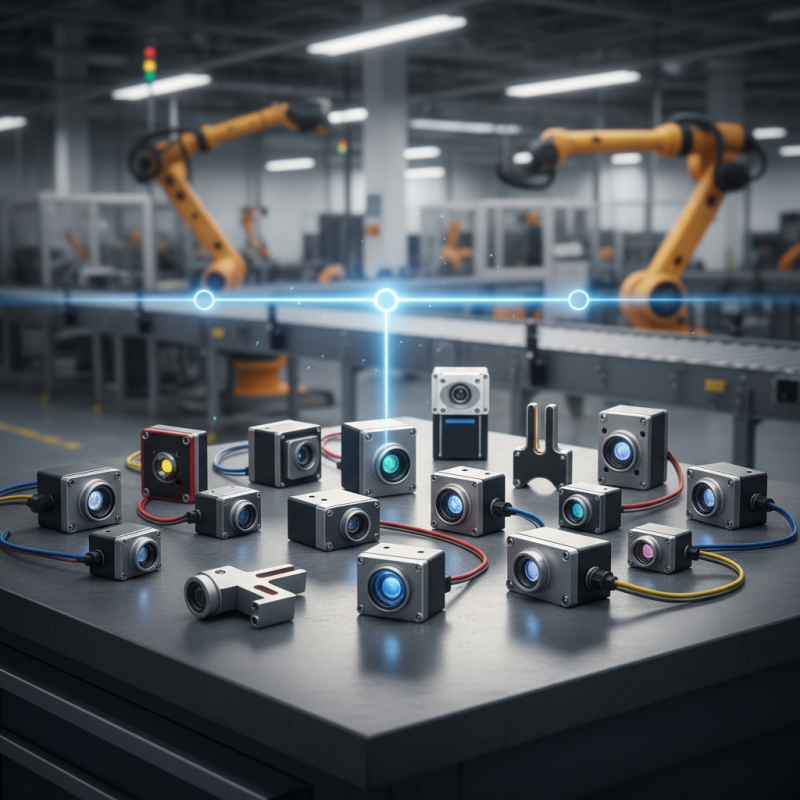
Top 10 Photoelectric Sensors You Need to Know About?

Understanding Photoelectric Sensors: Definition and Functionality

Photoelectric sensors are essential devices used in automation. They detect changes in light and convert them into electrical signals. These sensors can sense objects without physical contact. They use various technologies for detection, including reflected light and infrared beams. This capability makes them versatile in many applications, such as counting items on a conveyor belt.

Understanding how they work is crucial. When an object interrupts the light beam, the sensor reacts. It can signal an alarm or halt machinery. Many people overlook the importance of calibration. If a sensor is improperly calibrated, it may fail to detect properly. This can lead to mistakes in production lines.

Different environments can affect performance. Factors like dust or moisture can interfere with the sensing mechanism. Regular maintenance is often neglected, which can result in failure. Users must frequently check and clean sensors to ensure reliability. Knowing these details can help leverage their full potential in various industries.

Top 10 Photoelectric Sensors: Detection Range Comparison

Types of Photoelectric Sensors: A Comprehensive Overview

Photoelectric sensors are vital in various applications, including industrial automation and safety systems. These sensors convert light into an electrical signal. Their effectiveness hinges on the type of technology used. Understanding these types is essential for selecting the right sensor.

There are three primary categories of photoelectric sensors: through-beam, reflective, and proximity. Through-beam sensors consist of two units, a transmitter, and a receiver. They provide the highest sensitivity and can detect objects at greater distances. Reflective sensors use a single unit, relying on a reflector to bounce light back. They're versatile and often cost-effective. Proximity sensors detect objects without any light interruption, making them suitable for tight spaces. According to industry reports, the global photoelectric sensor market is expected to reach $3.5 billion by 2025, indicating significant growth. However, one must consider actual installation conditions, as improper placements can lead to false readings.

Each sensor type has strengths and weaknesses. Environmental factors like dust or moisture can interfere with sensor performance. It’s critical to assess the specific application environment before installation. A mismatch can render even the best sensor ineffective, highlighting the need for careful evaluation and adjustment.

Key Features to Consider When Choosing Photoelectric Sensors

When selecting photoelectric sensors, understanding key features is crucial. One primary factor is the sensing range. Some sensors operate effectively over distances of 0.1 meters, while others can reach up to 20 meters. The application demands will dictate the necessary range.

Another important feature is the type of emitted light. Sensors typically use infrared or visible light. According to recent industry reports, infrared-based sensors are most common in industrial settings for their reliability. However, they may lack the precision needed in certain applications, like packaging.

Response time is another aspect to consider. Some sensors trigger in milliseconds, while others may take longer. A recent study highlighted that 30% of production errors are due to inadequate response times in sensor technology. Additionally, environmental resilience is key. Sensors exposed to harsh conditions require robust housing and effective sealing. This choice impacts functionality over time. Balancing these features can be challenging, and often compromises must be made.

Top 10 Photoelectric Sensors: Reviews and Highlights

In the world of automation, photoelectric sensors are vital. They detect objects without contact. Different types serve various industries. Many sensors use light beams, creating a reliable detection system. These sensors can be categorized into different styles, like through-beam, retro-reflective, and diffuse. Each type has distinct features and suitable applications.

Through-beam sensors provide excellent performance at long distances. They require two separate units, which can complicate installation. Retro-reflective sensors, on the other hand, are easier to set up. They bounce light off a reflector, requiring less space. However, they may struggle with highly reflective surfaces. Diffuse sensors combine both features, detecting objects within a limited range. They are versatile but might produce false readings in complex environments.

When considering a photoelectric sensor, one must reflect on the environment. Factors like ambient light and dust can influence effectiveness. Sensors require regular maintenance to ensure reliability. Users should also think about the installation position. A poorly placed sensor can lead to frequent errors. In the end, choosing a sensor is not just about specifications; it’s about understanding the application.

Top 10 Photoelectric Sensors You Need to Know About

Sensor Type Detection Range Output Type Response Time Operating Temperature
Ultrasonic 300 mm to 6 m NPN 30 ms -20 to 70 °C
Laser 20 mm to 20 m NPN/PNP 1 ms -10 to 50 °C
Capacitive 0 to 3 m NPN 2 ms -25 to 70 °C
Photoelectric 50 mm to 8 m PNP 0.5 ms -20 to 60 °C
Inductive 0 to 2 m NPN 0.3 ms -25 to 70 °C
Fiber Optic 5 mm to 10 m PNP 0.1 ms -10 to 70 °C
Reflective 30 mm to 5 m NPN 4 ms -20 to 70 °C
Thru-beam 1 mm to 10 m NPN/PNP 0.5 ms -20 to 60 °C
Smart Sensors 0 to 15 m NPN/PNP 0.2 ms -10 to 50 °C
Wireless Sensors 0 to 100 m Digital 1 ms -20 to 60 °C

Applications of Photoelectric Sensors in Various Industries

Photoelectric sensors play a crucial role across various industries. Their applications range from manufacturing to logistics. These sensors detect objects without physical contact. They work by emitting light and reading reflections. It’s a simple mechanism with profound impact.

In manufacturing, they improve efficiency. Photoelectric sensors monitor conveyor belts. They identify the presence of products with precision. This reduces errors in packaging. In logistics, these sensors track inventory. They help in managing warehouse operations seamlessly. However, environmental factors can interfere with their performance. Dust and dirt may block the sensor's view. Regular maintenance is vital to ensure accuracy.

In the automotive industry, photoelectric sensors are essential for safety. They play a key role in detecting obstacles. Yet, they are not flawless. Variations in light conditions can affect readings. Manufacturers must continuously refine their technology. The potential for misuse exists as well. Awareness and training are necessary to harness their full capabilities. As with any technology, reflection on improvements is essential.