
China Top Marine Flex Hose Manufacturers?
Marine Flex Hose is a small component with a demanding job. It must carry fuel, water, exhaust, or other specified media while facing vibration, moisture, temperature changes, and tight installation spaces. A hose that looks robust on a product page may still be unsuitable for a particular vessel. Details matter.
This guide examines Chinese manufacturers through practical sourcing criteria, not unsupported rankings. It considers product range, stated pressure and temperature limits, reinforcement, end fittings, bend radius, and compatibility with the intended fluid. It also looks at evidence buyers can request, such as technical data sheets, test records, material details, and traceable quality documentation. Claims should be checked against current, product-specific information.
Factory capacity and export experience can help, but they do not replace clear engineering answers. Ask how the manufacturer controls dimensions, inspects finished assemblies, and handles custom lengths or fittings. Compare response quality as well as quoted price. A low-cost hose may create extra work if its specifications are vague or replacement parts are difficult to obtain.
There is no single best supplier for every vessel or application. Some buyers may prioritize short lead times; others may need specialized assemblies or consistent documentation. This comparison offers a starting point, not a substitute for confirming requirements with a qualified marine engineer. Even careful checks can miss a detail. Revisit the assumptions before placing an order.
What Marine Flex Hoses Do on Ships
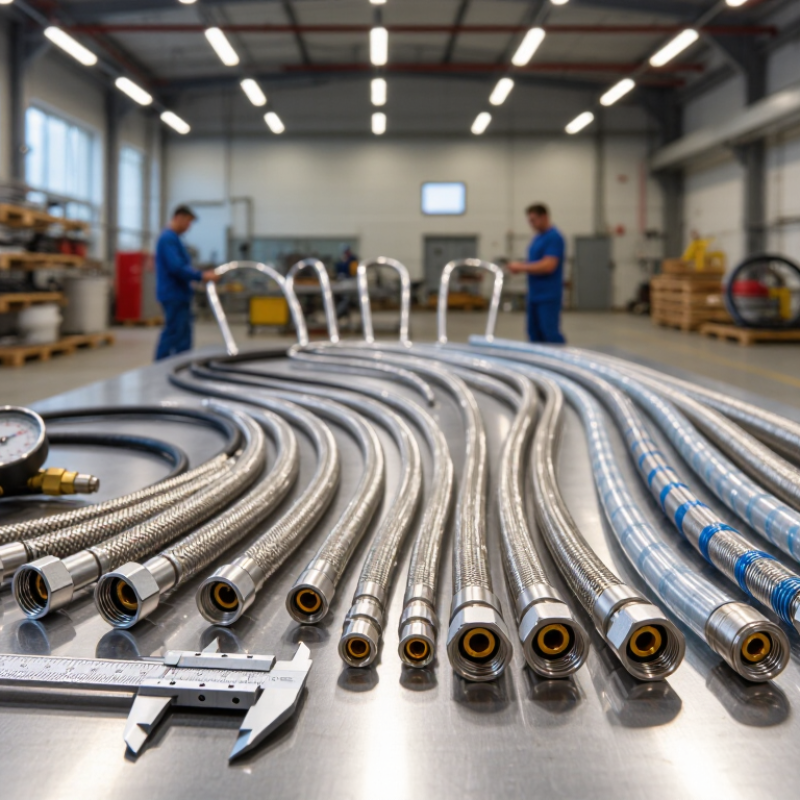
On a ship, marine flex hoses connect equipment to fixed pipework while allowing for vibration and movement. They may carry cooling water, fuel, lubricants, or exhaust, depending on their construction and rating. A hose near an engine can absorb small shifts that would otherwise strain a rigid connection. The movement is subtle. But it matters.
Hoses also help installers route lines through crowded machinery spaces, around bulkheads, and past equipment that needs servicing. Their flexibility is useful, not unlimited: forcing a hose into a tight bend can restrict flow or weaken it over time. I have seen routing choices that looked neat at installation become awkward during maintenance. Leave enough clearance for inspection, and keep hoses away from sharp edges and hot surfaces.
The right hose depends on the fluid, operating temperature, pressure, and expected movement. A general-purpose hose is not automatically suitable for every shipboard system. Check that fittings match, support the hose where needed, and follow the specified bend radius. During routine checks, look for chafing, cracks, swelling, loose clamps, or damp spots. Small signs can be easy to dismiss, especially in a noisy engine room, but they deserve attention. The inspection interval should also reflect the vessel’s use and working conditions.

Materials and Standards Used in Marine Flex Hose Production
Marine flex hose materials must match the fluid, temperature, pressure, and movement involved. Nitrile rubber often suits fuel and oil service, while EPDM handles many water and weather exposures. Neither material is suitable for every fluid. Reinforcement may use textile braid or steel wire to resist pressure, and corrosion-resistant fittings help withstand salt spray. Check the hose maker’s stated limits, not just its appearance.
Standards provide useful checks, but their scope matters. ISO 7840 covers fire-resistant fuel hoses for small craft; ISO 8469 covers non-fire-resistant fuel hoses. These standards do not automatically apply to every marine hose or installation. Buyers should verify the required specification, working pressure, temperature range, bend radius, and fitting compatibility. A hose that kinks near a pump can restrict flow, even when its materials are otherwise suitable. In practice, one choice rarely solves every exposure; service life still depends on inspection and installation.
Tips: Ask for traceable test documentation and confirm the hose’s intended service. Look for cracks, bulges, softened areas, or loose clamps during routine checks. Replace a damaged section promptly; visual checks alone cannot prove internal condition.
| Hose Application | Typical Inner-Tube Materials | Typical Reinforcement and Cover | Relevant Standards | Production and Verification Considerations |
|---|---|---|---|---|
| Marine fuel hose for small craft | Fuel-resistant elastomers are selected for the fuel type and hose design; nitrile rubber (NBR) is commonly used in fuel-contacting layers. | Textile reinforcement is common; the outer cover is selected for resistance to the intended marine environment, including oil, abrasion, and weather exposure. | ISO 7840 covers fire-resistant fuel hoses for small craft. ISO 8469 covers non-fire-resistant fuel hoses for small craft. SAE J1527 also addresses marine fuel hoses. | Confirm the hose is certified or declared for the intended fuel, installation location, and fire-resistance category. Verify construction, markings, and applicable test documentation. |
| Engine seawater cooling hose | Rubber or plastic compounds are selected for seawater, engine-cooling conditions, and the specified temperature range. EPDM is often used where heat and water resistance are required. | Textile reinforcement is typical; the cover is designed for the installation environment and may include resistance to weathering and abrasion. | ISO 13363 specifies requirements for rubber and plastic hoses used in seawater cooling systems for marine engines. | Check the declared working conditions, hose dimensions, bend radius, and compatibility with the cooling system. Do not assume a cooling hose is suitable for fuel or oil. |
| Oil suction and discharge hose assemblies | Oil-resistant rubber compounds, often including NBR-based tube formulations, are used according to the oil and service conditions. | Textile and/or metallic reinforcement may be used to meet pressure, vacuum, and handling requirements; the cover is selected for the operating environment. | EN 1765 specifies requirements for rubber hose assemblies used for oil suction and discharge services. | Verify whether the assembly is rated for suction, discharge, or both. Check working pressure, vacuum rating, end connections, and inspection or test records. |
| Chemical transfer hose | Material depends on the chemical: PTFE or other compatible fluoropolymers may be used for demanding chemical service; suitable rubber or thermoplastic compounds are used for other media. | Textile or metallic reinforcement may be incorporated depending on pressure, flexibility, and permeation requirements. The cover and any fittings must also be compatible. | EN 12115 covers rubber and thermoplastic hoses and hose assemblies for liquid or gaseous chemicals. | Check a chemical-compatibility chart for the exact medium, concentration, temperature, and exposure conditions. Confirm permeation, cleaning, and assembly limitations with the supplier. |
| Offshore mooring and tanker hose service | Elastomeric tube compounds are selected for the transported product and the hose design; material choice is specific to the service. | Heavy-duty textile and/or metallic reinforcement may be used. Hose construction and end fittings are designed for the required offshore operating configuration. | OCIMF’s GMPHOM guidance addresses the manufacture and purchase of hoses for offshore moorings. | Specify the hose system and service conditions, then review design qualification, production testing, traceability, and inspection requirements against the applicable project specification. |
| General marine hose construction | Common material families include NBR for many oil or fuel-contact applications, EPDM for many water and weather-exposed applications, and PTFE for selected chemical or high-temperature services. | Reinforcement may use textile, steel wire, or a combination. Covers may be formulated from rubber or thermoplastic compounds for weather, abrasion, oil, or chemical exposure. | The applicable standard depends on the hose’s intended use; a material description alone does not establish compliance with a product standard. | Review the complete assembly: tube, reinforcement, cover, fittings, manufacturing controls, dimensional checks, pressure or vacuum tests, and required product markings. |
| Selection note: Standards apply to defined product types and service conditions. Confirm the current edition, required certification, media compatibility, pressure and temperature limits, and installation requirements for the specific vessel and application. | ||||
How China’s Marine Flex Hose Manufacturing Industry Is Organized
China Top Marine Flex Hose Manufacturers?
How China’s Marine Flex Hose Manufacturing Industry Is Organized
China’s marine flex hose industry is a network of specialist suppliers, not one uniform manufacturing sector. Rubber compounders and tube makers produce inner layers for different fluids and operating conditions. Reinforcement suppliers add textile braid or steel wire, while other workshops form end connections. Some factories handle several stages; others rely on nearby partners. That division matters. A sales contact may represent a supply chain involving multiple production sites.
Manufacturers and assembly firms typically coordinate hose dimensions, fittings, packaging, and shipment records. Technical checks can include pressure testing, visual inspection, and verifying the finished hose against drawings. Buyers should also clarify temperature range, bend radius, and fluid compatibility before comparing quotations. Small details count. A mismatched fitting can complicate installation even when the hose itself meets its stated specification. The weakest link may be an unclear interface, not the hose material. Supplier descriptions can be polished, but process records and inspection details offer a more useful view of production discipline.
How to Evaluate Marine Flex Hose Manufacturers in China
China Top Marine Flex Hose Manufacturers?
When evaluating marine flex hose manufacturers in China, begin with the job the hose must perform. Share the fluid, operating pressure, temperature range, and installation space. Ask how the liner, reinforcement, and cover suit those conditions. A hose exposed to salt spray and engine heat needs different evidence from one used in a cool machinery room. Details matter.
Request technical drawings, material descriptions, and test records for the exact hose construction and end fittings. Check that stated pressure ratings and bend radius match your operating needs. Ask how batches are identified and how inspection results are recorded. A polished brochure is not enough. I would not treat one strong sample as proof that every production run will match it. That is easy to overlook.
Discuss how fittings are attached and what checks are performed before shipment. Ask whether the factory can explain a failed test and show how the cause was addressed. If practical, inspect a sample for clean assembly, even crimping, and clear markings. Speak with the technical team, not only sales staff. No supplier is perfect. Look for specific, consistent answers, and note any gaps that your team still needs to verify.
How to Evaluate Marine Flex Hose Manufacturers in China
Suggested procurement-screening weights (%) for comparing suppliers. This is an evaluation framework, not a market survey or a ranking of companies.
Prioritize verifiable compliance documents and product-specific pressure and vacuum test reports. Then confirm that hose materials suit the intended media and service conditions, and assess design fit, quality controls, delivery capability, and after-sales support. Request evidence for the exact hose assembly and application rather than relying on general claims.
Leading Chinese Manufacturers and Their Product Specialties
Chinese marine-flex-hose manufacturers often specialize by application rather than offering one identical product range. Some focus on floating and submarine hoses for offshore oil transfer, with buoyant layers and reinforced carcasses designed to resist wave movement. Others produce dredging hoses, where abrasion-resistant rubber and robust steel reinforcement matter more than flexibility alone. Shipboard suppliers may concentrate on compact fuel, cooling-water, and exhaust connections. Details vary by factory.
Demand context matters, but it needs careful interpretation. UNCTAD’s Review of Maritime Transport 2024 reports that global seaborne trade grew 2.4% in 2023, reaching 12.3 billion tonnes. That figure is not a marine-hose sales estimate. It does show the scale of shipping activity that keeps transfer and maintenance equipment relevant. Buyers should check working pressure, bend radius, temperature range, reinforcement, and end fittings against the actual service conditions. Ask for test records and traceability, not just a catalogue claim. One detail is easy to overlook: a hose suitable for shipboard fuel may not suit offshore transfer. Product descriptions can be broad. Verification should be specific.