Top 10 Automatic Wire Winding Machine Manufacturers?

Choosing among the Top 10 Automatic Wire Winding Machine Manufacturers requires more than comparing prices or machine speed. Buyers must examine winding accuracy, tension control, software stability, service response, and proven production experience. A machine may look impressive during a demonstration, yet perform poorly with thin enamelled wire, irregular bobbins, or frequent product changes.

Industry consultant David McKay describes the issue clearly: “A winding machine is only valuable when it repeats the same result under real factory conditions.” That principle guides this review. Each manufacturer is considered through practical criteria, including spindle control, programmable settings, tooling flexibility, safety design, and after-sales support. Factory examples matter. So do operator feedback and maintenance requirements.

The companies listed here serve different applications. Some focus on compact coils for electronics. Others build heavy-duty systems for transformers, motors, and automotive components. Their strengths are not identical. That matters.

This comparison also recognizes an uncomfortable reality: no automatic wire winding machine is ideal for every production line. A fast system may require complex setup. A lower-cost model may create higher maintenance expenses later. Even respected manufacturers can have uneven regional support. Buyers should verify specifications directly, request sample winding tests, and inspect actual working machines before signing an order.

The final ranking is therefore a practical starting point, not an absolute verdict. Production volume, wire diameter, coil geometry, and operator skill can change the best choice. Careful evaluation remains essential.
Top 10 Automatic Wire Winding Machine Manufacturers?

What Is an Automatic Wire Winding Machine?

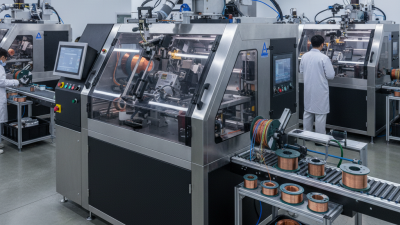
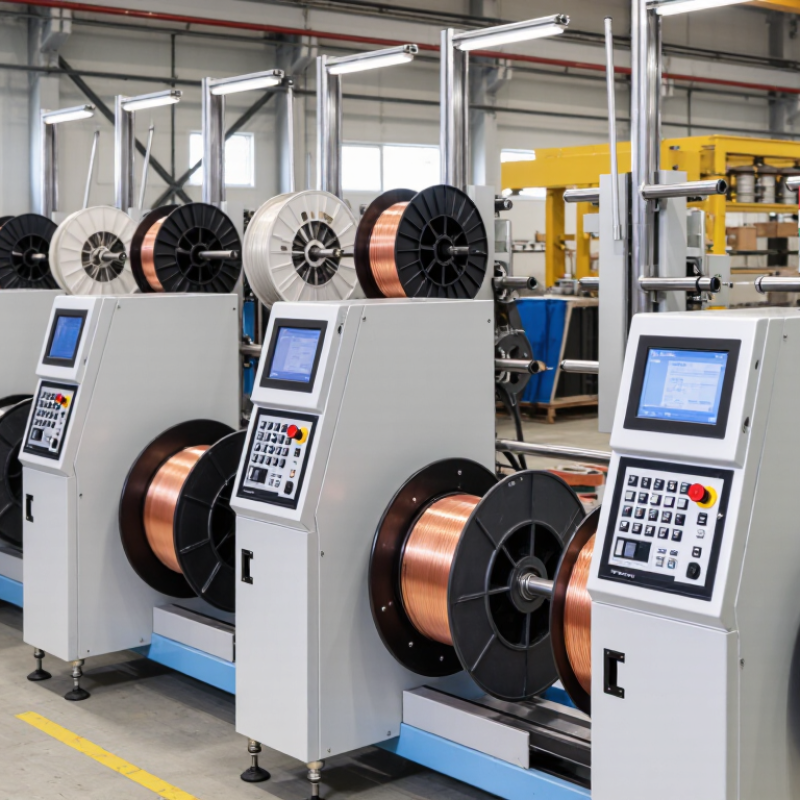
An automatic wire winding machine forms insulated wire into precise coils around a bobbin, stator, rotor, or custom former. It combines a rotating spindle, wire guide, tension controller, traverse system, and programmable control unit. Sensors monitor wire position and tension while the spindle maintains a selected speed. The operator enters parameters such as turns, winding pitch, coil width, and stopping position. The machine then repeats the cycle with limited manual handling. It is not simply a faster spool.

This equipment supports transformers, motors, solenoids, relays, speakers, and other electromagnetic components. The International Energy Agency’s Energy Efficiency Market Report identifies electric motor systems as responsible for roughly 45% of global electricity use, creating strong pressure for consistent motor production. The U.S. Department of Energy also reports that motor-driven systems consume about 69% of industrial electricity in the United States. Reliable winding quality therefore affects both manufacturing yield and energy performance.

In practical use, a good machine should prevent loose turns, crossed wire, insulation damage, and uneven end placement. Tension matters greatly. Too much force can stretch fine copper wire; too little can create unstable coils. Modern systems may record production data for inspection and traceability. Yet automation is not flawless. Poor tooling, incorrect wire settings, or a worn guide can still produce defective coils. That uncomfortable detail is often missed in simple equipment comparisons.

How to Evaluate Automatic Wire Winding Machine Manufacturers

Top 10 Automatic Wire Winding Machine Manufacturers?

Choosing among the top ten requires more than comparing prices or website photos. Examine each manufacturer’s experience with your wire diameter, coil shape, insulation, and production speed. Ask for sample winding tests using your actual materials.

Small differences matter.

A reliable supplier should provide clear machine specifications, process limits, maintenance schedules, and operator training. Review factory records, quality procedures, and documented test results. If possible, inspect a working machine in production.

Watch the tension system closely. Uneven tension can create loose layers, damaged insulation, or rejected coils. A polished website proves little.

Technical support also deserves careful attention. Ask how quickly engineers respond, which spare parts remain available, and whether remote diagnosis is practical.

Check software controls, safety functions, adjustment access, and data recording options. Speak with recent customers, not only selected references. Their comments may reveal recurring faults or slow service.

Do not accept impressive claims without evidence. A lower price can hide expensive setup work. An advanced machine may also exceed your real production needs.

I have seen evaluations focus heavily on speed while ignoring changeover time. That was a mistake.

Compare total operating cost, training demands, warranty terms, and expected output under normal conditions. Leave room for doubt, and verify every important promise before purchasing.

Top 10 Automatic Wire Winding Machine Manufacturers

Top 10 Automatic Wire Winding Machine Manufacturers

Choosing among the top 10 automatic wire winding machine manufacturers requires more than checking production speed. Experienced buyers inspect winding tension, spindle accuracy, software stability, and service response. A reliable machine should place each turn evenly, even when wire diameter changes. Small errors can create loose coils, damaged insulation, or costly rework.

The strongest manufacturers usually represent different specialties: high-speed coil equipment, transformer winding systems, compact motor winding lines, precision voice-coil machines, heavy-gauge wire solutions, custom automation, multi-spindle platforms, intelligent inspection systems, flexible prototype equipment, and integrated production cells. Each category serves a different factory need. Ask for test samples using your actual wire, bobbin, and winding pattern. Watch the machine run. Paper specifications are not enough.

Practical evaluation should include tension control, changeover time, operator access, spare-part availability, and training quality. Request documented accuracy data and a factory acceptance test. Check whether alarms identify the real fault clearly. That detail matters during a night shift. No ranking is perfect. A famous supplier may still lack the right tooling for a difficult coil. A smaller manufacturer might offer better engineering support, but its software could need closer review. Record cycle time, defect rate, noise, and maintenance effort during trials. Honest notes often reveal more than polished demonstrations.

Key Features and Industries Served by Leading Manufacturers

Top 10 Automatic Wire Winding Machine Manufacturers

Leading automatic wire winding machine manufacturers compete through precision, flexibility, and dependable production support. Their machines commonly use servo-driven spindles, programmable winding patterns, automatic wire tension control, and rapid recipe changes. These features help maintain consistent coil geometry during long production runs. Some systems also include vision inspection, laser measurement, and digital production records. Such tools make defects easier to trace.

Transformer and motor manufacturers often require machines that handle different wire diameters, insulation types, and coil shapes. Automotive suppliers may prioritize short cycle times and stable performance across thousands of components. Aerospace applications usually demand careful process control and detailed documentation. Medical equipment producers may need compact coils with clean, repeatable winding. Electronics manufacturers often value fine-wire handling and accurate layering.

A reliable supplier should provide practical testing before installation. Ask for sample winding trials using your actual wire and bobbin. This reveals problems that product brochures may not mention. A polished interface is useful, but it cannot replace stable tension control. Maintenance access matters too. Operators need clear alarms, accessible tooling, and training that reflects real factory conditions. Not every machine fits every coil. Some advanced systems remain difficult to configure, especially when product designs change frequently. That limitation deserves honest discussion before purchase.

Top 10 Automatic Wire Winding Machine Manufacturers: Key Features and Industries Served

The chart compares representative wire-diameter ranges commonly associated with major application sectors served by automatic winding-machine manufacturers. Actual specifications vary according to coil design, insulation, winding method, and production requirements.

Automatic winding systems typically emphasize programmable motion control, wire-tension regulation, precision guiding, automatic wire cutting, recipe management, and integration with testing or assembly equipment. These capabilities support applications ranging from miniature inductors and medical coils to automotive, transformer, motor, solenoid, and aerospace components.

How to Choose the Right Manufacturer for Your Needs

Choosing an automatic wire winding machine manufacturer requires more than comparing catalog prices. Start with your wire type, diameter range, bobbin size, and target production speed. A manufacturer should explain how its equipment controls tension, alignment, winding pitch, and stopping accuracy. Ask for test results using your actual copper or aluminum wire, not a generic sample. Small details matter.

Request a trial winding session before signing an order. Watch the machine handle acceleration, tight corners, insulation changes, and repeated starts. Measure coil width, wire placement, and rejection rates afterward. Experienced suppliers can discuss motor control, programmable settings, maintenance intervals, and spare-part availability in practical terms. They should also provide clear manuals, training plans, and documented quality procedures.

Do not judge support by polished sales language alone. Ask how quickly technical staff respond when a sensor fails during production. Speak with current users, if possible, and inspect service records. No manufacturer is perfect. I have seen impressive demonstrations hide difficult software adjustments and slow troubleshooting. That possibility deserves attention. Compare warranty terms, installation support, operator training, and long-term upgrade costs. A slightly cheaper machine may become expensive when one missing component stops your line. Choose a supplier willing to document limitations, accept reasonable questions, and adapt the machine after real production feedback.

Top 10 Automatic Wire Winding Machine Manufacturers? - How to Choose the Right Manufacturer for Your Needs

The following comparison uses anonymous manufacturer profiles so that buyers can evaluate technical capability, application fit, service coverage, and purchasing risk without relying on brand names alone. Specifications are typical industry ranges and should be confirmed against the supplier’s current datasheet, sample-winding results, and written quotation.

No. Anonymous Manufacturer Profile Typical Machine Focus Common Wire Diameter Range Typical Winding Capacity Automation Features to Check Best-Fit Applications Key Selection Priority
1 Manufacturer Profile A Precision coil winding
Multi-axis automatic winding systems
Approximately 0.02–0.80 mm Small to medium coils; programmable winding length and pitch Servo tension control, automatic wire break detection, recipe storage, programmable traverse Relays, sensors, small transformers, ignition coils High precision and repeatability
2 Manufacturer Profile B Transformer coil winding
Horizontal and vertical winding platforms
Approximately 0.10–3.00 mm Medium to large coils; winding widths commonly up to 500 mm Automatic layer transition, programmable speed profiles, end-of-wire detection Power transformers, control transformers, inductors Coil size and torque capacity
3 Manufacturer Profile C Motor coil winding
Needle, flyer, or spindle winding equipment
Approximately 0.05–1.20 mm High-volume stator or armature production Automatic loading and unloading, indexing table, production counters, fault alarms Small motors, fans, pumps, power tools Cycle time and production stability
4 Manufacturer Profile D Toroidal winding
Automatic toroid and ring-core winding machines
Approximately 0.05–2.00 mm Ring cores commonly from 10 to 150 mm outside diameter Core loading support, controlled wire distribution, automatic cut-and-clamp function Current transformers, filters, chokes, power supplies Core compatibility and wire handling
5 Manufacturer Profile E High-speed bobbin winding
Compact programmable spindle machines
Approximately 0.03–0.60 mm High-speed small-bobbin production; multiple programmable recipes Electronic tensioner, automatic bobbin exchange, barcode or recipe management Inductors, relays, solenoids, miniature transformers Speed without sacrificing wire tension
6 Manufacturer Profile F Heavy-wire winding
High-torque winding systems for larger conductors
Approximately 0.80–6.00 mm Large coils with higher mandrel torque and reinforced tooling Closed-loop torque control, heavy-duty payout, variable-frequency drive, safety guarding Large inductors, reactors, industrial transformers Motor power, torque, and mechanical rigidity
7 Manufacturer Profile G Custom automation
Integrated winding, assembly, testing, and handling cells
Application-dependent; confirmed through sample testing Designed around the customer’s product geometry and takt time Robotic handling, vision inspection, electrical testing, MES or PLC integration Automotive components, medical devices, specialized assemblies Engineering capability and integration support
8 Manufacturer Profile H Flexible batch production
Compact machines for frequent product changeovers
Approximately 0.03–1.50 mm Small to medium batch sizes with quick tooling changes Touchscreen HMI, recipe backup, quick-change fixtures, guided setup procedures Contract manufacturing, prototypes, varied industrial components Changeover time and operator usability
9 Manufacturer Profile I Cost-focused standard equipment
General-purpose automatic winding platforms
Approximately 0.05–1.00 mm Standard bobbin and coil sizes with limited customization Basic PLC control, automatic stop, overload protection, stored winding programs General industrial coils and entry-level production lines Total cost of ownership and spare parts
10 Manufacturer Profile J Export-oriented supplier
Standard and semi-custom machines with remote support
Approximately 0.02–3.00 mm, depending on machine configuration Small, medium, and selected large coil formats Remote diagnostics, multilingual HMI, compliance documentation, training packages Overseas production sites and companies requiring local-language support Documentation, installation, and after-sales response

Buyer checklist: Request a sample-winding demonstration, confirm the supported wire and core dimensions, review accuracy and repeatability data, calculate throughput using the complete cycle time, verify spare-parts availability, and obtain written details covering installation, operator training, warranty, preventive maintenance, and response time for technical support.