
2026 How to Choose the Best China Manual Concrete Block Making Machine?
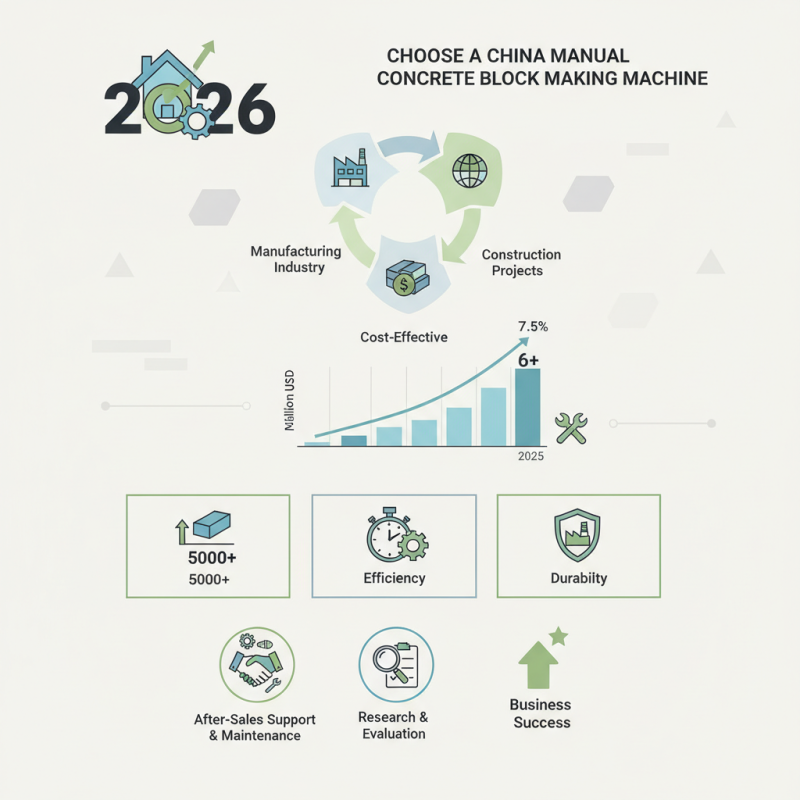
The demand for affordable housing is on the rise globally, with an expected growth of around 7.5% in the construction sector by 2026. This marks a crucial point for the manufacturing industry, particularly for those interested in the China Manual Concrete Block Making Machine. These machines offer a cost-effective solution for producing concrete blocks suited for various construction projects.
Investing in the right equipment is essential. A report from the International Trade Administration indicates that the construction machinery market in China is projected to surpass $6 billion by 2025. This underscores the importance of selecting a high-quality China Manual Concrete Block Making Machine. Factors like production capacity, efficiency, and durability play a significant role in making a sound purchase decision.
While many manufacturers promise reliability, it's vital to conduct thorough research. Practical considerations, such as after-sales support and machine maintenance, often determine long-term value. Buyers must reflect on their specific needs and evaluate different options. Finding the best machine can be challenging, yet it's essential for achieving business success in an evolving market.
Understanding the Different Types of Manual Concrete Block Making Machines
When choosing a manual concrete block making machine, understanding the different types is essential. Various models serve distinct needs, from basic manual presses to more sophisticated versions with added features. Each type has its strengths and weaknesses. Basic models are affordable and easy to operate, but they may lack efficiency. More advanced machines can produce higher quantities with better precision, yet they often come at a higher cost.
Tips for evaluating these machines include examining their production capacity and material types. A machine designed for specific blocks, like hollow or solid types, can greatly affect your output. Look for machines with adjustable molds for versatility. You might encounter challenges in finding the right balance between cost and capability. It’s crucial to gauge how often you will use the machine to avoid over-investing in unnecessary features.
Additionally, consider the machine's physical size and weight. If space is limited, a compact model might be more suitable. However, larger machines could offer higher productivity. Reflect on where you’ll place the machine and how you’ll operate it daily. This consideration can reveal potential logistical issues that might arise once the machine is in use.

Key Factors to Consider When Choosing a Block Making Machine
Choosing a manual concrete block making machine can be challenging. Many factors must be considered to ensure you make an informed decision. One key aspect is the machine’s productivity. Evaluate how many blocks it can produce per hour. Higher output may lead to better profitability.
Material quality matters greatly. Look for machines that can work with various aggregates. This versatility can help you adapt to different project needs. Check the durability of the machine, too. A robust machine can handle repetitive tasks and rough handling.
Tips: Always inspect the machine before purchase. Look for any signs of wear or rust. Ask the seller about maintenance history. It’s also wise to read reviews from other users. Their experiences could highlight potential issues.
Another important factor is support and training. Ensure the manufacturer offers good training resources. Understanding how to operate and maintain the machine is vital. Without proper knowledge, you might struggle with efficiency. In the end, your choice impacts your entire operation. Consider your long-term goals carefully.
Evaluating the Production Capacity and Efficiency of Machines
Choosing the right manual concrete block making machine is crucial for maximizing production efficiency. When evaluating machines, consider their production capacity. Many machines can produce 1000 to 2000 blocks per day, depending on their design and the operator's skill level. Reports indicate that skilled operators can significantly enhance output, sometimes exceeding the machine's rated capacity.
It's essential to assess the efficiency of the machine. Factors such as cycle time and energy consumption play a vital role. A machine with a cycle time of under 30 seconds can lead to substantial gains in daily production. However, energy-efficient models may slightly reduce output but contribute to longer-term savings.
Tips: Regular maintenance can help maintain efficiency. A properly lubricated machine runs smoother and lasts longer. Operators should also receive thorough training to optimize performance. In reality, not all operators will achieve peak efficiency. A lack of training can hinder productivity and may lead to unsatisfactory results. Evaluating past performance and adjusting operational practices are critical for continuous improvement.
Production Capacity of Manual Concrete Block Making Machines
Assessing Machine Durability and Maintenance Requirements
When selecting a manual concrete block making machine, durability is crucial. A robust construction ensures that the machine can withstand repeated use. Look for high-quality materials that resist wear and tear over time. Commonly used metals should offer strength without excessive weight. Components that show signs of corrosion can compromise the entire machine. This is a vital point to consider during evaluation.
Maintenance is often overlooked, yet it significantly impacts machine longevity. Regular checks of moving parts and lubrication can prevent unexpected breakdowns. A simple schedule can help maintain performance. Engaging with the machine’s manual is essential for understanding specific maintenance tasks. Sometimes, neglecting minor issues can result in costly repairs later. Reflection on your maintenance practices can reveal room for improvement.
Durability often correlates with efficiency. A reliable machine can produce consistent quality blocks, reducing waste. Inconsistent production not only frustrates the operator but can lead to financial loss. Finding balance in selecting a machine that is both durable and easy to maintain is a challenging yet rewarding process. Observing and adapting to these factors will enhance your production experience.
2026 How to Choose the Best China Manual Concrete Block Making Machine? - Assessing Machine Durability and Maintenance Requirements
| Feature | Description | Durability Rating | Maintenance Frequency |
|---|---|---|---|
| Frame Material | High-strength steel | Excellent | Annual |
| Vibration System | Electromechanical | Good | Bi-Annual |
| Molding Process | Manual and mechanical | Very Good | Monthly |
| User Interface | Simple control panel | Good | Quarterly |
| Warranty | 1-year warranty | N/A | N/A |
Exploring Cost-Effectiveness and Return on Investment in Block Production
Investing in a manual concrete block making machine can be a significant decision for businesses. The initial setup costs can vary widely based on machine features and production capacity. Industry data indicates that the average price for a reliable model ranges from $2,000 to $5,000. This is a manageable investment for many, yet the financial returns can make the choice worthwhile.
Cost-effectiveness is critical in determining overall profitability. It is reported that producing concrete blocks yields up to **50%** lower costs compared to purchasing blocks from suppliers. The production capacity has a direct impact on ROI. Machines that produce up to **2,000 blocks per day** often recoup their costs within a year of steady production. However, it is worth noting that market demand and operational efficiency significantly influence these returns.
Purchasing a machine is not the end of the journey. Maintenance and staff training are crucial areas often overlooked. These elements can affect efficiency and product quality. Understanding local market conditions and competitor pricing can also help in optimizing production strategies. A well-planned approach can lead to sustainable profits, but oversight in planning can lead to reduced returns. This reinforces the need for thorough research and assessment before making a commitment.