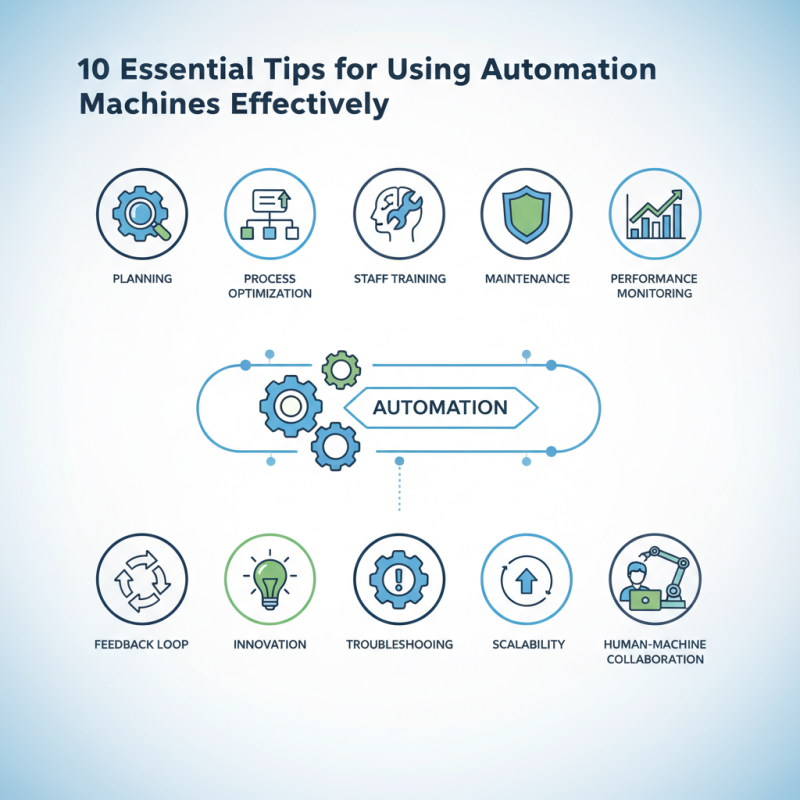
10 Essential Tips for Using Automation Machines Effectively?

Automation machines play a crucial role in modern industries. They enhance efficiency and productivity, reducing human error. However, using these machines effectively requires careful planning and execution.

Many businesses invest in automation technology but struggle to optimize their use. This can lead to wasted resources and missed opportunities. Understanding the key aspects of automation is essential for success. Proper training is vital. Staff must feel confident operating these machines.

Regular maintenance is also important. Neglect can result in costly downtimes. Evaluate your processes often to ensure smooth operations. Adapting your strategies based on feedback can improve results. Automation is a valuable tool, but it has its challenges. Embrace the learning curve and make adjustments as needed.
10 Essential Tips for Using Automation Machines Effectively?

Understanding Automation Machines: Definitions and Types

10 Essential Tips for Using Automation Machines Effectively?

Automation machines are revolutionizing various industries. They simplify tasks and improve efficiency. However, understanding their definitions and types is crucial for effective use.

There are several types of automation machines. Some focus on industrial tasks, while others assist in office environments. For instance, robotic arms can handle manufacturing processes. They improve precision while reducing labor costs. On the other hand, software automation helps streamline administrative tasks. These machines can analyze data quickly, yet they require periodic checks for accuracy.

Choosing the right automation machine can be challenging. Not every machine fits every need. Some users may find the learning curve steep. Overlooking training may lead to errors and wasted time. Regular evaluation of machine performance is vital. This reflection helps identify areas needing improvement. Embracing automation demands continuous learning and adaptation.
Key Benefits of Automation to Enhance Productivity

Automation technology has transformed industries, enhancing productivity significantly. According to a recent report by McKinsey, organizations can increase productivity by up to 30% through effective automation. This improvement often comes from reducing repetitive tasks. Employees can then focus on strategic areas. In fact, 68% of companies surveyed report improved workflow efficiency after implementing automation solutions.

However, the implementation of automation is not without challenges. Many organizations struggle with employee resistance and lack of training. A study by Deloitte found that 43% of companies acknowledge these issues. This can lead to underutilized machines and wasted investment. Companies should invest in training to empower employees, fostering a culture of collaboration between humans and machines.

Additionally, automation can provide real-time data insights. This enhances decision-making processes. A report by Forrester highlights that automated data analysis can reduce decision-making time by 50%. But relying solely on automated systems poses risks. Over-reliance might overlook crucial human judgment. Balancing automation with human insight is essential for optimal outcomes.

Selecting the Right Automation Machine for Your Industry Needs

Selecting the right automation machine is crucial for enhancing productivity in various industries. Each sector has unique requirements. For instance, manufacturing may need precision, while agriculture might require durability. Assessing these specific needs can save time and resources. Researching machine specifications helps ensure alignment with your operations.

Evaluating available options is just as important. Not all automation machines are created equal. Some may boast advanced technology, but could lack user-friendliness. Consider the learning curve for your team. A complicated machine may hinder efficiency rather than boost it. Trial periods can help determine practicality in real-world scenarios.

Budget is another critical factor. Often, cheaper machines can lead to higher long-term costs due to maintenance issues. Investing in quality may seem costly initially but can prove beneficial over time. Take time to reflect on past purchases. Did prior decisions lead to desired outcomes? Learning from experience informs better choices moving forward.

10 Essential Tips for Using Automation Machines Effectively

Tip Number Tip Description Applicable Industry Automation Machine Type
1 Identify specific tasks for automation Manufacturing Industrial Robots
2 Assess the return on investment (ROI) Logistics Automated Guided Vehicles (AGVs)
3 Choose machines that integrate with existing systems Retail Point of Sale Systems
4 Provide adequate training for staff Food Processing Automated Food Prep Machines
5 Monitor machine performance regularly Pharmaceuticals Robotic Dispensing Systems
6 Select scalable solutions for future growth Automotive Assembly Line Automation
7 Implement robust safety protocols Construction Automated Construction Equipment
8 Regularly update software and systems Telecommunications Network Management Automation
9 Engage with vendors for ongoing support Healthcare Telehealth Solutions
10 Evaluate and adapt to market trends E-commerce Automated Inventory Systems

Best Practices for Maintenance and Troubleshooting Automation Systems

10 Essential Tips for Using Automation Machines Effectively?

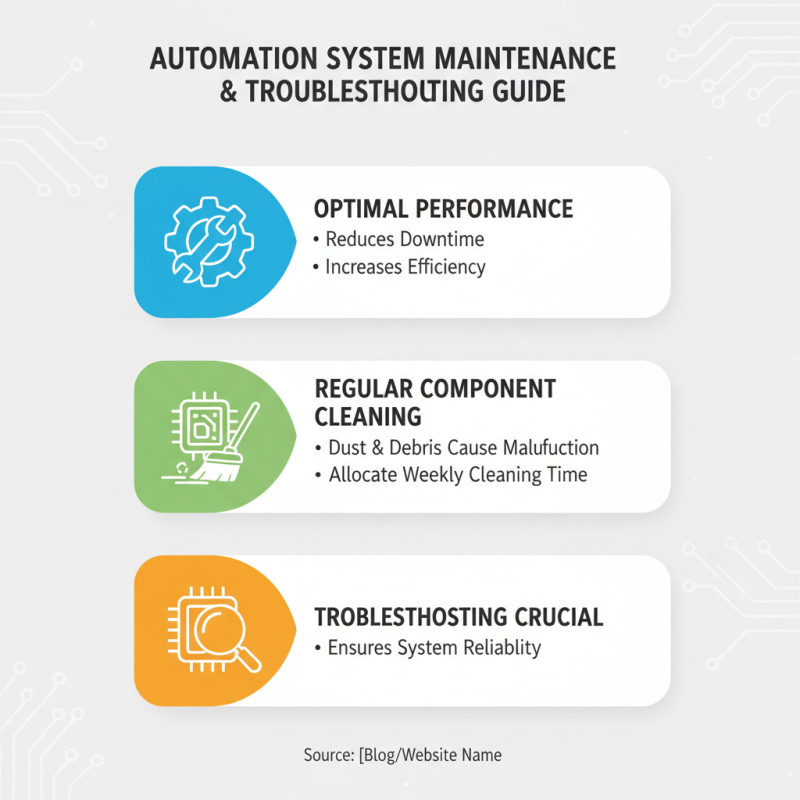
Maintaining and troubleshooting automation systems is crucial for optimal performance. A well-maintained system reduces downtime and increases efficiency. Regular cleaning of components is essential. Dust and debris can cause malfunction. Allocate time each week for thorough cleaning.

Sometimes, systems may show unexpected behavior. In such cases, reviewing error logs can be helpful. Identify patterns and recurring issues. This may point to underlying problems that need attention. Consistent troubleshooting will build a better understanding of your automation environment.

Another important tip is to keep software updated. Outdated software can lead to vulnerabilities. Regular updates fix bugs and enhance functionality. However, updates can sometimes cause compatibility issues. After each update, test the system thoroughly. This practice helps catch any new problems early. With careful attention and proactive measures, maintaining automation systems becomes more effective and less stressful.

Measuring Success: KPIs for Automation Machine Effectiveness

When implementing automation machines, measuring success is crucial. Key Performance Indicators (KPIs) help track effectiveness. Different KPIs can reveal various insights about performance. For example, throughput measures the number of units produced over time. A low throughput might indicate malfunctions or inefficiencies in the automation process.

Another important KPI is downtime. This measures the time when the machine is not operational. High downtime suggests issues that need addressing. It could be due to maintenance, setup changes, or even unexpected failures. Regular monitoring allows for quick responses, reducing lost productivity.

Additionally, consider the quality of output. Are products meeting standards consistently? Defects per unit is a useful metric here. If this number is high, it's time to reassess processes. Involving team feedback is valuable too. They provide insights that data alone may not reveal. Balancing these different KPIs can shed light on overall effectiveness. Sometimes, results may not align with expectations. Reflecting on these discrepancies can lead to improvements.

Automation Machine Effectiveness: Key Performance Indicators