How to Choose the Right Wire Coil Winding Machine for Your Needs?

Choosing the right wire coil winding machine can be challenging. With so many options available, it's important to consider your specific needs. These machines play a vital role in various industries, from electronics to automotive. Each application requires different winding techniques and wire types.

When selecting a wire coil winding machine, think about your production scale. Are you a small business or a large manufacturer? The machine's capacity should match your output requirements. Consider factors like speed, precision, and ease of use. Some machines are versatile, while others focus on specific tasks.

Additionally, be aware of your budget. High-end machines offer advanced features, but basic models might suffice for simpler projects. Research user reviews and brands. Not all manufacturers provide reliable machines. A poor choice could lead to inefficiencies. Reflect on your long-term goals to ensure the right investment in your wire coil winding machine.
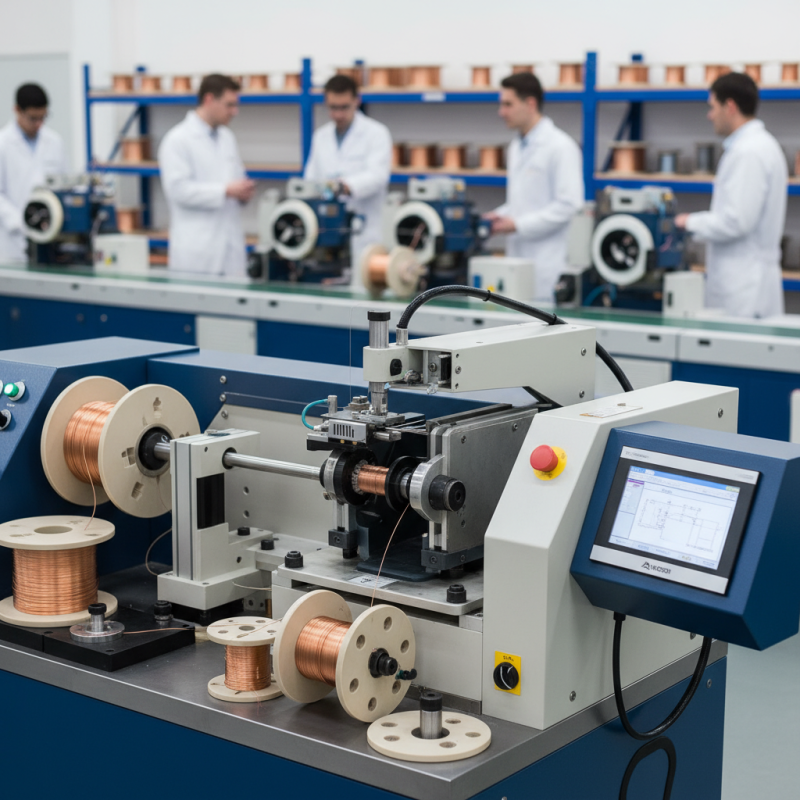
How to Choose the Right Wire Coil Winding Machine for Your Needs?

Understanding the Different Types of Wire Coil Winding Machines

When selecting a wire coil winding machine, understanding the types available is crucial. There are several designs to consider. The most common types include automatic, semi-automatic, and manual machines. Each has unique features that cater to different production needs. Automatic machines offer high efficiency and can handle complex winding patterns. However, they can be expensive and may require extensive training to operate.

Semi-automatic machines often strike a balance between functionality and cost. They require some manual intervention but can still produce consistent results. Manual machines are the most basic type, perfect for small-scale production. They provide flexibility and control but may require more effort and time. It’s important to evaluate your production volume and desired complexity before making a choice.

Another aspect to think about is the machine’s capabilities. Some models allow for quick changeovers, while others may need more time. If flexibility is a key concern, look for features that enable easy adjustments. Potential users should also be mindful of the level of technical support available. Sometimes, machines can be less user-friendly than expected, leading to frustration during operation.

How to Choose the Right Wire Coil Winding Machine for Your Needs?

Type of Machine Best For Coil Size Range Features Price Range
Single-Spindle Winding Machine Small Scale Production Up to 100 mm Easy to Use, Compact Size $1,000 - $5,000
Multi-Spindle Winding Machine Mass Production Up to 300 mm High Speed, Automation Options $10,000 - $50,000
CNC Winding Machine Custom Designs and Precision Work Up to 500 mm Computer Controlled, High Accuracy $20,000 - $100,000
Bench Top Winding Machine Hobbyists and Small Projects Up to 50 mm Portable, Simple Operation $500 - $2,000

Identifying Your Production Needs and Specifications

Choosing the right wire coil winding machine starts with understanding your specific production needs. Think about the type of wire you will use. Is it thin or thick? The machine's capacity must match your wire type. Consider the quantity you plan to produce regularly. High volumes require sturdy machines capable of fast, continuous winding.

Additionally, identify the level of automation you need. Fully automated systems enhance efficiency but may not fit smaller operations. Think about maintenance too. Some machines require regular checks, which could affect productivity. Also, don't overlook the machine's space requirements in your facility. It's easy to assume you have enough room until the machine arrives.

Reflect on your long-term goals. Will your production needs change? A versatile machine might cost more initially, but it could save costs later. Proper research helps, but you could overlook essential aspects. Be prepared to reassess your choices based on feedback from operators and production outcomes. Each decision shapes your production journey.

Key Features to Consider When Selecting a Winding Machine

How to Choose the Right Wire Coil Winding Machine for Your Needs?

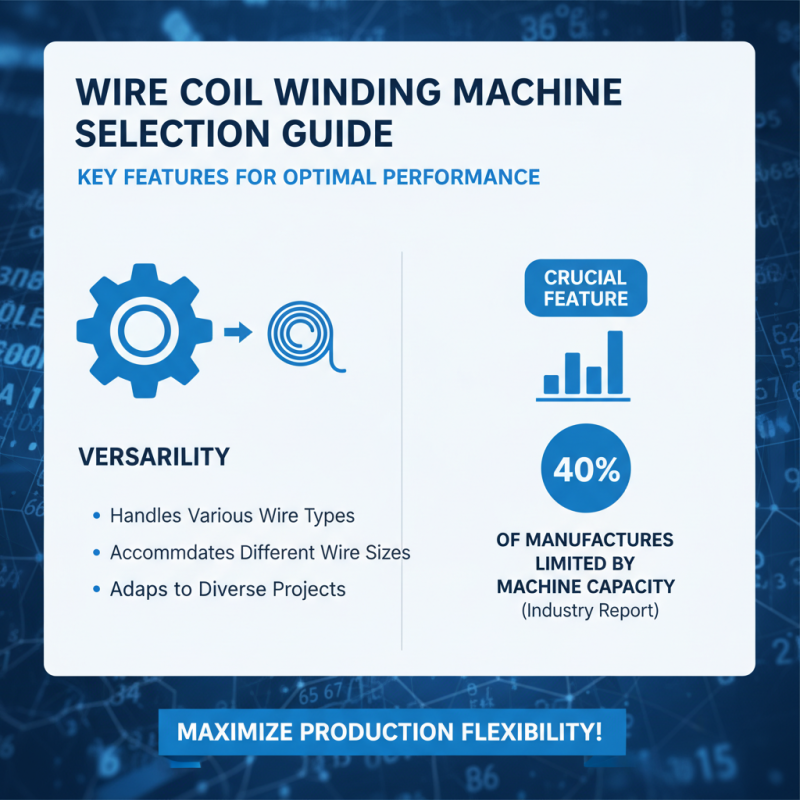
When selecting a wire coil winding machine, key features are essential. One crucial aspect is the machine’s versatility. A good machine can handle various wire types and sizes. This flexibility ensures that you can adapt to different projects without investing in multiple machines. According to industry reports, around 40% of manufacturers find themselves limited by their winding machine's capacity to accommodate different wire specifications.

Additionally, precision is vital in winding applications. Machines that offer accurate tension control reduce the risk of wire damage. Unnecessary breaks or irregular winding can lead to product rejections. Nearly 30% of defects come from improper winding, which highlights the need for machines that excel in consistency. Look for machines with advanced electronic controls or programmable settings that can be calibrated for different projects.

Automation features can also enhance efficiency. Machines with automatic feed systems save time on manual setups. A survey by an industry group indicated that automating winding processes can increase productivity by up to 50%. However, this automation must balance with ease of use; complicated interfaces can hinder workers. Often, operators encounter frustration when technology exceeds their competence level. Striking a balance is critical in choosing the right machine.

Evaluating Budget and Cost Efficiency for Your Machine Purchase

When selecting a wire coil winding machine, budget is a primary concern. According to a recent industry report, around 40% of manufacturers struggle to keep costs down. An essential step is to evaluate the initial purchase price. Machines vary widely in cost, often influenced by features and capabilities. A basic model may start as low as $5,000, while advanced machines can exceed $30,000. Understanding your production needs will help determine where to invest.

Cost efficiency goes beyond the initial price tag. Maintenance plays a significant role in overall expenses. Some machines require frequent servicing, which adds up over time. The same report indicates that unexpected repairs can increase operating costs by as much as 20%. Additionally, consider energy consumption. An energy-efficient model may have a higher upfront cost, but it can save money in the long run.

Investing in training is another factor often overlooked. Good training can minimize errors and reduce waste. Reports suggest that untrained operators can lead to production losses, possibly 15% of total output. This should factor into your overall budget. Balancing initial costs with long-term savings and ensuring adequate training are crucial for a sound investment.

Researching Manufacturers and After-Sales Support Options

When researching manufacturers for wire coil winding machines, evaluating after-sales support is crucial. A report by MarketsandMarkets estimates that nearly 70% of equipment failures stem from inadequate maintenance or technical support. Thus, solid after-sales assistance can enhance your machine’s longevity.

Ask potential manufacturers about warranty options and service agreements. Reliable support can prevent costly downtime. A machine may seem perfect, but without proper backing, issues may arise unexpectedly. Be wary of companies that don’t offer comprehensive service plans. This lack of support can turn a great investment into a regrettable decision.

Tips: Always seek user reviews on the quality of after-sales support. Engage with current users to get insights. A personal recommendation often reveals the reality of support services. Make sure to understand the training options provided as well. Many manufacturers offer training, which can be essential for maximizing machine utility. Remember, your success often hinges on the support you receive long after the purchase.

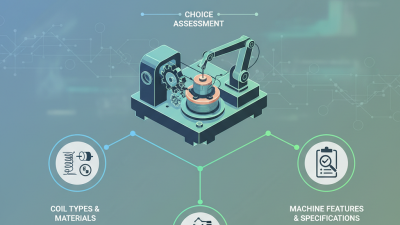
Comparison of Factors for Choosing a Wire Coil Winding Machine