2026 How to Choose the Best Automatic Wire Coiling Machine for Your Needs?

In the fast-evolving world of manufacturing, choosing the right equipment is crucial. The automatic wire coiling machine plays a vital role in optimizing production efficiency. According to a recent industry report by Market Research Future, the global market for these machines is projected to grow by 7% annually. This growth reflects the increasing demand for high precision and automated solutions in wiring processes.

Expert John Peterson, a leading figure in the wire processing industry, states, “Selecting the correct automatic wire coiling machine can drastically improve your production workflow.” This emphasizes the importance of evaluating specific needs. Every manufacturer might have different requirements based on their production scale and wire types.

Investing in an automatic wire coiling machine involves careful consideration. Factors such as speed, versatility, and ease of maintenance should not be overlooked. Many companies face challenges when selecting the right machine. They often regret hasty decisions that do not align with their production goals. It’s essential to reflect on both immediate needs and long-term aspirations when making such an investment.
2026 How to Choose the Best Automatic Wire Coiling Machine for Your Needs?

Understanding Your Needs: Assessing Application Requirements

When selecting an automatic wire coiling machine, start with assessing your specific application requirements. The type of wire you work with can greatly influence your choice. For example, according to industry reports, machines suitable for thin wires may struggle with thicker gauge wires. Understanding the diameter and material of the wires you typically use is crucial.

Next, consider the production volume. A report from the Industrial Machinery Association indicates that nearly 40% of manufacturers experience bottlenecks due to insufficient machine capacity. If your operations require high throughput, prioritize machines that offer speed and efficiency. Additionally, machines with programmable features can adapt to various production needs, enhancing flexibility.

Another factor is the complexity of your coiling designs. Some applications need intricate coil shapes. In this case, advanced technology might be necessary. However, simpler machines can suffice for basic coils. Balancing complexity with your actual demands can prevent overspending on features you may never use. Always remember, investing in the right machine is about meeting your needs, not following trends.
Key Features to Look for in Automatic Wire Coiling Machines

When selecting an automatic wire coiling machine, certain key features are essential. Start by considering the machine's capacity. Think about the thickness and length of the wire you typically work with. Some machines excel with thin wires while others are better suited for thicker varieties.

Another important aspect is the speed of operation. Faster machines can increase productivity. However, you might notice that speed can sometimes lead to errors. Balancing speed with precision is vital. Look for a model that offers both without compromising quality.

Ease of use should also be a priority. A user-friendly interface makes it easier to operate the machine efficiently. Complicated controls can lead to frustration. Consider machines with clear instructions or intuitive setups. Lastly, check the machine's durability. Machines made of quality materials tend to last longer, reducing costs in the long run.

Evaluating Different Types of Coiling Mechanisms

When evaluating coiling mechanisms for automatic wire coiling machines, it’s crucial to understand the different types available. Some machines use gravity-based systems. These rely on weight to guide the wire into coils. This method can be simple and effective but may lack precision. Users often find that the coils are inconsistent in size and shape.


Another popular mechanism is the electronically controlled system. These machines adjust the tension and speed automatically. This creates more uniform coils, which is essential for specific applications. However, they can be more complex to operate. Users might struggle with settings initially. Some find the learning curve steep. This can lead to wasted materials if not managed properly.


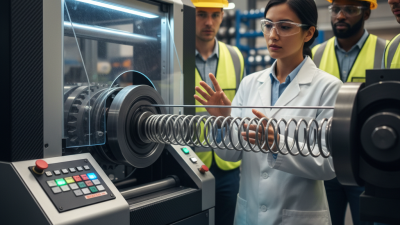
Lastly, consider the spring-loaded mechanisms. These are designed to provide tension and maintain coil shape. They can be reliable and require less maintenance. However, they may not offer the same level of speed as other systems. Users often debate the trade-offs between speed and quality. Each option has its strengths and weaknesses, and it’s important to reflect on your specific needs before making a choice.

Comparing Brands: Reliability and Performance Metrics

When choosing an automatic wire coiling machine, examining reliability and performance metrics is crucial. Consider the materials used in construction. A robust design often indicates longevity. User reviews can provide insights into real-world experiences and potential issues. Check for common problems. Machines may be prone to jamming or misalignment.


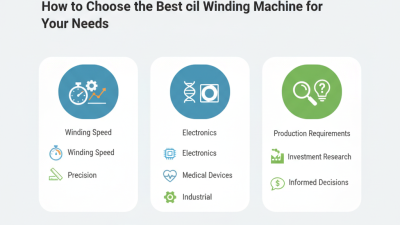
Performance metrics are essential for evaluating capability. Speed, precision, and ease of use should be priorities. A machine that coils wire at a consistent speed can save time. However, if precision is lacking, it can lead to more errors in your work. Many users overlook after-sales support. Reliable customer service can make a big difference when issues arise.


Investing time in research is vital. It’s tempting to go with the first machine that looks appealing. However, thorough comparison helps in the long run. Some machines may promise higher performance but fall short in practice. Reflecting on your specific needs is also important. What works for one project might not suit another. Understanding these nuances can lead to better decision-making.

Cost vs. Quality: Making an Informed Investment Decision

2026 How to Choose the Best Automatic Wire Coiling Machine for Your Needs?

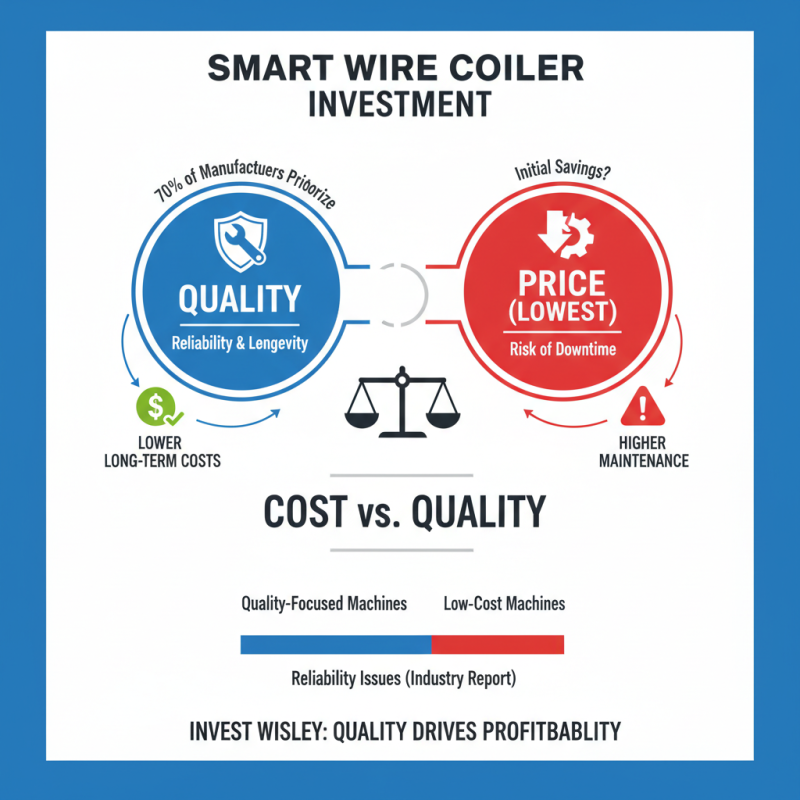
When selecting an automatic wire coiling machine, cost and quality are critical factors. New data suggests that 70% of manufacturers prioritize quality over the initial purchase price. However, a lower-cost option may save money upfront but lead to higher long-term maintenance costs. A recent industry report noted that machines priced significantly lower than the market average often have reliability issues, leading to costly downtimes.

Investing in a high-quality machine can yield a better return on investment. Quality machines typically offer advanced features, such as automatic adjustments for wire thickness. They also tend to require less frequent repairs. According to a survey of manufacturers, those who spent more on a quality machine reported up to 30% more efficiency compared to cheaper alternatives. However, it’s crucial to assess if those features align with your specific production needs.

Some companies become fixated on price, overlooking machine performance. This can lead to regrettable purchases that don't fit their needs. Initial savings can be misleading if a machine fails to deliver consistent results. In such cases, the perceived cost-effectiveness evaporates quickly, underscoring the importance of aligning investment with actual operational requirements.