Why Choose an Air Coil Winding Machine for Your Manufacturing Needs?
In today’s competitive manufacturing landscape, choosing the right equipment is crucial. Experts often emphasize the importance of efficient machinery. Jack Thompson, a noted specialist in winding technology, states, “An air coil winding machine can greatly enhance production efficiency.” This sentiment underscores the value of investing in advanced tools.
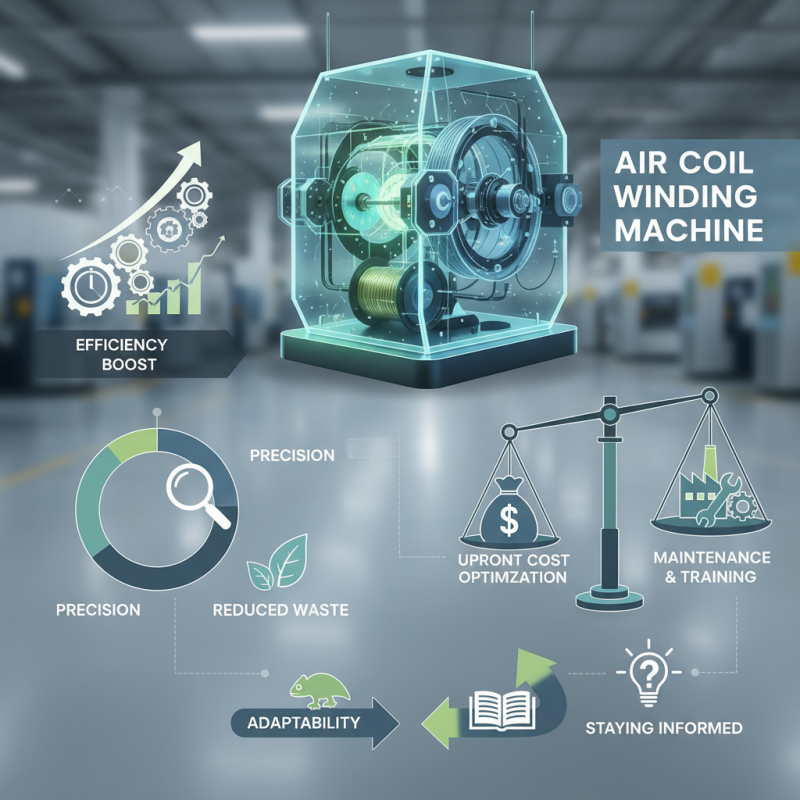
The air coil winding machine offers precision and speed, essential for high-quality outcomes. Manufacturers can reduce material waste while increasing output. However, not all companies leverage these machines effectively. Some hesitate to adapt to new technology, fearing the upfront costs. This can lead to missed opportunities in optimization.
The adoption of an air coil winding machine requires careful consideration. Factoring in maintenance and training is vital. It’s important to recognize that integrating this technology might not solve every problem. Reflection on current processes is often necessary to make the best choice. In this evolving industry, staying informed and adaptable is key to success.
Benefits of Using Air Coil Winding Machines in Manufacturing
When it comes to manufacturing, efficiency is key. Air coil winding machines offer a range of benefits that can enhance production lines. They are designed to create high-quality coils in a fraction of the time compared to traditional methods. The use of air technology means less wear and tear, leading to lower maintenance costs.
One significant advantage is the simple setup process. Manufacturers can quickly adjust settings for different coil specifications. This flexibility allows for rapid changes in production needs. Operators can troubleshoot issues more effectively, but it requires a certain level of understanding of the machine’s capabilities. Without proper training, mistakes can happen, leading to waste.
Tips: Always ensure that your operators are well-trained. Regular maintenance checks help avoid unexpected downtimes. Experimentation with various settings can lead to improved outcomes, but remember to track results carefully. This helps identify the best practices tailored to your specific needs. In the end, finding the balance between efficiency and quality is essential for long-term success in manufacturing.
Key Features of Modern Air Coil Winding Machines
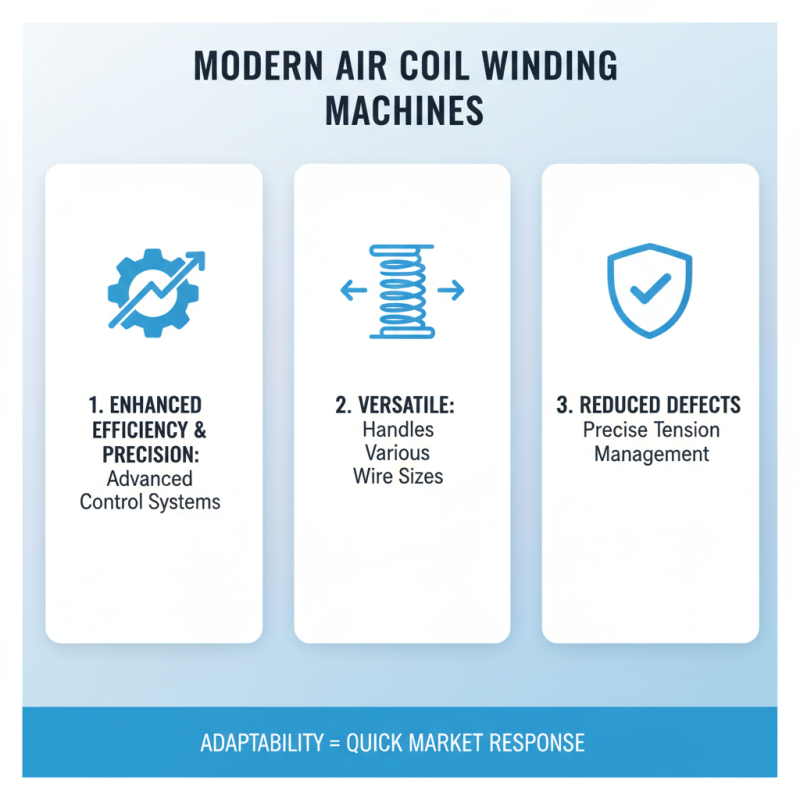
Modern air coil winding machines are designed to enhance efficiency and precision. One key feature is their versatility in handling various wire sizes. This adaptability helps manufacturers respond quickly to changing market demands. The machines utilize advanced control systems, which allow for precise tension management. This leads to fewer defects in the winding process.
Another significant aspect is their automated functionalities. Automation reduces the need for manual intervention, saving time and minimizing human error. Many machines incorporate real-time monitoring. This ensures that operators can track performance and make adjustments as needed. However, not all systems are foolproof. Sometimes, the complexity can lead to operational challenges that require skilled technicians for troubleshooting.
Energy efficiency is also a notable feature. Modern machines are designed to minimize power consumption while maintaining high output. This can reduce overall production costs. Nonetheless, the initial investment in advanced technology can be daunting. Manufacturers must weigh the benefits against their budget constraints. Balancing cost with the long-term efficiency gains remains a critical consideration.
Cost Efficiency and Productivity Improvement with Air Coil Winding
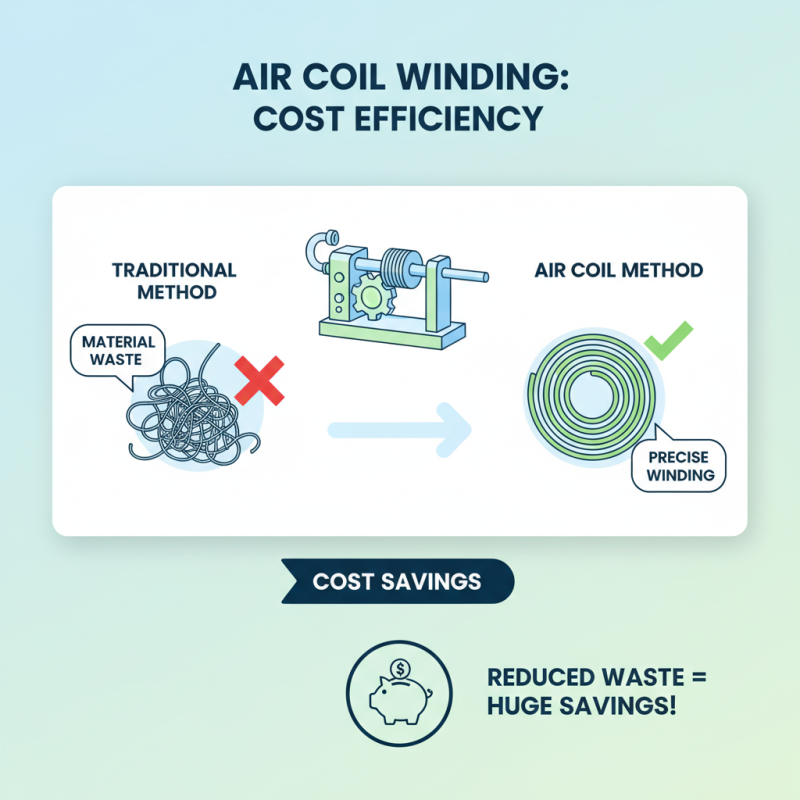
When it comes to manufacturing, cost efficiency is crucial. An air coil winding machine offers this benefit. It reduces material waste significantly. This machine uses pressurized air to wind coils tightly. The result is precise winding, which minimizes excess materials. This efficiency leads to cost savings over time.
Improving productivity is another advantage. Air coil winding machines can operate at higher speeds. This allows for faster production rates. Workers can focus on other tasks, enhancing overall operations. However, training is needed for optimal use. Without proper understanding, mistakes can happen.
**Tips:** Always conduct regular maintenance checks. Clean the equipment regularly to avoid delays. Set clear goals for production speed and quality. Reflect on these goals often and adjust as necessary. This ensures that productivity remains high with every use. Balancing efficiency and quality is essential in manufacturing.
Industry Applications and Success Stories Leveraging Air Coil Technology
Air coil winding technology has transformed various manufacturing sectors. Industries such as electronics, automotive, and renewable energy are now leveraging this innovation. In the electronics realm, devices like transformers and inductors benefit from precise winding. This precision improves performance in compact spaces. Automotive applications are embracing air coils for their lightweight and efficient designs, enhancing electric motors.
Success stories highlight the advantages of air coil technology. A leading energy company switched to air coil machines, reducing costs significantly. Their efficiency skyrocketed, leading to faster production times. Another scenario involved a startup in renewable energy. They adopted air coil technology for efficient generators. Their ability to optimize space and resources led to impressive growth.
However, transitioning to air coil technology is not without challenges. Some manufacturers face difficulties in training staff to adapt. Others grapple with initial costs and installation timelines. These reflections are crucial for making informed decisions. Adaptability and resource management are key to overcoming these hurdles. Embracing new technology requires a willingness to learn and improve.
Why Choose an Air Coil Winding Machine for Your Manufacturing Needs?
| Application Area | Production Volume (units/day) | Product Type | Efficiency Improvement (%) | Recommended Features |
|---|---|---|---|---|
| Consumer Electronics | 500 | Induction Coils | 30 | Auto-tension Control |
| Automotive | 250 | Motor Coils | 25 | Programmable Settings |
| Telecommunications | 1000 | Transformer Coils | 40 | Multi-functional Winding |
| Renewable Energy | 300 | Generator Coils | 35 | High-speed Operation |
Technical Considerations for Selecting the Right Air Coil Winding Machine
When selecting an air coil winding machine, several technical factors should be considered. The coil size is crucial. Machines vary in the range of wire sizes they can handle. Knowing your specific requirements will help narrow down your choices. Additionally, the winding speed is another important aspect. Faster machines enhance productivity but could compromise precision if not designed correctly.
Another key consideration is the control system. Advanced models offer programmable features for customization. This allows for better reproduction of coils. However, user-friendly interfaces are essential. A complex system may lead to errors in operation. Lastly, pay attention to the machine's durability. Investing in a sturdy model can prevent future breakdowns.
Reflecting on these factors can be challenging. Not all features are necessary for every application. It’s essential to prioritize what suits your manufacturing needs best. Take time to evaluate and understand your production processes. This can lead to better decision-making. Every detail matters in the selection process.
Related Posts
-
How to Choose the Best Micro Coil Winding Machine for Your Needs
-
What is the Best Automatic Winding Machine in 2026?
-
2026 Best Heavy Duty Coil Winding Machine for Your Industrial Needs?
-
Discover the Innovations in the Best Coil Winding Machine Technology for Efficient Production
-
2025 Top 5 Used Coil Winding Machines You Need for Your Business
-
What is an Auto Winding Machine? Exploring Efficiency and Precision in Coil Production