
Can Body Making Machine China Top Manufacturer?
Choosing the top Can Body Making Machine manufacturer in China requires more than comparing prices or production speed. A reliable supplier must understand the complete can-making process, from steel sheet feeding to cupping, drawing, ironing, trimming, and inspection. The machine should produce consistent body dimensions, clean flanges, and stable wall thickness during long production runs.
John Nutting, a respected metal-packaging specialist, offers a practical warning: “A can line is only as strong as its weakest operation.” This principle matters on the factory floor. A small alignment error can create wrinkles, splits, or leaking cans. Experienced manufacturers therefore combine rigid machine frames, accurate servo control, hardened tooling, and real-time quality checks. They should also provide installation records, maintenance instructions, spare-parts support, and measurable test results.
Look closely.
A strong Chinese manufacturer should explain its engineering decisions clearly. ISO certification can support credibility, but certification alone does not prove excellent performance. Buyers should inspect operating references, trial samples, energy consumption, changeover time, and after-sales response. Factory visits can reveal details that brochures hide, including worn tools, crowded assembly areas, or unfinished testing.
Still, no supplier is perfect. Even a well-built Can Body Making Machine may need adjustment for different materials, coating systems, or can sizes. That is where technical communication becomes essential. The best manufacturer is not simply the cheapest or largest. It is the partner that documents limitations, accepts difficult questions, and keeps improving after delivery. Performance must be demonstrated, not merely promised.
What Is a Can Body Making Machine? Processes and 400–1,200 CPM Capacity
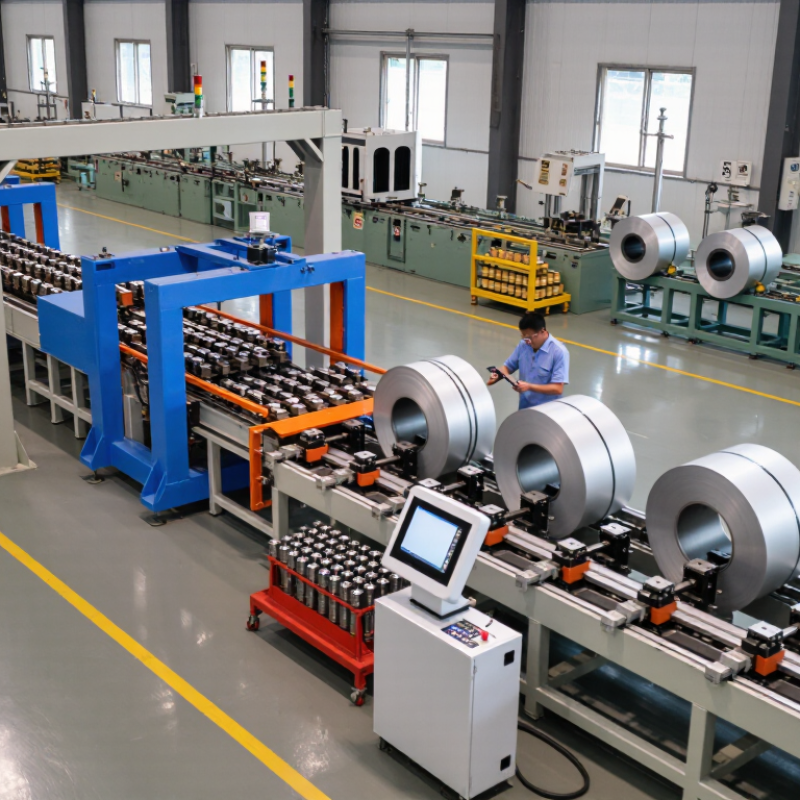
A can body making machine forms metal sheet into seamless can bodies at high speed. In practical production, the process starts with a coil of aluminum or tinplate. A decoiler feeds the strip into a press, where circular blanks become shallow cups. The cups then pass through redraw and ironing stages. These operations reduce wall thickness and increase body height.
After forming, a trimmer removes uneven edges. Washing removes forming oil and metal particles. Sensors inspect diameter, height, wall thickness, and surface damage. Small defects matter. A tiny wrinkle can cause filling or sealing problems later. Experienced operators also check tooling wear, lubrication, and press vibration instead of trusting the display alone.
Capacity usually ranges from 400 to 1,200 CPM, meaning cans per minute. A 400 CPM system may suit a smaller production plan or several can sizes. A 1,200 CPM line requires stable material, accurate tooling, fast inspection, and disciplined maintenance. Its rated speed is not always its real output. Changeovers, rejected bodies, cleaning, and short stops reduce efficiency. This is where machine evaluation becomes less obvious. A reliable manufacturer should provide measured trial data, technical drawings, spare-parts guidance, and operator training. Buyers should ask how capacity was tested, with which metal, and under what tolerance. The highest number may look impressive, but consistent body quality often matters more.
Can Body Making Machine China Top Manufacturer? - What Is a Can Body Making Machine? Processes and 400–1,200 CPM Capacity
| Process Stage | Primary Function | Typical Equipment | Common Materials and Specifications | Typical Production Range | Key Quality-Control Points |
|---|---|---|---|---|---|
| 1. Coil Feeding and Strip Preparation | Feeds sheet or coil stock into the line at a controlled speed and maintains stable material tension. | Uncoiler, straightener, servo feeder, strip guide, and automatic material detection system. | Tinplate ECCS/TFS Aluminum Material selection depends on the can design, wall strength, corrosion requirements, and forming method. | Designed for continuous feeding synchronized with the press or bodymaker. | Coil width, material thickness, flatness, surface condition, strip alignment, and feed consistency. |
| 2. Blanking and Cup Forming | Cuts circular blanks and forms them into shallow cups used as the starting shape for a two-piece can body. | High-speed cupping press, blanking die, draw die, transfer system, and scrap collection unit. | Metal sheet is selected according to the required can diameter, height, draw ratio, and final wall strength. | Often operates at several hundred strokes or cups per minute, depending on blank diameter and press design. | Blank diameter, cup height, flange condition, wrinkles, cracks, burrs, and material lubrication. |
| 3. Bodymaking and Wall-Ironing | Reduces wall thickness while increasing can height. This is the core forming operation for a drawn-and-ironed two-piece can. | Bodymaker with punch, redraw station, ironing rings, die pack, coolant system, and can transfer tooling. | Commonly used for beverage, food, aerosol, and general-purpose two-piece cans made from aluminum or steel. | High-speed commercial lines commonly fall within approximately 400–1,200 cans per minute, depending on can size and line configuration. | Wall-thickness profile, can height, dome shape, roundness, wrinkles, splits, scoring, and punch-to-die alignment. |
| 4. Bottom and Dome Formation | Forms the can base and dome to provide pressure resistance, stability, and correct internal volume. | Integrated bodymaker tooling or dedicated bottom-forming station. | Bottom geometry varies with beverage pressure, product type, metal grade, and required stacking strength. | Normally synchronized with the bodymaker and transfer system to avoid production bottlenecks. | Base profile, dome height, concentricity, leakage resistance, buckle resistance, and dimensional repeatability. |
| 5. Trimming | Removes excess material from the open end and creates a uniform height for later coating, printing, necking, or flanging. | Rotary trimmer, trim knives, height-control system, and scrap conveying unit. | Trim allowance depends on the can height, necking design, and downstream end-seaming requirements. | Normally designed to match the output of the bodymaker, typically within the selected 400–1,200 CPM line range. | Overall height, cut edge condition, burrs, ovality, trim scrap, and dimensional consistency. |
| 6. Washing, Cleaning, and Drying | Removes forming lubricant, metal particles, and surface contamination before internal or external coating. | Multi-stage can washer, chemical treatment tanks, rinse sections, hot-air dryer, and water filtration system. | Cleaning chemistry and temperature are selected for the metal substrate and coating system. | Line speed must remain synchronized with the bodymaking and coating equipment. | Cleanliness, residual oil, surface treatment coverage, water quality, drying temperature, and corrosion prevention. |
| 7. Internal Coating | Applies a protective lining that separates the product from the metal and helps reduce corrosion or flavor interaction. | Internal spray coater, curing oven, coating inspection system, and exhaust treatment equipment. | Coating type depends on the product, regulatory requirements, curing conditions, and substrate. | Usually matched to the body line speed; coating coverage must remain stable at high throughput. | Coating weight, coverage, cure level, pinholes, adhesion, conductivity, and internal surface defects. |
| 8. External Coating and Printing | Applies a base coat, decoration, protective varnish, or identification graphics to the outside of the can. | Base coater, decorator, over-varnisher, curing oven, registration controls, and vision inspection. | Uses approved inks, coatings, and varnishes compatible with the metal surface and intended application. | Decorator speed is selected according to can diameter, artwork complexity, registration accuracy, and curing capacity. | Color consistency, print registration, ink adhesion, coating weight, scratches, pinholes, and surface gloss. |
| 9. Necking and Flanging | Reduces the open-end diameter and forms a flange that allows the lid or easy-open end to be attached by double seaming. | Multi-stage necker, flanger, change parts, transfer star wheels, and automatic inspection system. | Neck diameter and flange dimensions are determined by the specified end size and seaming profile. | Usually arranged in multiple forming stages to prevent buckling and maintain accurate geometry. | Neck diameter, flange width, flange angle, concentricity, cracks, wrinkles, and end compatibility. |
| 10. Testing and Inspection | Detects leakage, dimensional defects, coating failures, damaged edges, and other conditions that could affect safety or performance. | Leak tester, vision inspection, wall-thickness gauge, dimensional gauges, and sample-based destructive testing. | Inspection criteria depend on can type, product pressure, filling process, and applicable packaging standards. | Online inspection can operate continuously at the line’s rated speed; laboratory checks are performed by sampling. | Leak rate, height, diameter, wall thickness, coating integrity, flange dimensions, and rejection accuracy. |
| 11. Palletizing and Packaging | Counts, stacks, and protects finished can bodies for transport to filling, storage, or further assembly. | Can counter, conveyor, layer former, palletizer, wrapping unit, and warehouse transfer system. | Packaging format depends on can diameter, customer handling method, pallet dimensions, and shipping requirements. | Must handle the maximum line output without creating back pressure or damaging finished cans. | Count accuracy, stack stability, dent prevention, pallet alignment, wrapping quality, and traceability. |
| Rated Capacity | Typical Line Position | Suitable Production Profile | Important Capacity Variables |
|---|---|---|---|
| 400–600 CPM | Entry to mid-range high-speed production | Suitable for smaller factories, multiple can formats, pilot expansion, and moderate-volume beverage or food-can production. | Can diameter, can height, tooling changeovers, operator intervention, material thickness, and downstream equipment speed. |
| 600–900 CPM | Standard high-volume production | Suitable for continuous production with automated feeding, forming, trimming, coating, inspection, and material handling. | Bodymaker stability, transfer timing, coolant performance, die wear, automation level, and reject-management efficiency. |
| 900–1,200 CPM | High-output industrial production | Suitable for large-volume operations requiring high automation, consistent raw material quality, and tightly synchronized auxiliary equipment. | Tooling precision, vibration control, lubrication, cooling capacity, inspection response time, maintenance planning, and line balancing. |