How to Choose the Best Blade Antenna for UAVs in 2026?
A Blade Antenna For Uav can look like a simple part: a slim housing above a carbon-fiber airframe. Its performance, however, depends on frequency, polarization, mounting position, and the radio system around it. A compact blade may suit a fixed-wing platform, while a multirotor’s frame and wiring can distort its radiation pattern. Small installation choices matter.
The market is growing, but growth does not select the right antenna. Drone Industry Insights’ Drone Market Report 2024–2030 estimates a global drone market of $30.6 billion in 2024, potentially reaching $54.6 billion by 2030. That forecast signals expanding applications, not a universal antenna specification. Dr. Nuno Borges Carvalho, an IEEE Fellow whose research includes UAV communications, offers a useful paraphrased design takeaway: “Evaluate the antenna as part of the complete radio link, not as an isolated accessory.” This is not a verbatim published quotation. Readers should verify any specific antenna claim against the manufacturer’s datasheet and test results.
This guide examines gain, frequency coverage, polarization, weight, connector type, and environmental protection. It also considers where the antenna sits, and what nearby batteries or metal components may block. The best choice depends on the mission and installation, not just the product label. A detail is easy to miss: a strong datasheet cannot fix poor placement. Begin with the radio requirements, then compare antennas using measurable evidence.
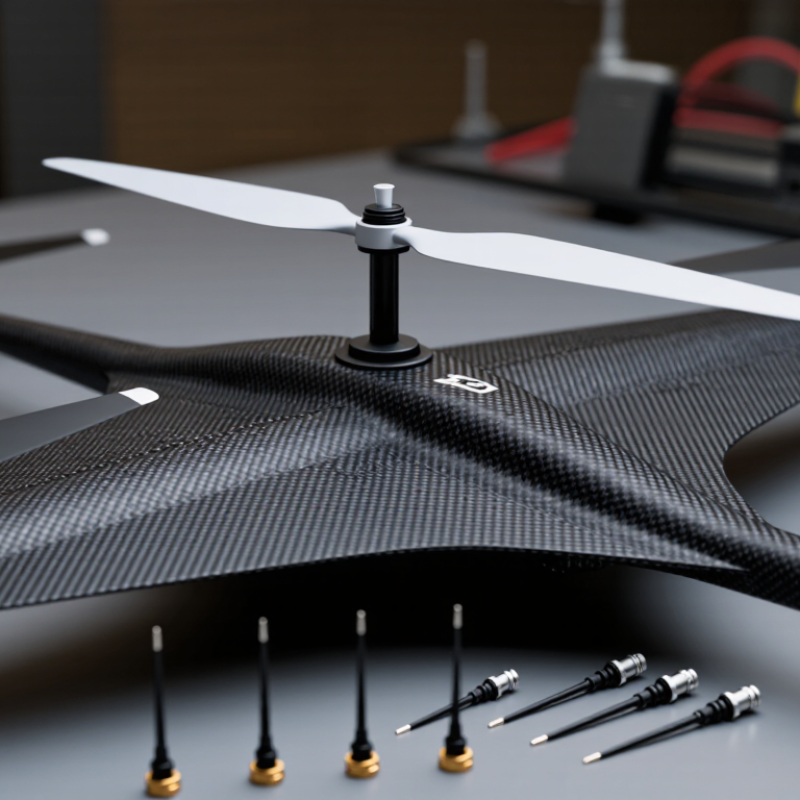
Understand the Role of Blade Antennas in UAV Systems
How to Choose the Best Blade Antenna for UAVs in 2026?
Understand the Role of Blade Antennas in UAV Systems
A blade antenna helps a UAV maintain radio links for command, telemetry, and other onboard communications. Its shape can reduce drag compared with taller exposed antennas, but aerodynamic form is only part of the decision. The antenna must suit the radio’s operating frequency and the airframe’s available mounting space. Small details matter.
Placement affects performance. Carbon-fiber structures, batteries, and wiring can obstruct or disturb radio signals, so an antenna mounted close to them may perform poorly. Keep it clear of conductive materials where practical, and check that its orientation matches the system’s polarization. Vibration and weather exposure also matter, especially during repeated outdoor flights. A neat installation is not necessarily an effective one.
Tips: Confirm frequency compatibility, mounting clearance, connector fit, and the antenna’s specified ground-plane requirements. Test link quality with the aircraft in several orientations, not just on a workbench. It is easy to focus on range claims and overlook installation conditions; that can lead to disappointing results. Record the setup and compare readings after changes.
Match Antenna Frequency and Polarization to Mission Needs
How to Choose the Best Blade Antenna for UAVs in 2026?
Match Antenna Frequency and Polarization to Mission Needs
Choose an antenna frequency that matches the radio system and its assigned operating band. A mismatch can reduce range and waste transmitter power. Check the antenna’s specified bandwidth, not just its center frequency. A UAV carrying separate control, telemetry, and navigation systems may need multiple antennas, carefully spaced to limit interference. Carbon-fiber frames, batteries, and wiring can also detune an antenna or block its signal. Measure performance on the finished airframe, not only on a workbench.
Tips: Confirm polarization at both ends of the link. Linear antennas work well when their orientations stay aligned; turns and banking can weaken the signal. Circular polarization can better tolerate changing aircraft orientation, but both ends must use compatible polarization. Test it installed.
A blade’s placement matters as much as its datasheet. Keep it clear of conductive structures, and consider how the aircraft’s pitch and roll affect line of sight. For missions near ground stations, test at realistic heights and distances. Use a network analyzer to check the installed antenna across its operating band, then verify the link during controlled flight tests. A bench result can still mislead: vibration, cable routing, and nearby electronics may change real-world performance. Record the setup and results so later changes can be compared rather than guessed.
Compare Gain, Radiation Pattern, and Communication Range
Choosing a blade antenna for a UAV means comparing gain, radiation pattern, and usable communication range—not just the largest number on a specification sheet. Gain describes how energy is distributed, not how much power the antenna creates. A higher-gain blade can concentrate coverage toward the horizon, but may provide less coverage above or below its main axis. That matters when a UAV banks, climbs, or changes heading.
Check the radiation pattern in the aircraft’s actual mounting position. A carbon-fiber frame, battery, wiring, or nearby metal can block or distort signals. Even a small shift in antenna angle may create a weak spot. Look for pattern data across the operating frequency, and confirm that the antenna’s polarization matches the rest of the link. Small details count.
Communication range depends on more than antenna gain. Transmit power, receiver sensitivity, cable loss, interference, and terrain all affect the link. A quoted range is not a promise. There is no perfect pick. Compare candidate antennas using the same radio setup, then test them at different headings and flight attitudes in a controlled, permitted area. Record signal strength and any dropouts. I would treat an uneven result as useful evidence, not a failed test; real installations rarely match an ideal diagram exactly.
Check Size, Weight, Mounting, and Environmental Ratings
A blade antenna for a UAV must fit the airframe, not just the frequency plan. Check the antenna’s full length and height against nearby propellers, landing gear, and payloads. Leave enough clearance to prevent contact during vibration or a hard landing. A compact unit may reduce drag, but its smaller size does not automatically mean better performance.
Include the cable and connector when checking total weight. Even a few grams can matter on a small aircraft, especially when the antenna sits far from the center of gravity. Mounting position also affects signal quality. Carbon-fiber structures can weaken radio signals, so test the intended location with the aircraft assembled. Check the specified temperature range, moisture protection, and UV resistance for your operating conditions. An IP rating applies only under defined test conditions; it is not a promise of unlimited weather protection. Real installations can be less tidy than drawings suggest.
Tips: Secure the cable with strain relief, and avoid sharp bends near the connector. Confirm the mount stays firm after repeated flights. If possible, compare signal readings in the planned orientation before final installation. A quick bench test helps, but it cannot replace an airborne check.
Validate Compatibility, Regulations, and Flight Performance in 2026
Choosing a blade antenna for a UAV starts with the airframe, not the catalogue. Check the antenna’s frequency range, impedance, connector, and polarization against the radio and cable. A mismatch can reduce link margin, even when the antenna looks suitable. Measure the mounting area and confirm the blade clears propellers, control surfaces, and landing gear throughout movement. Small gaps matter.
Validate regulations before installation. In 2026, permitted frequencies, transmit power, equipment approvals, and operating conditions can vary by country and flight category. Check current guidance from the relevant aviation and communications authorities; do not assume that a component approved in one market is acceptable everywhere. Keep the antenna’s documentation with the aircraft records. That saves time during reviews.
Then test it in flight conditions that reflect real use. A carbon-fiber fuselage, battery, wiring, or payload may shadow the signal, so placement deserves careful testing. Compare link quality at different headings and expected operating distances, and watch for dropouts during turns. A ground test helps, but it cannot reproduce every flight attitude. I have found that tidy installations can still perform poorly when the antenna sits too close to noisy electronics. That is an easy detail to miss. Recheck after changing payloads, cables, or mounting hardware, and record the results before relying on the setup.