What is an Automatic Wire Winding Machine and How Does It Work?

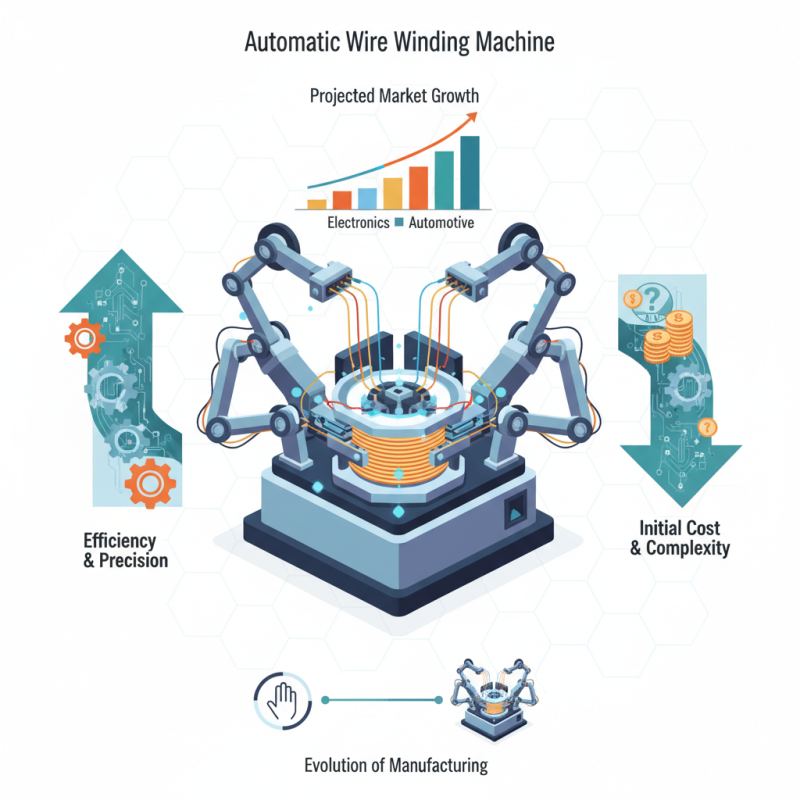
The automatic wire winding machine is a key player in modern manufacturing. As industries evolve, this technology adapts to meet high production demands. According to a recent report by MarketsandMarkets, the market for automated wire processing equipment is projected to reach $2.5 billion by 2025, highlighting its growing significance.

Experts emphasize its efficiency. John Smith, a recognized figure in the machinery sector, states, "An automatic wire winding machine significantly reduces manufacturing time and increases precision." These machines streamline processes that once required intensive manual labor. They provide high accuracy, essential for various applications, including electronics and automotive industries.

However, there are challenges to consider. Transitioning to automated systems can involve high initial costs. Businesses must weigh the benefits against potential risks. The technology's complexity can also pose difficulties in maintenance. Thus, while the automatic wire winding machine enhances productivity, reflection on its implementation and long-term costs is necessary.
What is an Automatic Wire Winding Machine and How Does It Work?

What is an Automatic Wire Winding Machine?
What is an Automatic Wire Winding Machine and How Does It Work?

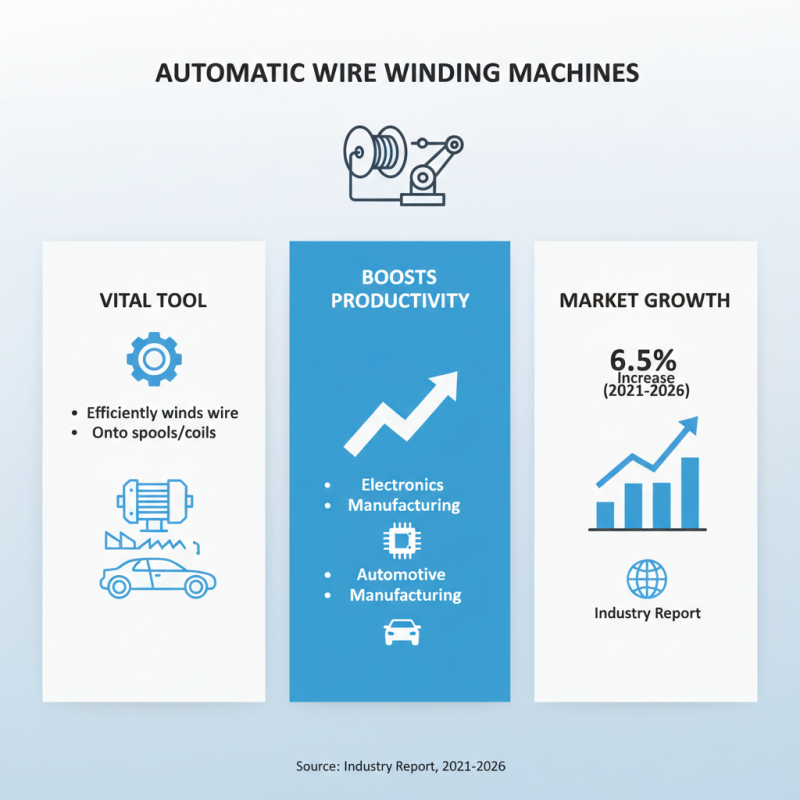
An automatic wire winding machine is a vital tool in various industries. It efficiently winds wire onto spools or coils. This machine significantly increases productivity, particularly in sectors like electronics and automotive manufacturing. A recent industry report shows that the automatic winding machine market is expected to grow by 6.5% from 2021 to 2026.

These machines operate by using programmable logic controllers and advanced sensors. This helps ensure consistent tension and speed during the winding process. Automatic machines can handle different wire types, including copper and aluminum. However, they can sometimes struggle with thicker gauges or irregular wire surfaces, leading to potential quality issues.

Employing an automatic wire winding machine reduces labor costs. However, initial investment costs may be substantial. Many businesses may hesitate to invest due to these upfront expenses. According to a study, companies often undervalue the long-term savings gained from automation. Balancing cost and efficiency remains a challenge for many manufacturers.
Key Components of Automatic Wire Winding Machines

Automatic wire winding machines play a crucial role in various industries. These machines are designed to streamline the wire winding process, enhancing efficiency and precision. The effectiveness of these machines lies in their key components.

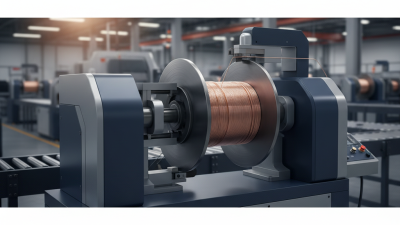
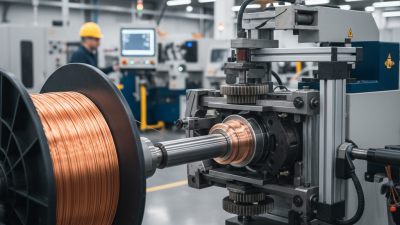
One major component is the spool holder. It securely holds the wire spool, allowing for smooth unwinding. The tension control system is also essential. It maintains optimal tension on the wire to prevent tangling during the winding process. Industry reports show that proper tension can reduce wire waste by up to 30%. Additionally, the winding mechanism, often utilizing CNC technology, ensures accurate and repeatable winding patterns. Such advancements have led to a 40% increase in production speed in some manufacturing settings.

Another important element is the user interface. Modern machines have intuitive controls, allowing operators to program winding specifications easily. Data suggests that user-friendly interfaces can reduce training time by over 25%. Despite these advancements, some operators still struggle with setting the parameters correctly. There is always room for improvement in design and usability, making ongoing feedback essential. Attention to these details can lead to enhanced productivity and user satisfaction.

How Automatic Wire Winding Machines Operate

What is an Automatic Wire Winding Machine and How Does It Work?

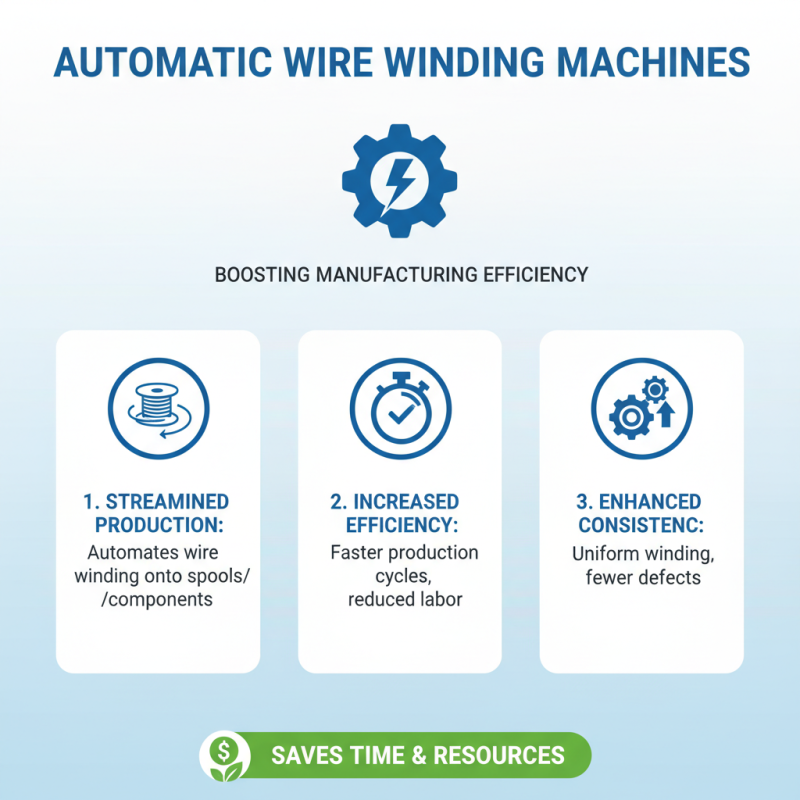
Automatic wire winding machines are essential in various manufacturing processes. They streamline the winding of wire onto spools or other components. This automation boosts efficiency and consistency in production, helping factories save time and resources.

These machines operate using innovative technology that controls the winding process. A motor drives the wire, guiding it smoothly onto a form. Sensors monitor the wire tension, ensuring that it does not break or tangle. The winding speed can be adjusted depending on the material and required tightness. Operators can input specific parameters for each job, which adds to the machine's versatility.

Despite their efficiency, these machines can sometimes face challenges. Misalignment or incorrect settings can lead to uneven winding. Maintenance is crucial to preventing these issues. Regular checks on the motor and sensors can keep the machine running smoothly. Observing these details helps improve the overall quality of the output. Effective training for operators is equally important to maximize the potential of these machines.

Applications of Automatic Wire Winding Machines

Automatic wire winding machines play a crucial role across various industries. They are vital in manufacturing motors, transformers, and other electrical components. In automotive applications, these machines are used to wind coils for electric vehicles. Efficient winding helps enhance the performance of these components.

In the telecommunications sector, automatic wire winding machines create wire harnesses. These harnesses are essential for connecting devices and ensuring signal integrity. Precise winding leads to better data transfer and overall reliability.

Tips: Regular maintenance can enhance machine performance. Clean the machine frequently to avoid contamination. Also, monitor wire tension closely during operation. Proper adjustments can prevent mistakes.

During industrial use, issues can arise. Sometimes, the winding process may not be uniform. In these cases, re-evaluating machine settings is essential. Understanding the machinery better can lead to improved results. Regular training for operators can also help minimize errors.

Benefits of Using Automatic Wire Winding Machines in Industries

Automatic wire winding machines are transforming several industries. They offer precision and efficiency that manual methods cannot match. The need for consistent quality is crucial in manufacturing. These machines provide exactly that. They ensure uniform winding, reducing the risk of defects.

Using automatic machines also boosts productivity. They operate at high speeds, which means more products can be produced in less time. This efficiency can significantly lower labor costs. However, there is a learning curve. Operators must be trained properly to maximize machine use. Mistakes can happen if they rush through the process.

Additionally, maintenance is essential for optimal performance. Regular checks can prevent breakdowns. A neglected machine may lead to costly repairs. This makes it crucial for industries to prioritize upkeep. Overall, while automatic wire winding machines offer many benefits, there are challenges to address. Understanding these can lead to better implementation and outcomes in production lines.

Benefits of Using Automatic Wire Winding Machines in Industries

This bar chart illustrates the key benefits of using automatic wire winding machines in industries, showcasing parameters such as increased efficiency, improved precision, cost savings, production speed, and labor reduction. These metrics highlight the importance of automation in enhancing productivity and reducing operational costs.