

Automated Machine Tips for Efficient Global Sourcing Operations?
In the rapidly evolving world of global sourcing, automated machines are revolutionizing operations. John Smith, a leading expert in automation, states, “Automated machines enhance efficiency, but they require careful integration.” His insight reflects a critical aspect of modern sourcing strategies.
Businesses must adopt automated machines to streamline processes. These technologies reduce labor costs and minimize errors. However, they are not a panacea. Companies often face challenges during implementation. Balancing automation with human oversight is essential for success.
The future of global sourcing rests on embracing automated machines. Companies must find the right tools and strategies to meet their unique needs. Investing in training for staff and maintaining flexibility is crucial. Automation offers opportunities but demands careful thought and planning for optimal results.

Understanding Automated Machine Sourcing and Its Importance in Global Operations
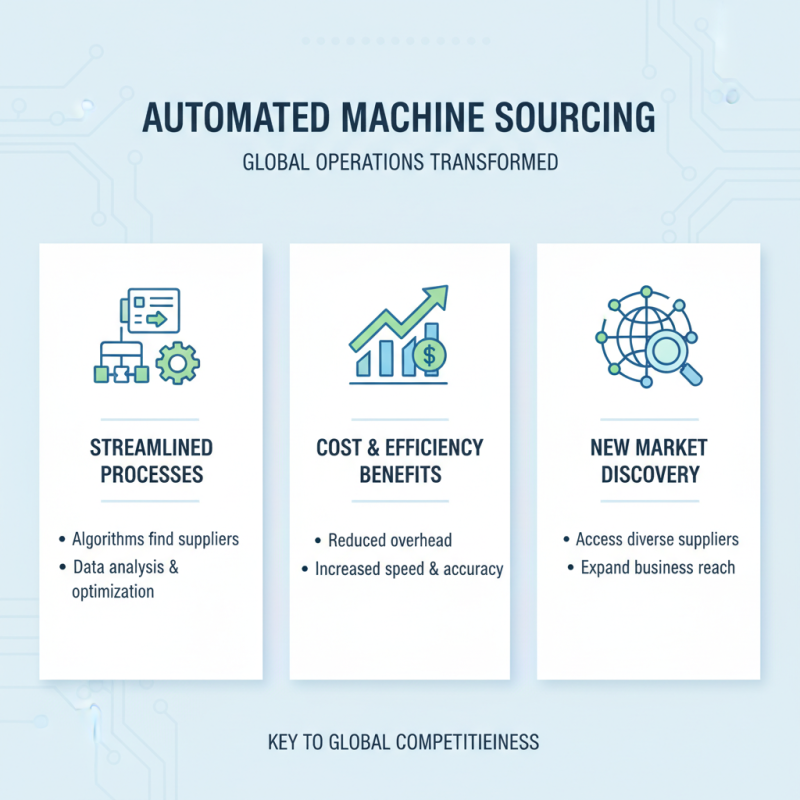
Automated machine sourcing transforms global operations. It streamlines processes, cuts costs, and increases efficiency. Companies rely on algorithms to find suppliers. These systems analyze data quickly and optimize sourcing strategies. This technology opens doors for businesses to discover new markets.
Understanding its importance is key. Automated sources can locate vendors with specific capabilities. This reduces time spent on research. Teams can focus on building relationships rather than endless searches. However, companies must remain cautious. Over-reliance on automation can lead to missed nuances. Cultural variations and local conditions often require human insight.
It's vital to balance automation with human expertise. Technology is a tool, not a replacement. Regular audits of automated decisions are important. They ensure that sourcing continues to meet quality standards. Relying too heavily on machines may overlook crucial local knowledge.
Key Technologies Driving Efficiency in Automated Machine Sourcing
Automated machine sourcing has transformed global operations significantly. Key technologies shape this efficiency. AI and machine learning enhance decision-making, making sourcing smarter. Predictive analytics allows companies to anticipate market changes. This adaptability is vital for success.
When implementing automated sourcing, consider these tips. First, invest in robust data management systems. They ensure accurate insights. Second, prioritize continuous training for your team. Knowledge gaps can hinder the effectiveness of automation. Third, regularly review your sourcing strategies. This reflection can uncover inefficiencies that technology might miss.
Automation is not a silver bullet. It requires human oversight. Miscommunication can arise when algorithms drive decisions. Always validate machine-generated insights with human expertise. Balancing technology with human input creates a stronger sourcing strategy.
Implementing Automated Solutions for Streamlined Supplier Management
Automated solutions have transformed supplier management in global sourcing. Many companies report reduced supplier onboarding time by up to 40% with automation tools. These advancements allow businesses to focus on relationships rather than paperwork.
Data from recent industry studies highlights that about 65% of procurement professionals believe automated systems enhance decision-making. For example, automated data analysis can identify trends, making it easier for teams to evaluate suppliers. However, reliance on technology has its pitfalls. Some organizations struggle with data integrity issues, risking inaccurate assessments.
One challenge is the integration of new systems with legacy processes. Automation is not a one-size-fits-all approach. Companies must ensure their teams are trained to navigate these systems effectively. When done right, automation leads to faster responses and better supplier communication. Yet, without the right oversight, there's potential for misalignment and missed opportunities.
Automated Machine Tips for Efficient Global Sourcing Operations
| Supplier Region | Product Category | Automation Level | Lead Time (Days) | Cost Savings (%) |
|---|---|---|---|---|
| Asia | Electronics | High | 15 | 20 |
| Europe | Automotive Parts | Medium | 30 | 15 |
| North America | Food Products | Low | 10 | 5 |
| South America | Textiles | Medium | 25 | 10 |
| Africa | Minerals | High | 40 | 25 |
Best Practices for Integrating Automation into Global Sourcing Strategies
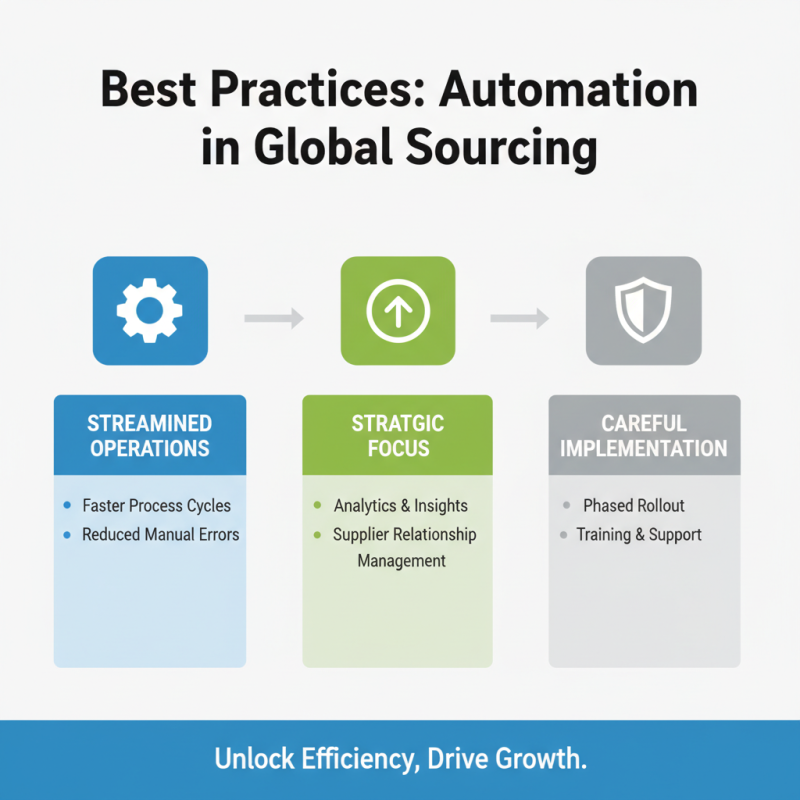
In the realm of global sourcing, integrating automation can streamline operations significantly. Efficient automation allows teams to focus on strategic tasks. However, it is crucial to implement best practices carefully.
When integrating automation, consider these tips: define clear objectives. Understand what you want to achieve with automation. This clarity will guide your strategy effectively. Next, ensure thorough training for your team. Automation tools can be complex, and proper training reduces resistance. Involving the team early fosters a sense of ownership.
Another key aspect is to start small. Test automation on a few projects before scaling. This will help identify potential issues without significant risks. Keep an eye on the data. Regularly evaluate the performance of automated systems. Analyze their impact on sourcing efficiency and costs. Automation should enhance your operations, not complicate them. Regular feedback will refine processes further.
Measuring Success: Metrics for Evaluating Automated Sourcing Effectiveness
Measuring the effectiveness of automated sourcing operations is crucial. Key metrics can reveal insights into how well these systems are performing. First, tracking cost savings is essential. Businesses should analyze how automation impacts procurement costs over time. This can highlight areas for improvement.
Another significant metric is supplier performance. Firms need to assess lead times, quality, and reliability. Gathering this data helps in making informed decisions about supplier relationships. Regular reviews can pinpoint inefficiencies. This reflection ensures that sourcing strategies align with business goals.
User experience is also a critical factor. Feedback from procurement teams can provide vital information on the system's usability. If team members find automation cumbersome, it could hinder efficiency. Companies may need to invest in training or user-friendly interfaces. Balancing automation with human input can lead to better outcomes.
Related Posts
-
What is Automated Machine Learning Its Impact on Industry Growth and Efficiency
-

2026 How to Choose the Best Automatic Wire Coiling Machine for Your Needs?
-
10 Best Motor Winding Coil Machines for Efficient Production in 2023
-

How to Choose the Right Micro Coil Winding Machine for Your Needs?
-
Top 10 Spindle Winding Machines for Efficient Production in 2023
-
Revolutionizing Efficiency How Motor Winding Automatic Machines Transform Manufacturing